Introduction
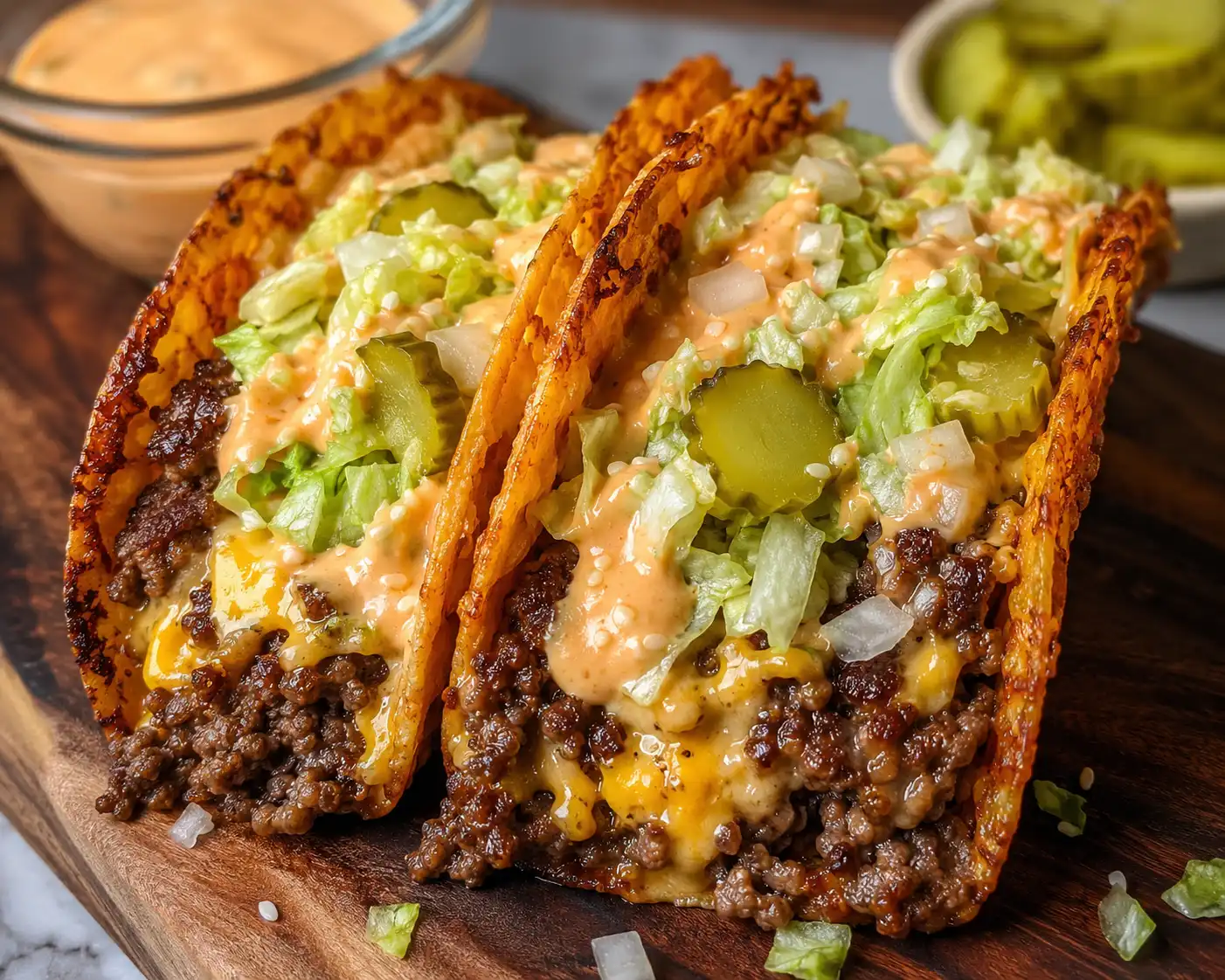
Welcome to the ultimate culinary fusion that bridges the gap between American fast-food nostalgia and Mexican street food innovation. Big Mac Tacos, often referred to as Crispy Smash Burger Tacos, represent a bold evolution in home cooking and gourmet fast food hybrids. This dish takes the iconic flavor profile of the world’s most famous burger—the Big Mac—and reimagines it within the crunchy, handheld vessel of a hard-shell taco. The result is a textural masterpiece where the savory, umami-rich smashed beef meets the crispiness of a fried tortilla, all bound together by the legendary special sauce.
Whether you are hosting a game day party, looking for a unique weeknight dinner solution, or simply craving the taste of a Big Mac without the bun, this recipe delivers maximum flavor with minimal fuss. The concept relies on the Maillard reaction achieved through smashing ground beef onto a hot surface, creating a caramelized crust that locks in juices while providing a satisfying crunch. When combined with melted American cheese, crisp lettuce, diced pickles, and onions, all nestled inside a cheese-crusted taco shell, you create a mouthfeel that is simultaneously tender, crunchy, creamy, and savory. This guide will walk you through every aspect of creating this dish, from its historical context to the nutritional breakdown, ensuring you master the art of the Big Mac Taco.
The History
To understand the Big Mac Taco, one must first appreciate the lineage of its parent dishes. The Big Mac was introduced by McDonald’s franchisee Jim Delligatti in Pittsburgh, Pennsylvania, in 1967. It quickly became a cultural icon, recognized globally for its two all-beef patties, special sauce, lettuce, cheese, pickles, onions, and a sesame seed bun. The “Special Sauce,” a proprietary blend of mayonnaise, sweet pickle relish, yellow mustard, vinegar, garlic powder, onion powder, and paprika, became the secret weapon that defined the sandwich’s identity for decades.
On the other side of the culinary spectrum, the taco has roots stretching back to the 18th century in Mexican silver mines, evolving into a staple of Mexican-American cuisine in the United States throughout the 20th century. The hard-shell taco, popularized by chains like Taco Bell in the 1960s, provided a crunchy alternative to the soft corn tortilla. As fusion cuisine gained momentum in the 1990s and 2000s, chefs and home cooks began experimenting with cross-cultural combinations. The “burger taco” emerged as a trend, but the specific iteration of the “Big Mac Taco” gained significant traction on social media platforms like TikTok and Instagram in the early 2020s. Food influencers sought to replicate the exact flavor profile of the Big Mac without the bread, utilizing the structural integrity of a taco shell to hold the ingredients. This recipe captures that modern internet-born phenomenon and refines it into a reproducible, high-quality home cooking experience.
Ingredients Breakdown
Creating the perfect Big Mac Taco requires a meticulous selection of ingredients. Each component plays a specific role in replicating the authentic taste while ensuring the structural integrity of the taco.
The Beef
The foundation of this dish is the ground beef. For the best flavor and texture, use an 80/20 blend (80% lean meat, 20% fat). The fat content is crucial for the “smash” technique; it renders out during cooking, frying the meat against the pan to create a dark, crispy crust known as the Maillard reaction. Leaner blends may result in dry, tough meat that lacks the juicy richness associated with a classic burger.
The Special Sauce
This is the soul of the recipe. While you can use a bottled substitute, making it from scratch allows you to balance the acidity and sweetness perfectly. The base is mayonnaise for creaminess, ketchup for sweetness and color, and sweet pickle relish for texture and tang. Yellow mustard adds a sharp bite, while vinegar cuts through the fat. Seasonings like garlic powder, onion powder, and paprika provide the underlying savory depth that makes the sauce recognizable.
The Shell
Standard hard taco shells work, but for the ultimate experience, we recommend making “cheese shells.” By melting shredded cheddar cheese directly onto a skillet and draping a soft tortilla over it, you create a hybrid shell that is crunchy, cheesy, and sturdy enough to hold the heavy beef filling without snapping prematurely.
The Toppings
Authenticity lies in the details. Shredded iceberg lettuce provides the necessary crunch and freshness to balance the rich meat. Diced white onions offer a sharp, pungent kick, while sliced dill pickles add the signature acidity found in the original sandwich. American cheese is preferred over cheddar for the meat topping because of its superior melting properties and creamy texture.
Step-by-Step Recipe
Follow this detailed workflow to ensure every element of your Big Mac Tacos is cooked to perfection. Timing is key, as you want the shells to remain crisp while the cheese melts.
- Prepare the Special Sauce: In a small mixing bowl, combine mayonnaise, ketchup, sweet pickle relish, yellow mustard, white vinegar, garlic powder, onion powder, and paprika. Whisk until smooth and uniform in color. Cover and refrigerate for at least 30 minutes to allow the flavors to meld and the dried spices to rehydrate.
- Prep the Vegetables: Finely shred the iceberg lettuce using a sharp knife or mandoline for consistent strips. Dice the white onion into small, uniform cubes to ensure every bite contains a bit of onion without overwhelming the palate. Slice the dill pickles into thin rounds or small chunks.
- Form the Meat Balls: Take your ground beef and loosely form it into small balls, approximately 2 ounces each. Do not pack the meat tightly; loose packing allows for better expansion and smashing. You will need two meat balls per taco to replicate the double-patty style.
- Create the Cheese Shells: Heat a non-stick skillet over medium heat. Sprinkle a cup of shredded cheddar cheese in a circle. Once bubbly and lacy, place a soft flour tortilla on top. Press down gently. Once the cheese crisps, flip the entire unit over and cook for another minute until the tortilla is toasted. Remove and drape over a wooden spoon handle or taco rack to cool into a U-shape.
- Smash the Burgers: In the same skillet (wiped clean), heat over high heat. Place the meat balls into the hot pan. Immediately use a heavy spatula or burger smasher to press the meat flat until it is very thin. Season generously with salt and pepper. Cook undisturbed for 2-3 minutes until a deep brown crust forms.
- Flip and Cheese: Flip the smashed patties. Immediately place a slice of American cheese on each patty. Cook for another minute until the cheese is fully melted and the meat is cooked through.
- Assembly: Place two cheesy patties into the prepared cheese shell. Drizzle generously with the chilled special sauce. Top with shredded lettuce, diced onions, and pickles. Serve immediately while the shell is still crisp.
Tips
To elevate your Big Mac Tacos from good to exceptional, consider these professional cooking tips and tricks.
- High Heat is Essential: When smashing the beef, your pan must be smoking hot. This ensures the meat sears instantly, creating a crust that prevents sticking and locks in flavor. If the pan is too cool, the meat will steam rather than fry.
- Don’t Overwork the Meat: When forming the initial meat balls, handle the ground beef as little as possible. Overworking the protein can make the final texture dense and rubbery rather than tender.
- Sauce Consistency: If your special sauce is too thick, add a teaspoon of pickle juice to thin it out. This adds extra tang and makes it easier to drizzle over the toppings.
- Shell Stability: If you are not making cheese shells, warm your standard hard taco shells in the oven for 5 minutes before serving. Cold shells are more prone to shattering when filled with hot meat.
- Rest the Sauce: Do not skip the refrigeration step for the sauce. The dried spices need time to absorb moisture from the mayonnaise to release their full aromatic potential.
- Batch Cooking: If cooking for a crowd, keep the cooked patties warm on a wire rack in a low-temperature oven. Avoid stacking them directly on top of each other, as the steam will soften the crispy crust.
Variations and Customizations
While the classic Big Mac flavor profile is iconic, this recipe is highly adaptable to suit different dietary preferences and taste buds.
Spicy Big Mac Tacos
Add a kick of heat by mixing cayenne pepper or chipotle powder into the special sauce. You can also substitute the American cheese with Pepper Jack cheese for a melty, spicy finish.
Chicken Big Mac Tacos
For a lighter protein option, substitute ground beef with ground chicken. Be sure to add a tablespoon of olive oil to the pan since chicken lacks the natural fat content of beef. Season the chicken generously with smoked paprika to mimic the beefy flavor.
Vegetarian Option
Use a plant-based ground meat substitute such as Beyond Meat or Impossible Burger. These brands are designed to bleed and caramelize similarly to real beef. Ensure you use vegan mayonnaise and dairy-free cheese slices for a fully plant-based version.
Low-Carb Wrap
To reduce carbohydrates, skip the tortilla shell entirely. Use large leaves of iceberg lettuce as the shell. While you lose the crunch of the tortilla, you gain a fresh, hydrating vessel that holds the ingredients well.
Double Cheese
For cheese lovers, sprinkle shredded cheddar directly onto the smashing beef patty before flipping. This creates a lacey cheese crust on the outside of the meat, adding an extra layer of texture and richness.
Health Considerations and Nutritional Value
While delicious, Big Mac Tacos are a indulgent meal. Understanding the nutritional content helps you enjoy them in moderation or adjust the recipe for a healthier profile.
The primary sources of calories in this dish are the ground beef, the cheese, the mayonnaise-based sauce, and the tortilla shell. A single serving (two tacos) can range significantly based on portion sizes. The beef provides high-quality protein and essential nutrients like iron and zinc, but it also contains saturated fats. The special sauce contributes most of the sugar and sodium content. The cheese shells add calcium and protein but also increase the fat content.
To make this dish healthier, consider using lean ground beef (90/10), reducing the amount of sauce by half, or using a low-fat mayonnaise alternative. Increasing the volume of lettuce and onions can add fiber and volume without adding significant calories. Those monitoring sodium intake should be aware that processed cheese, pickles, and condiments are high in salt; using low-sodium versions of these ingredients can help manage overall intake.
| Nutrient | Amount Per Serving (2 Tacos) | % Daily Value |
|---|---|---|
| Calories | 650 kcal | 32% |
| Total Fat | 42g | 54% |
| Saturated Fat | 18g | 90% |
| Cholesterol | 110mg | 37% |
| Sodium | 1200mg | 52% |
| Total Carbohydrates | 35g | 13% |
| Dietary Fiber | 3g | 11% |
| Sugars | 6g | 12% |
| Protein | 32g | 64% |
Ingredients
Here is the consolidated shopping list for your convenience. Ensure you have all items prepped before you begin cooking, as the smashing process moves quickly.
- For the Special Sauce:
- 1/2 cup mayonnaise
- 2 tablespoons ketchup
- 1 tablespoon sweet pickle relish
- 1 teaspoon yellow mustard
- 1 teaspoon white vinegar
- 1/2 teaspoon garlic powder
- 1/2 teaspoon onion powder
- 1/2 teaspoon paprika
- For the Tacos:
- 1 pound ground beef (80/20 blend)
- 8 small flour tortillas (for cheese shells) or 8 hard taco shells
- 2 cups shredded cheddar cheese (for shells and topping)
- 4 slices American cheese
- 1 cup shredded iceberg lettuce
- 1/4 cup diced white onion
- 1/4 cup sliced dill pickles
- Salt and black pepper to taste
- Cooking oil or butter spray
Directions
Follow these concise steps to assemble your meal efficiently.
- Mix all special sauce ingredients in a bowl and refrigerate.
- Shred lettuce, dice onions, and slice pickles; set aside.
- Make cheese shells by melting cheddar in a skillet, placing tortillas on top, flipping, and shaping while warm.
- Form ground beef into 16 small balls (2 ounces each).
- Heat a skillet over high heat and smash beef balls into thin patties.
- Season patties with salt and pepper; cook for 2-3 minutes until crusted.
- Flip patties, top with American cheese, and cook until melted.
- Place two patties into each cheese shell.
- Top with sauce, lettuce, onions, and pickles.
- Serve immediately.
FAQ
Here are answers to common questions regarding the preparation and storage of Big Mac Tacos.
Can I make the special sauce ahead of time?
Yes, in fact, it is recommended. The sauce can be made up to 3 days in advance and stored in an airtight container in the refrigerator. This allows the flavors to deepen.
How do I keep the shells from getting soggy?
Moisture is the enemy of crunch. Ensure your lettuce is thoroughly dried after washing. Also, apply the sauce to the meat rather than directly onto the shell to create a barrier. Serve the tacos immediately after assembly.
Can I freeze the leftover meat?
Cooked smashed beef can be frozen, but it may lose some of its crispy texture upon reheating. It is best to cook the meat fresh. However, you can freeze the raw meat balls for up to 3 months and cook them later.
Is this recipe gluten-free?
Standard flour tortillas contain gluten. To make this gluten-free, use certified gluten-free tortillas or corn tortillas for the shells. Also, verify that your spices and condiments are labeled gluten-free.
What is the best way to reheat leftovers?
It is difficult to recreate the crispiness once the taco is assembled. It is better to store components separately. Reheat the meat in a skillet to restore the crust, warm the shells in the oven, and assemble fresh with cold toppings.
Summary
Big Mac Tacos combine the iconic flavors of a classic burger with the crunchy satisfaction of a hard-shell taco for a unique fusion meal.
Follow the detailed steps for smashing beef and crafting cheese shells to achieve the perfect balance of texture and taste in every bite.