Introduction
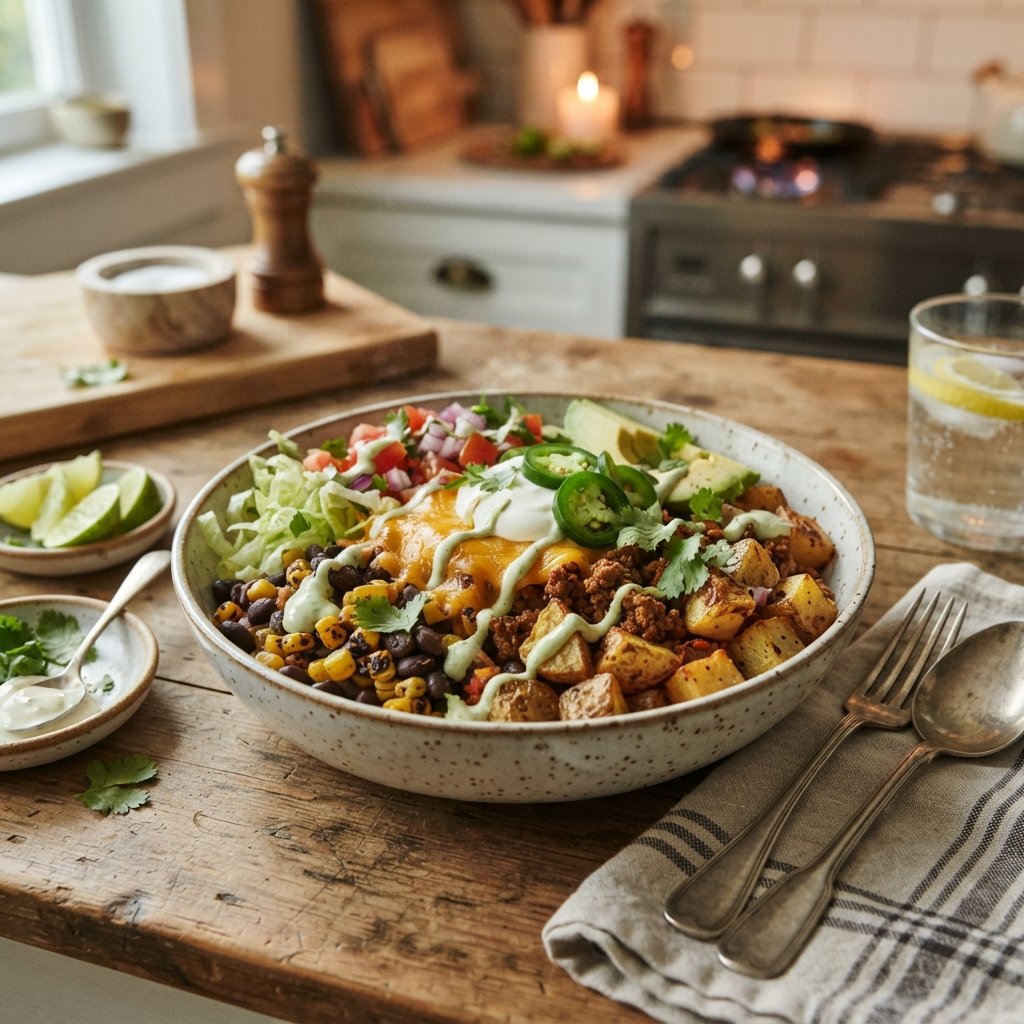
Welcome to the ultimate fusion of comfort and flavor with our Loaded Potato Taco Bowl Recipe. In the busy rhythm of modern life, finding a meal that satisfies the soul without demanding hours in the kitchen is a true victory. This dish represents the perfect marriage between hearty, starchy comfort food and the vibrant, zesty profiles of Mexican-inspired cuisine. Whether you are feeding a hungry family after a long day of work and school, hosting a casual game night gathering, or simply treating yourself to a nourishing meal, this bowl delivers on every front. The concept is simple yet profoundly satisfying: a base of crispy, seasoned potatoes topped with savory protein, melted cheese, fresh vegetables, and cooling creams. It is a customizable canvas that invites creativity while remaining grounded in the essentials of good home cooking. This recipe is designed to be accessible for beginners yet detailed enough for seasoned cooks looking to refine their weeknight dinner rotation. By combining the textural crunch of roasted potatoes with the soft warmth of beans and meat, you create a symphony of flavors in every bite. Let us dive into how you can create this easy weeknight comfort food masterpiece in your own kitchen.
The History
The origins of the taco bowl can be traced back to the evolution of Tex-Mex cuisine in the United States during the late 20th century. While traditional Mexican tacos are served on corn or flour tortillas, the concept of serving taco ingredients in a bowl gained significant popularity in the 1990s, largely propelled by fast-food chains seeking to offer low-carb or gluten-free alternatives to the standard hard shell. This innovation allowed diners to enjoy the flavors of a taco without the structural limitations of a shell that might crack or leak. Simultaneously, the loaded potato has deep roots in American comfort food history, stemming from the classic baked potato bars that became staples in steakhouses and casual dining restaurants throughout the 1970s and 1980s. The fusion of these two concepts—the loaded potato and the taco bowl—is a testament to the modern culinary trend of hybridization. As food culture became more experimental in the 2010s, chefs and home cooks began merging distinct culinary identities to create novel experiences. The Loaded Potato Taco Bowl emerged from this era of experimentation, combining the satiety of the potato with the vibrant spice profiles of cumin, chili powder, and cilantro. It represents a democratic style of eating where boundaries are blurred, and the focus is placed squarely on flavor, texture, and communal enjoyment. Today, it stands as a symbol of adaptable comfort food that respects tradition while embracing innovation.
Ingredients Breakdown
Understanding the components of this dish is key to mastering its flavor profile. Each ingredient plays a specific role in creating the balance of salt, fat, acid, and heat that defines a great taco bowl.
The Potato Base
The foundation of this recipe is the potato. Russet potatoes are generally preferred for their high starch content, which yields a fluffy interior and a crispy exterior when roasted. However, Yukon Gold potatoes can be used for a creamier texture and a buttery flavor that requires less added fat. The key to great potatoes is the cut; uniform cubes ensure even cooking, while a generous coating of oil and seasoning promotes caramelization. We use a blend of olive oil and spices to transform the humble potato into a flavorful vessel that can stand up to the bold toppings.
The Protein
Traditionally, ground beef is the standard for taco bowls, offering a rich, savory depth that pairs well with earthy spices. However, the beauty of this recipe lies in its flexibility. Ground turkey provides a leaner option without sacrificing texture, while shredded chicken offers a lighter alternative. For plant-based eaters, lentils, black beans, or textured vegetable protein can absorb the taco seasoning beautifully. The protein is browned and seasoned with a classic blend of chili powder, cumin, paprika, and garlic to ensure it sings with authentic taco flavor.
The Cheese and Dairy
Cheese is the binding agent that brings the bowl together. A blend of sharp cheddar and Monterey Jack offers both tang and excellent melting properties. The fat in the cheese coats the tongue, carrying the spices and smoothing out the heat from the peppers. Sour cream or Mexican crema adds a necessary cooling element, cutting through the richness of the meat and the starch of the potatoes. This dairy component is crucial for balancing the overall mouthfeel of the dish.
The Fresh Toppings
To prevent the bowl from feeling too heavy, fresh elements are essential. Diced tomatoes provide acidity and juice, while red onions add a sharp crunch. Cilantro introduces a herbaceous brightness that lifts the heavier flavors. Avocado or guacamole contributes healthy fats and a luxurious creaminess that complements the sour cream. These toppings are not merely garnishes; they are integral to the nutritional balance and textural variety of the meal.
Step-by-Step Recipe
Creating this dish is a linear process that rewards attention to detail at each stage. Follow this narrative guide to ensure success.
Phase One: Preparation
Begin by preheating your oven to a high temperature, around 425 degrees Fahrenheit. This high heat is necessary to roast the potatoes rather than steam them. While the oven heats, wash and scrub your potatoes thoroughly. There is no need to peel them if you enjoy the skin, as it adds fiber and texture, but peeling is optional based on preference. Cut the potatoes into half-inch cubes. Uniformity is vital here; if some pieces are larger than others, they will cook at different rates, leading to some burnt pieces and some undercooked ones. Toss the cubes in a large bowl with olive oil, salt, pepper, and a portion of your taco seasoning. Spread them out on a baking sheet in a single layer, ensuring they are not crowded, which allows air to circulate and crisp the edges.
Phase Two: The Protein
While the potatoes are roasting, move to the stovetop. Heat a large skillet over medium-high heat. Add your ground protein to the pan, breaking it up with a wooden spoon as it browns. You want to achieve a nice Maillard reaction, where the meat develops a deep brown color rather than turning gray. Once the meat is fully cooked and no pink remains, drain any excess grease if necessary. Stir in the remaining taco seasoning and a splash of water to help the spices bloom and adhere to the meat. Let this simmer for a few minutes until the liquid reduces and the mixture is fragrant.
Phase Three: Assembly
Once the potatoes are golden brown and fork-tender, remove them from the oven. Now comes the fun part: building the bowl. Grab your serving dishes and start with a generous base of the roasted potatoes. Top this with the seasoned protein mixture. Immediately sprinkle the shredded cheese over the hot meat and potatoes so that it begins to melt from the residual heat. If you prefer fully melted cheese, you can place the assembled bowls under the broiler for one minute, watching closely to prevent burning.
Phase Four: The Finish
Remove the bowls from the heat and add your cold toppings. This contrast in temperature is delightful. Add dollops of sour cream, scattered diced tomatoes, onions, cilantro, and slices of avocado. Serve immediately while the base is still warm and the cheese is gooey. This ensures the best textural experience for you and your guests.
Tips
- Crispy Potatoes Secret: To ensure maximum crispiness, soak the cut potatoes in cold water for 30 minutes before roasting to remove excess surface starch. Dry them thoroughly before adding oil.
- Seasoning Control: Taste your meat mixture before assembling. If it feels flat, add a squeeze of lime juice or a pinch more salt to wake up the flavors.
- Preventing Sogginess: Do not add the sour cream or salsa until just before eating. If you plan to meal prep, keep the wet toppings in separate containers to maintain the integrity of the crispy potatoes.
- Cheese Melting: Shred your own cheese from a block rather than using pre-shredded bags. Pre-shredded cheese contains anti-caking agents that can prevent smooth melting.
- Batch Cooking: This recipe scales easily. You can roast multiple sheets of potatoes and cook a large batch of meat to store in the refrigerator for quick assemblies throughout the week.
- Spice Level: If you prefer more heat, add diced jalapeños to the meat while cooking or sprinkle cayenne pepper over the potatoes before roasting.
- Utensil Choice: Use a rimmed baking sheet for the potatoes to prevent oil from spilling into your oven, and use a deep skillet for the meat to avoid splatter.
Variations and Customizations
This recipe is a template that invites personalization based on dietary needs and flavor preferences.
Vegetarian and Vegan Options
To make this dish vegetarian, simply omit the meat and increase the portion of black beans or pinto beans. For a vegan version, substitute the cheese with a high-quality plant-based alternative that melts well, and use coconut cream or a cashew-based sour cream substitute. The potatoes and vegetables are naturally vegan, making the base easy to adapt.
Low-Carb and Keto Adaptations
Potatoes are high in carbohydrates, so for a keto-friendly version, replace the potato base with cauliflower florets or diced turnips. These vegetables roast similarly to potatoes but have a significantly lower glycemic index. Ensure your taco seasoning does not contain hidden sugars to maintain ketosis.
Spicy Southwest Style
For those who love heat, incorporate chipotle peppers in adobo sauce into the meat mixture. You can also add corn kernels to the bowl for a sweet contrast to the spice, and top with a spicy salsa verde instead of mild tomato salsa.
Breakfast Taco Bowl
Transform this into a morning meal by swapping the ground beef for scrambled eggs and breakfast sausage. Keep the potatoes and cheese, but add a dash of hot sauce and chives for a breakfast-specific flavor profile.
Seafood Twist
Shrimp or white fish can be used instead of ground meat. Sauté the seafood quickly with lime and cilantro for a lighter, coastal version of the taco bowl that pairs beautifully with the hearty potatoes.
Health Considerations and Nutritional Value
While this dish is comfort food, it can be part of a balanced diet when mindful portions and ingredient choices are made. Potatoes are often misunderstood; they are actually rich in potassium, containing more than a banana, and provide significant Vitamin C and fiber, especially when the skin is left on. They are a source of complex carbohydrates that provide sustained energy. The protein component offers essential amino acids necessary for muscle repair and satiety. By using lean ground turkey or plant-based beans, you can reduce the saturated fat content significantly. The vegetables added as toppings contribute antioxidants and additional fiber, aiding in digestion. However, attention should be paid to the sodium content in packaged taco seasoning and the calorie density of cheese and sour cream. Using Greek yogurt instead of sour cream can increase protein intake while reducing fat. Moderation is key; this bowl is nutrient-dense, so a single serving is usually sufficient to meet mealtime energy requirements without overconsumption. It is a wholesome meal that fuels the body while satisfying cravings.
Ingredients
- 4 large Russet potatoes, washed and cubed
- 2 tablespoons olive oil
- 1 pound ground beef or turkey (or 2 cans black beans for vegetarian)
- 1 packet taco seasoning (or 2 tablespoons homemade blend)
- 1/2 cup water
- 1 cup shredded cheddar and Monterey Jack cheese blend
- 1/2 cup sour cream or Greek yogurt
- 1 cup diced tomatoes
- 1/4 cup diced red onion
- 1/4 cup fresh cilantro, chopped
- 1 avocado, sliced
- Salt and black pepper to taste
- Optional: Jalapeños, corn, lime wedges
Directions
- Preheat your oven to 425°F (220°C) and line a baking sheet with parchment paper.
- Toss the cubed potatoes with olive oil, salt, pepper, and half of the taco seasoning. Spread evenly on the baking sheet.
- Roast the potatoes for 25-30 minutes, flipping halfway through, until golden brown and tender.
- While potatoes roast, brown the ground meat in a large skillet over medium-high heat, breaking it into crumbles.
- Drain excess fat, add the remaining taco seasoning and water, and simmer for 5 minutes until thickened.
- Divide the roasted potatoes among serving bowls and top with the seasoned meat mixture.
- Sprinkle shredded cheese over the hot ingredients and broil for 1-2 minutes if desired to melt.
- Top with sour cream, diced tomatoes, onions, cilantro, and avocado slices.
- Serve immediately with lime wedges on the side.
FAQ
Can I make this recipe in advance?
Yes, you can roast the potatoes and cook the meat up to three days in advance. Store them in separate airtight containers in the refrigerator. Reheat in the oven or microwave before adding fresh toppings.
How do I store leftovers?
Leftovers should be stored in the refrigerator without the fresh toppings like lettuce or avocado. They will stay fresh for up to four days. Reheat thoroughly before adding cold garnishes.
Can I freeze this meal?
Yes, the potatoes and meat freeze well for up to three months. However, dairy products like sour cream and cheese may separate upon thawing, so it is best to add those fresh after reheating.
What is the best way to reheat the potatoes?
To maintain crispiness, reheat the potatoes in an oven or air fryer at 350°F for 10 minutes. Microwaving them may result in a softer, less crispy texture.
Is this recipe gluten-free?
Yes, naturally gluten-free ingredients are used. However, always check the label on your taco seasoning packet, as some brands may contain wheat-based thickeners or additives.
Summary
This Loaded Potato Taco Bowl combines crispy seasoned potatoes and savory spiced meat for a perfect weeknight meal.
Customize with fresh toppings and cheese for a comforting, flavorful dish that pleases every eater.