Introduction
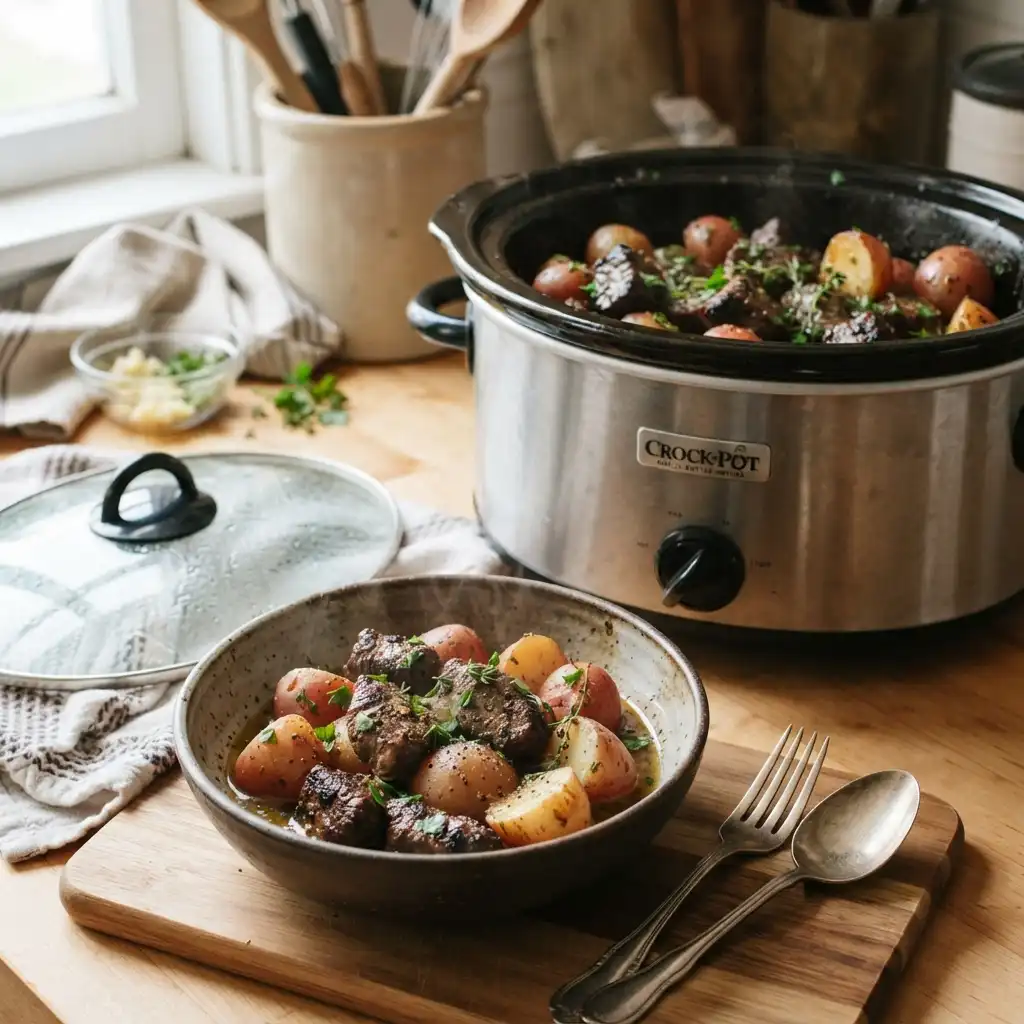
Welcome to the ultimate guide for creating one of the most comforting, aromatic, and satisfying meals you can prepare in your kitchen: Slow Cooker Garlic Butter Beef Bites and Potatoes. This dish represents the pinnacle of convenience cooking without sacrificing the depth of flavor that usually requires hours of active stove-top monitoring. Imagine coming home after a long day of work to a house filled with the savory scent of seared beef, roasted garlic, and rich butter, all melding together into a cohesive gravy that coats tender morsels of meat and fluffy potatoes. This recipe is designed for the modern home cook who values quality time with family over time spent chopping and stirring. It is a meal that bridges the gap between rustic farmhouse cooking and contemporary busy lifestyles, offering a gourmet experience with minimal effort. Whether you are hosting a dinner party, preparing a weekly meal prep solution, or simply craving a hearty dinner that warms the soul, this slow cooker masterpiece delivers on every front. The combination of succulent beef bites and starch-absorbing potatoes creates a textural harmony that is hard to resist, while the garlic butter sauce adds a layer of luxurious richness that elevates the dish from simple sustenance to culinary delight.
The History
To truly appreciate this dish, one must understand the culinary evolution that brought us here. The concept of slow cooking meat with root vegetables dates back centuries, originating from methods like the French pot-au-feu or the Irish stew, where tough cuts of meat were simmered over low heat for extended periods to break down connective tissue. However, the specific appliance we know as the slow cooker has a more recent history. It was invented by Irving Naxon in the 1970s, originally marketed as the “Naxon Beanery,” before being purchased by Rival Industries and rebranded as the Crock-Pot. This invention revolutionized home cooking by allowing safe, unattended simmering. The addition of garlic butter as a primary flavor profile draws heavily from French and Italian traditions, where butter and garlic are used to create rich sauces for seafood and meats, such as in Scampi or Steak Au Poivre variations. The fusion of these elements—American slow-cooking technology, European flavor profiles, and the universal comfort of beef and potatoes—creates a modern classic. The “beef bites” concept specifically evolved from stewing traditions, where cutting meat into smaller cubes increases the surface area for browning and sauce adherence, ensuring every bite is packed with flavor rather than having the sauce pool at the bottom of the pot.
Ingredients Breakdown
Understanding the role of each component in this recipe is crucial for mastering the final outcome. We do not simply throw items into a pot; we select ingredients based on their chemical properties and how they interact under low-heat conditions.
The Beef
Beef Chuck Roast: This is the preferred cut for slow cooking. Unlike lean cuts like sirloin which can dry out, chuck roast is rich in collagen and intramuscular fat. During the long cooking process, the collagen hydrolyzes into gelatin, which provides that melt-in-your-mouth texture and naturally thickens the sauce. Cutting them into “bites” ensures uniform cooking and maximum sauce coverage.
The Potatoes
Yukon Gold or Baby Potatoes: Starch content matters. Yukon Golds are waxy enough to hold their shape but creamy enough to absorb the garlic butter. Russets might disintegrate over a long cook time, while red potatoes offer a firmer skin. Baby potatoes are ideal because their skin is thin and edible, reducing prep time and adding nutritional value.
The Aromatics and Fat
Unsalted Butter: Butter acts as the carrier for the fat-soluble flavor compounds in the garlic. Using unsalted allows you to control the sodium level of the dish precisely. The milk solids in the butter also contribute to the browning and richness of the sauce.
Fresh Garlic: Fresh is non-negotiable for the best flavor. Jarred garlic often contains preservatives and lacks the pungent allicin compound that develops when fresh cloves are minced. Slow cooking mellows the sharp bite of raw garlic into a sweet, savory depth.
The Liquid Base
Beef Broth: This provides the umami backbone. A low-sodium version is recommended so the reduction of the liquid doesn’t become overly salty. Some recipes incorporate Worcestershire sauce or soy sauce here to deepen the color and savory notes.
Step-by-Step Recipe
Executing this recipe requires attention to detail during the preparation phase to ensure the cooking phase goes smoothly. Follow these expanded steps for the best results.
Phase 1: Preparation and Searing
Begin by removing the beef chuck from the refrigerator and letting it sit at room temperature for about 20 minutes. This reduces the thermal shock when it hits the pan. Pat the beef bites completely dry with paper towels; moisture is the enemy of browning. Season generously with salt and black pepper. Heat a heavy skillet over high heat with a splash of oil. Sear the beef bites in batches. Do not overcrowd the pan, or the meat will steam instead of brown. You are looking for a deep mahogany crust, which indicates the Maillard reaction is occurring, creating complex flavor compounds. Transfer the seared beef to the slow cooker.
Phase 2: Vegetable Prep and Layering
While the beef sears, scrub the potatoes thoroughly. If using larger potatoes, cut them into 1-inch cubes to match the size of the beef bites. Uniformity is key to ensuring everything finishes cooking at the same time. Place the potatoes in the bottom of the slow cooker. They act as a natural rack for the beef, preventing the meat from sitting directly on the heating element and potentially burning. Scatter minced garlic over the potatoes and beef.
Phase 3: Sauce Creation and Cooking
In a separate bowl, whisk together the melted butter, beef broth, Worcestershire sauce, and dried herbs (such as thyme or rosemary). Pour this mixture evenly over the contents of the slow cooker. Ensure the liquid covers at least half of the ingredients. Cover the slow cooker with the lid. Cook on LOW for 7-8 hours or on HIGH for 4-5 hours. Avoid lifting the lid during cooking, as this releases heat and extends the cooking time significantly.
Phase 4: Thickening and Finishing
Once the beef is tender, you may find the sauce is too thin. To remedy this, mix cornstarch with cold water to create a slurry. Stir this into the slow cooker, replace the lid, and cook on HIGH for an additional 20-30 minutes until the sauce reaches a gravy-like consistency. Taste and adjust seasoning with fresh parsley before serving.
Tips
To elevate your cooking game and avoid common pitfalls, consider these professional tips tailored for this specific dish.
- Do Not Skip the Sear: While slow cookers are designed for convenience, searing the beef beforehand adds a layer of flavor complexity that cannot be achieved by boiling the meat in broth. It locks in juices and adds texture.
- Uniform Cutting: Spend extra time cutting your beef and potatoes into similar sizes. If the potatoes are too large, they will remain hard while the beef turns to mush. If the beef is too small, it may overcook.
- Lid Discipline: Every time you lift the lid of a slow cooker, you lose about 20 minutes of cooking heat. Trust the process and keep the lid closed until the thickening stage.
- Slow Cooker Variance: All slow cookers run at different temperatures. If your model runs hot, check the meat an hour early. If it runs cool, you may need to extend the time. The beef is done when it shreds easily with a fork but still holds its cube shape.
- Garlic Timing: If you prefer a sharper garlic kick, add half the garlic at the beginning and the other half during the last 30 minutes of cooking.
Variations and Customizations
This recipe is a canvas for your culinary creativity. Here are several ways to adapt the dish to different palates and dietary requirements.
Spicy Kick
For those who enjoy heat, add red pepper flakes, a diced jalapeño, or a dash of cayenne pepper to the broth mixture. The fat in the butter will help distribute the capsaicin evenly throughout the dish.
Creamy Version
To create a richer, stroganoff-like consistency, stir in a half-cup of sour cream or heavy cream during the last 15 minutes of cooking. Be careful not to boil vigorously after adding dairy to prevent curdling.
Low-Carb Adaptation
Potatoes are high in carbohydrates. To make this keto-friendly, substitute the potatoes with large chunks of cauliflower or radishes. These vegetables mimic the texture of potatoes when slow-cooked but contain a fraction of the carbs.
Vegetable Add-ins
Carrots, celery, and onions make excellent additions. Add carrots at the beginning as they take longer to cook. Add peas or green beans in the last 30 minutes to retain their bright color and crunch.
Wine Infusion
Replace half of the beef broth with a dry red wine, such as Cabernet Sauvignon or Merlot. The acidity in the wine helps tenderize the meat further and adds a sophisticated depth to the garlic butter sauce.
Health Considerations and Nutritional Value
While this is a comfort food dish, understanding its nutritional profile helps you fit it into a balanced diet.
Protein Power
Beef is an excellent source of high-quality protein, essential for muscle repair and growth. It also provides heme iron, which is more easily absorbed by the body than plant-based iron, making this dish beneficial for those with iron deficiencies.
Carbohydrate Content
Potatoes are often misunderstood. They are rich in potassium, containing more than a banana, and provide Vitamin C and B6. However, they are starch-dense. Portion control is key if you are monitoring carbohydrate intake. Leaving the skins on increases the fiber content, which aids in digestion and slows sugar absorption.
Fat Profile
The dish relies on butter and beef fat. While saturated fat should be consumed in moderation, it is necessary for satiety and hormone regulation. Using grass-fed beef can increase the Omega-3 fatty acid content and conjugated linoleic acid (CLA) levels compared to grain-fed beef.
Sodium Management
Processed broths and salts can lead to high sodium levels. To make this heart-healthier, use low-sodium beef broth and rely on herbs like thyme, rosemary, and garlic powder to enhance flavor without adding salt. This allows you to enjoy the dish without spiking blood pressure.
Ingredients
- Beef Chuck Roast: 2 to 3 pounds, trimmed of excess hard fat and cut into 1-inch cubes
- Potatoes: 1.5 pounds of Yukon Gold or baby potatoes, washed and halved or quartered
- Unsalted Butter: 4 tablespoons, melted
- Fresh Garlic: 6 to 8 cloves, minced finely
- Beef Broth: 1 cup (low sodium preferred)
- Worcestershire Sauce: 1 tablespoon
- Soy Sauce: 1 tablespoon (optional, for color and umami)
- Dried Thyme: 1 teaspoon
- Dried Rosemary: 1 teaspoon, crushed
- Salt and Black Pepper: To taste for seasoning the beef
- Cornstarch: 2 tablespoons (mixed with 2 tablespoons cold water for slurry)
- Fresh Parsley: Chopped, for garnish
- Olive Oil: 1 tablespoon (for searing)
Directions
- Prep the Beef: Pat the beef cubes dry with paper towels. Season liberally on all sides with salt and freshly cracked black pepper.
- Sear the Meat: Heat olive oil in a large skillet over medium-high heat. Working in batches to avoid crowding, sear the beef bites until browned on all sides, about 2-3 minutes per batch. Transfer seared beef to the slow cooker insert.
- Prepare Potatoes: Place the cleaned and cut potatoes into the slow cooker, arranging them around and underneath the beef.
- Make the Sauce: In a medium bowl, whisk together the melted butter, minced garlic, beef broth, Worcestershire sauce, soy sauce, thyme, and rosemary.
- Combine: Pour the sauce mixture evenly over the beef and potatoes in the slow cooker.
- Cook: Cover and cook on LOW setting for 7-8 hours or on HIGH setting for 4-5 hours. The beef should be tender and potatoes fork-tender.
- Thicken Sauce: In a small cup, mix cornstarch and cold water until smooth. Stir the slurry into the slow cooker. Cover and cook on HIGH for an additional 20-30 minutes until the sauce thickens.
- Serve: Garnish with fresh chopped parsley and serve warm directly from the slow cooker.
FAQ
Can I use frozen beef for this recipe?
It is not recommended to use frozen beef in a slow cooker. Frozen meat raises the temperature of the pot too slowly, potentially keeping the food in the bacterial “danger zone” for too long. Always thaw beef in the refrigerator before cooking.
Why is my beef tough after cooking?
Tough beef usually means it hasn’t cooked long enough for the collagen to break down. Try cooking for an additional hour. Conversely, if it is mushy, it has overcooked. Chuck roast is forgiving, but timing varies by appliance.
Can I freeze the leftovers?
Yes, this dish freezes well. Allow it to cool completely, then store in airtight containers for up to 3 months. Note that potatoes may change texture slightly upon reheating, becoming softer.
How do I store leftovers in the fridge?
Store leftovers in an airtight container in the refrigerator for up to 4 days. Reheat gently on the stove or in the microwave, adding a splash of broth if the sauce has thickened too much.
Can I make this without dairy?
Yes, you can substitute the butter with olive oil or a dairy-free butter alternative. The flavor will be slightly different but still delicious.
What size slow cooker should I use?
A 6-quart slow cooker is ideal for this recipe. It provides enough surface area for the searing step (if using a stovetop-safe insert) and enough depth for the ingredients without overflowing.
Summary
Tender beef bites and creamy potatoes slow-cooked in a rich garlic butter sauce for an effortless, flavorful meal.
Perfect for busy weekdays, this dish combines convenience with gourmet taste using simple, wholesome ingredients.