Introduction
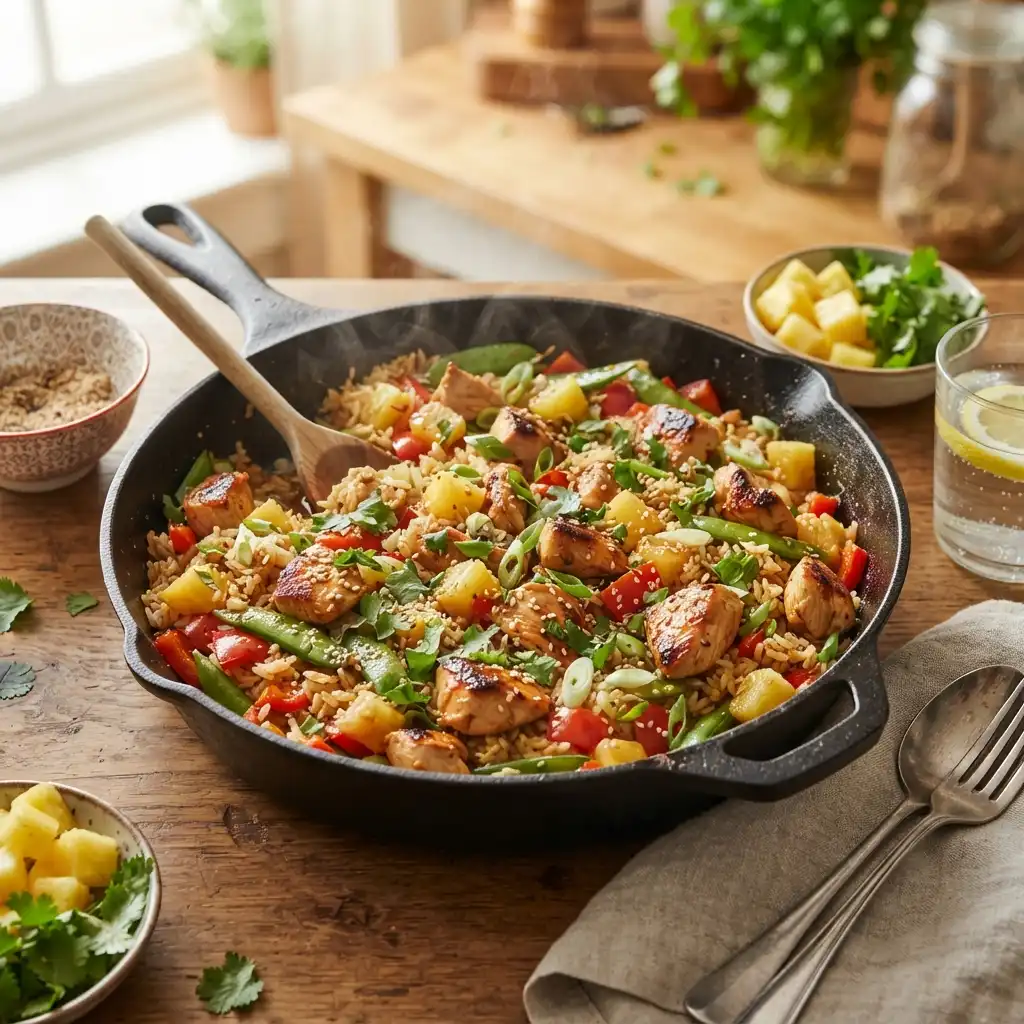
There is a specific kind of magic that happens in the kitchen when you can create a restaurant-quality meal without dirtying half your cupboard. Enter the Pineapple Chicken and Rice skillet—a culinary triumph that balances the bright, tropical acidity of fresh pineapple with the deep, umami-rich savory notes of soy sauce and ginger. This isn’t just a dinner; it is a weeknight savior, a crowd-pleaser, and a testament to the fact that “effortless” does not mean “lacking in flavor.”
Imagine coming home after a long day, tossing a few ingredients into a single large pan, and watching as the rice absorbs the golden juices of the chicken and the caramelized sugars of the fruit. The result is a harmonious blend of textures: tender bites of chicken, fluffy grains of rice, and juicy bursts of pineapple that cut through the richness. Whether you are a busy parent, a college student looking to upgrade your diet, or a home cook seeking comfort food with a twist, this one-pan wonder delivers satisfaction in every forkful. It is sweet, it is savory, and quite simply, it is the easiest gourmet meal you will ever make.
The History
To understand the magic of Pineapple Chicken, we must look back at the fascinating intersection of culinary traditions. The concept of combining fruit with meat is ancient, dating back to Persian and Middle Eastern cuisines where dried fruits like apricots and raisins were stewed with lamb. However, the specific marriage of pineapple and poultry gained significant traction in the 20th century, heavily influenced by the globalization of trade and the rise of “American Chinese” cuisine.
Pineapples, native to South America, were introduced to Asia by Portuguese and Spanish explorers in the 16th and 17th centuries. They thrived in the tropical climates of Southeast Asia and Hawaii. In Hawaii, the plantation culture of the early 1900s cemented the fruit as a staple, leading to the creation of dishes that blended local ingredients with imported Asian flavors. The famous “Sweet and Sour” profile, a cornerstone of Cantonese cooking, found a perfect partner in the local pineapple.
As the decades progressed, the “one-pan” or “skillet” meal became a symbol of mid-century American efficiency. The fusion of these elements—the Asian sweet-and-sour flavor profile, the tropical availability of pineapple, and the American desire for quick, cleanup-free dinners—gave birth to the modern Pineapple Chicken and Rice dish we know today. It represents a global history on a plate, evolving from ancient spice trades to modern convenience cooking.
Ingredients Breakdown
The beauty of this dish lies in its simplicity, but the quality of your ingredients dictates the final outcome. Let’s dissect the key players in this flavor symphony:
- The Chicken: We recommend boneless, skinless chicken thighs for this recipe. While breasts are leaner, thighs contain more fat and connective tissue, which means they stay incredibly juicy even when simmered in a sauce. They are more forgiving and offer a richer mouthfeel that pairs beautifully with the fruit.
- The Pineapple: This is the star. Fresh pineapple offers a bright, enzymatic acidity that tenderizes the meat slightly and provides a crisp texture. However, canned pineapple chunks (in juice, not heavy syrup) are a fantastic alternative. They are softer, sweeter, and release more juice into the rice, creating a more intense tropical flavor profile.
- The Rice: Long-grain white rice, such as Jasmine or Basmati, is ideal. These varieties remain separate and fluffy when cooked, absorbing the sauce without turning into a gummy mush. Jasmine rice, in particular, has a subtle floral aroma that complements the pineapple.
- The Aromatics: Fresh garlic and ginger are non-negotiable. Garlic provides the pungent, savory base, while ginger adds a spicy, warming heat that cuts through the sweetness of the fruit. Using fresh rather than powdered versions ensures a vibrant, zesty kick.
- The Sauce: The liquid gold of this dish is a mixture of soy sauce (for salt and umami), brown sugar (for caramelization and depth), and rice vinegar (for acidity). A touch of sesame oil at the end adds a nutty, toasted aroma that signals “dinner is ready.”
Step-by-Step Recipe
Cooking this dish is a rhythmic process of layering flavors. Here is how to achieve perfection:
- Preparation is Key: Before you turn on the heat, chop your chicken into bite-sized cubes. Dice your onions, mince your garlic and ginger, and cut your bell peppers. Measure out your liquids. Once the pan is hot, things move fast, so having everything ready (mise en place) is crucial.
- The Sear: Heat oil in a large, deep skillet or wok over medium-high heat. Add the chicken in a single layer. Do not overcrowd the pan, or the chicken will steam instead of brown. Let it sit undisturbed for 3-4 minutes to develop a golden-brown crust (the Maillard reaction). This locks in flavor. Flip and cook until mostly done, then remove the chicken to a plate.
- Sauté the Aromatics: In the same pan, add a bit more oil if needed. Toss in the onions, garlic, and ginger. Sauté for about 1-2 minutes until fragrant. Be careful not to burn the garlic, as it will turn bitter quickly.
- Toast the Rice: Add the uncooked rice to the pan. Stir it constantly for 1-2 minutes. Toasting the raw grains in the fat and aromatics before adding liquid enhances the nutty flavor of the rice and helps prevent it from becoming sticky.
- Liquids and Simmer: Pour in the chicken broth, soy sauce mixture, and pineapple juice. Scrape the bottom of the pan to release any browned bits (fond) left from the chicken—this is pure flavor. Bring to a boil, then reduce the heat to low.
- The Steam: Cover the pan tightly with a lid. This is the most important step. The steam cooks the rice evenly. Let it simmer gently for 15-18 minutes. Do not lift the lid! Releasing the steam lowers the temperature and can result in undercooked rice.
- The Finish: Once the rice is tender and the liquid is absorbed, remove the pan from the heat. Stir in the cooked chicken, fresh pineapple chunks (if using fresh), and bell peppers. The residual heat will warm the chicken and soften the peppers without overcooking them. Drizzle with sesame oil and garnish with green onions.
Tips
To elevate your Pineapple Chicken and Rice from good to extraordinary, keep these professional tips in mind:
- Rinse Your Rice: Always rinse your white rice under cold water until the water runs clear before cooking. This removes excess surface starch, ensuring your final dish is fluffy rather than clumpy.
- Don’t Skip the Rest: After the rice has finished cooking and you’ve turned off the heat, let the pan sit covered for another 5 to 10 minutes. This allows the moisture to redistribute evenly throughout the grains.
- Acid Balance: Taste your sauce before serving. If it feels too sweet, add a splash more rice vinegar or a squeeze of lime juice. If it’s too salty, a pinch of sugar or a bit more pineapple juice can balance it out.
- Pan Selection: Use a skillet with high sides or a Dutch oven. You need enough vertical space to stir the rice and liquid without it spilling over the edges.
- Fresh vs. Canned Pineapple: If using fresh pineapple, add it at the very end to maintain its crunch. If using canned, you can add it earlier to let it break down and infuse the rice with more sweetness.
Variations and Customizations
This recipe is a versatile canvas. Feel free to adapt it to your dietary needs or flavor preferences:
- Spicy Kick: Add red pepper flakes, a diced jalapeño, or a tablespoon of Sriracha or Chili Garlic Sauce to the liquid mixture for a sweet-and-spicy variation.
- Vegetable Boost: Bulk up the nutrition by adding snap peas, broccoli florets, carrots, or baby corn. Add harder vegetables (carrots) with the rice, and softer ones (snap peas) at the end.
- Protein Swap: While chicken is classic, this works beautifully with shrimp (add them in the last 5 minutes of cooking), firm tofu (pan-fry first for crispiness), or even pork tenderloin.
- Low-Carb/Keto: Swap the rice for cauliflower rice. Note that cauliflower rice cooks much faster, so add it in the last 5-7 minutes of the simmering process to avoid mushiness.
- Gluten-Free: Ensure you use Tamari or a certified Gluten-Free Soy Sauce. The rest of the ingredients are naturally gluten-free.
Health Considerations and Nutritional Value
Pineapple Chicken and Rice can be a balanced component of a healthy diet when portioned correctly.
- Protein Power: Chicken is an excellent source of lean protein, essential for muscle repair and keeping you satiated.
- Vitamin C and Enzymes: Pineapple is packed with Vitamin C, which boosts the immune system, and bromelain, an enzyme that aids in digestion and reduces inflammation.
- Carbohydrate Awareness: White rice is a high-glycemic carbohydrate. For a lower glycemic index, consider using brown rice or quinoa, though this will increase the cooking time and liquid requirements.
- Sodium Watch: Soy sauce is high in sodium. To make this heart-healthier, use low-sodium soy sauce and control the amount of added salt.
- Sugar Content: The brown sugar adds calories. You can reduce the amount by half without significantly impacting the flavor, relying on the natural sweetness of the pineapple instead.
Ingredients
- 1.5 lbs boneless, skinless chicken thighs, cut into 1-inch cubes
- 1 cup long-grain white rice (Jasmine or Basmati), rinsed
- 1 can (20 oz) pineapple chunks in juice (reserve the juice) OR 2 cups fresh pineapple chunks
- 1 red bell pepper, diced
- 1/2 medium onion, diced
- 3 cloves garlic, minced
- 1 tablespoon fresh ginger, grated
- 2 cups chicken broth
- 1/3 cup soy sauce (low sodium preferred)
- 2 tablespoons brown sugar, packed
- 1 tablespoon rice vinegar
- 1 tablespoon sesame oil
- 2 tablespoons vegetable or canola oil for cooking
- Salt and black pepper to taste
- Garnish: Sliced green onions and sesame seeds
Directions
- Season the chicken cubes generously with salt and pepper.
- In a small bowl, whisk together the chicken broth, soy sauce, brown sugar, rice vinegar, and the reserved pineapple juice (if using canned).
- Heat the vegetable oil in a large, deep skillet or wok over medium-high heat.
- Add the chicken to the pan in a single layer. Cook for 4-5 minutes, turning occasionally, until browned on all sides. The chicken does not need to be fully cooked through yet. Remove chicken from the pan and set aside on a plate.
- In the same pan, add the onion. Sauté for 2 minutes until softened. Add the garlic and ginger, cooking for another 30 seconds until fragrant.
- Add the rinsed rice to the pan. Stir constantly for 1-2 minutes to toast the grains lightly.
- Pour in the liquid mixture (broth/soy sauce mix). Scrape the bottom of the pan to release any browned bits. Bring to a boil.
- Once boiling, reduce the heat to low. Cover the pan tightly with a lid. Simmer for 15 minutes.
- After 15 minutes, check the rice. It should be tender and the liquid absorbed. If not, cover and cook for 2-3 more minutes.
- Remove the pan from the heat. Stir in the cooked chicken, bell peppers, and pineapple chunks.
- Drizzle with sesame oil and toss gently to combine. Let it sit covered for 5 minutes.
- Fluff with a fork, garnish with green onions and sesame seeds, and serve hot.
FAQ
Can I make this ahead of time?
Yes, this dish reheats well. However, rice can absorb liquid as it sits. When reheating, add a splash of water or broth to the pan to loosen it up and restore the texture.
Why is my rice crunchy?
This usually means the heat was too high, causing the liquid to evaporate before the rice cooked, or the lid wasn’t tight enough, letting steam escape. Ensure a tight seal and low heat.
Can I freeze this meal?
You can freeze it, but the texture of the pineapple and peppers may become softer upon thawing. Freeze in airtight containers for up to 3 months. Thaw in the fridge overnight before reheating.
What can I use instead of brown sugar?
Honey, maple syrup, or coconut sugar work well as substitutes. Keep in mind that honey and maple syrup are liquids, so you may need to reduce the broth slightly.
Is this dish spicy?
As written, it is not spicy; it is sweet and savory. To add heat, include red pepper flakes or a dash of hot sauce during the sauce mixing stage.
Summary
This Pineapple Chicken and Rice is a perfect one-pan meal that combines tender chicken, fluffy rice, and tropical fruit in a sweet and savory soy-ginger sauce. It is a quick, family-friendly dinner that requires minimal cleanup and delivers maximum flavor.