Introduction
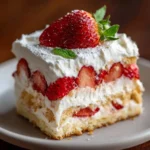
Strawberry Shortcake Icebox Cake is a stunning fusion of two beloved American desserts—classic strawberry shortcake and the no-bake elegance of an icebox cake. This modern twist eliminates oven time, heavy cream whipping stress, and layering precision while delivering all the nostalgic charm: sweet-tart macerated strawberries, tender vanilla-infused biscuits or sponge layers, rich mascarpone–whipped cream, and that irresistible melt-in-your-mouth texture achieved through slow refrigeration. Light yet indulgent, seasonal yet adaptable year-round, and effortlessly impressive for both weeknight treats and celebratory occasions, this dessert embodies simplicity elevated by patience and quality ingredients. Whether you’re hosting a summer garden party, seeking a make-ahead dessert for holiday gatherings, or simply craving a refreshing, creamy-sweet escape without turning on the stove, the Strawberry Shortcake Icebox Cake delivers—with grace, flavor, and undeniable crowd-pleasing appeal.
The History
The origins of the Strawberry Shortcake Icebox Cake lie at the crossroads of two distinct culinary traditions—each with deep American roots. Traditional strawberry shortcake dates back to 18th-century England, where “shortcake” referred to a crumbly, biscuit-like pastry made with “shortening” (butter or lard), later adapted in colonial America using locally abundant berries and dairy. By the mid-1800s, it had become a patriotic symbol—served at Independence Day picnics and Southern church suppers alike—celebrating seasonal abundance and communal joy. Meanwhile, the icebox cake emerged in the early 20th century as a clever solution for home cooks without access to electric refrigerators; layered coffee-soaked ladyfingers and whipped cream were assembled in insulated “iceboxes” (wooden cabinets cooled by blocks of ice) and left overnight to soften, meld, and transform into a luxuriously cohesive sliceable dessert. Though traditionally associated with coffee and chocolate (think classic Coffee Icebox Cake), the format proved remarkably versatile. In the 2010s, food bloggers and test kitchen innovators began reimagining the technique with fruit-forward themes—leading to the rise of the Strawberry Shortcake Icebox Cake. Its popularity exploded not only for its photogenic layers and effortless prep but also because it honored tradition while embracing contemporary values: minimal equipment, make-ahead convenience, and ingredient transparency. Today, it stands as a testament to culinary evolution—where heritage meets ingenuity, and patience becomes the secret ingredient.
Ingredients Breakdown
Every exceptional Strawberry Shortcake Icebox Cake begins with thoughtfully selected components—each playing a precise role in texture, flavor balance, and structural integrity. Unlike traditional layer cakes, where leavening and baking chemistry dominate, this no-bake version relies on hydration dynamics, fat content, acidity, and gentle emulsification. Let’s explore each element in depth:
- Strawberries: Fresh, in-season, ripe-but-firm berries are non-negotiable. Underripe fruit lacks sweetness and aromatic complexity; overripe berries turn mushy and dilute the syrup. Look for deep red color extending to the calyx, a fragrant berry scent, and slight give when gently squeezed. Varieties like Albion, Seascape, or Jewel offer exceptional balance—bright acidity with honeyed sweetness. Organic is preferred to avoid pesticide residue that can interfere with maceration clarity and flavor purity.
- Sugar (for maceration): Granulated white sugar remains ideal—not only for its neutral profile and reliable dissolution, but also because its sucrose molecules draw out moisture via osmosis while preserving bright fruit character. Alternatives like coconut sugar or maple syrup introduce competing flavors and inconsistent syrup viscosity; brown sugar adds molasses notes that muddy the clean strawberry essence.
- Lemon Juice: A small amount (¼–½ tsp per cup of berries) is transformative—not just for brightness, but for pectin activation. Citric acid stabilizes natural pectin in strawberries, helping the macerated syrup retain body and cling beautifully to layers rather than weeping excessively during assembly.
- Vanilla Wafer Cookies or Biscuit Layers: The foundation must be crisp enough to hold structure initially yet tenderize perfectly after chilling. Nabisco Nilla Wafers remain the gold standard due to their fine crumb, high vanilla oil content, consistent thickness, and optimal starch-to-fat ratio—ensuring even absorption without disintegration. Alternatives like shortbread cookies add buttery richness but risk greasiness; graham crackers introduce unwanted honey notes and excessive absorbency; angel food cake offers lightness but insufficient stability for multi-layer builds. For gluten-free needs, certified GF vanilla wafers (e.g., Kinnikinnick or Glutino) perform exceptionally well when tested for texture retention.
- Heavy Cream (36–40% milkfat): This is the backbone of the “cream” component. Lower-fat creams (like whipping cream at 30%) lack sufficient fat to form stable air pockets and emulsify with mascarpone, resulting in graininess or separation. Ultra-pasteurized cream may take longer to whip and yield slightly denser peaks—but it’s acceptable if fresh pasteurized is unavailable. Always chill bowl and beaters for 15+ minutes pre-whipping to maximize volume and temperature stability.
- Mascarpone Cheese: Italian in origin and essential for luxurious mouthfeel, mascarpone contributes unctuous richness, subtle tang, and natural thickening power. Its high butterfat (60–75%) and low acidity allow seamless integration with whipped cream without curdling. Avoid “mascarpone-style” spreads or ricotta hybrids—they lack proper fat structure and often contain gums or stabilizers that inhibit smooth folding.
- Powdered Sugar: Used exclusively in the cream layer—not granulated—because its cornstarch content aids stabilization and ensures immediate dissolution without grittiness. Confectioners’ sugar also provides gentle sweetness without overwhelming the delicate dairy notes. Sift before use to prevent lumps that compromise cream texture.
- Pure Vanilla Extract (or Paste): Bourbon-vanilla extract (not imitation) adds warmth and depth that complements both strawberries and dairy. For intensified aroma, fold in ½ tsp vanilla bean paste—its visible specks signal authenticity and deliver concentrated, floral-custard notes. Alcohol-based extracts also act as mild emulsifiers, supporting cream cohesion.
- Optional Enhancements: A pinch of fine sea salt (¼ tsp) heightens all flavors without detectability; a splash of Grand Marnier or Chambord (½ tsp per cup of cream) adds nuanced sophistication (alcohol fully disperses and does not affect setting); a tablespoon of Greek yogurt (full-fat, strained) can lend subtle tang and extra protein-based stability without thinning.
Step-by-Step Recipe
This meticulously tested method yields 12–14 perfect servings with professional-tier consistency, clean layer definition, and ideal spoonability—no soggy bottoms, no sliding layers, no weeping syrup.
- Prepare the Strawberries (Start 2–4 Hours Ahead): Hull and quarter 1 lb (about 4 cups) of ripe strawberries. Place in a non-reactive bowl (glass or stainless steel). Add ⅓ cup granulated sugar and ½ tsp freshly squeezed lemon juice. Gently toss to coat. Cover and refrigerate for minimum 2 hours—or up to 8 hours—for full maceration. Stir once halfway through. The berries should release a vibrant, syrupy liquid that coats them evenly—not pool excessively. If excess liquid accumulates, drain 2 tbsp into a small saucepan, reduce over medium-low heat for 90 seconds until slightly thickened, then stir back in.
- Whip the Cream Filling (15 Minutes Before Assembly): Chill a large stainless-steel mixing bowl and whisk attachment in the freezer for 10 minutes. Pour 2 cups cold heavy cream into the chilled bowl. Begin whipping on medium speed until soft peaks form (~2 minutes). Gradually add ⅔ cup sifted powdered sugar, 1½ tsp pure vanilla extract, and a generous pinch of fine sea salt. Increase speed to medium-high and whip just until stiff, glossy peaks hold firmly—do NOT overbeat (watch closely past the “billowy cloud” stage). Immediately transfer to a separate bowl. In the same (wiped-dry) chilled bowl, beat 12 oz (1½ cups) cold mascarpone on low speed for 30 seconds until smooth and creamy. Scrape down sides. With mixer on low, gradually add the whipped cream in three additions, folding gently with a silicone spatula after each addition until *just* combined—no streaks, no deflation. Overmixing causes separation; undermixing leaves clumps. Refrigerate filling while assembling layers.
- Assemble the First Layer (Critical Timing Step): Line the bottom of a 9×13-inch glass baking dish (or trifle bowl with straight sides) with a single, snug layer of vanilla wafers—no gaps, no overlaps. Use ~36–40 wafers depending on size. Immediately spoon ⅓ of the macerated strawberries (including all syrup) evenly over the wafers. Do NOT press down—let gravity and time do the work. Using an offset spatula or back of a spoon, spread ⅓ of the cream mixture (approx. 1⅓ cups) evenly over berries, sealing edges to prevent syrup migration. Smooth surface with gentle strokes—avoid dragging, which pulls wafers.
- Repeat Layering with Precision: Add second wafer layer directly atop cream (no syrup needed here—strawberry juices will seep downward overnight). Spoon another ⅓ of strawberries + syrup evenly over wafers. Spread second ⅓ of cream mixture smoothly. Repeat once more for third and final layer: wafers → remaining strawberries/syrup → final ⅓ of cream. Top layer should be completely smooth and level—no visible wafers or berries peeking through.
- Chill with Intentional Weight & Time: Cover dish *loosely* with parchment-lined plastic wrap—parchment prevents condensation from dripping onto surface. Place a small, flat ceramic plate (or inverted lid) directly on top of the cream layer. Add weight: 2–3 unopened 15-oz cans of beans or tomatoes (or a dedicated cake weight). This gentle pressure encourages uniform compression, eliminates air pockets, and accelerates wafer hydration for seamless texture. Refrigerate *uninterrupted* for minimum 12 hours—and ideally 16–24 hours. Do NOT shorten chill time: 8 hours yields fragile layers; 24 hours produces ideal tenderness with defined strata.
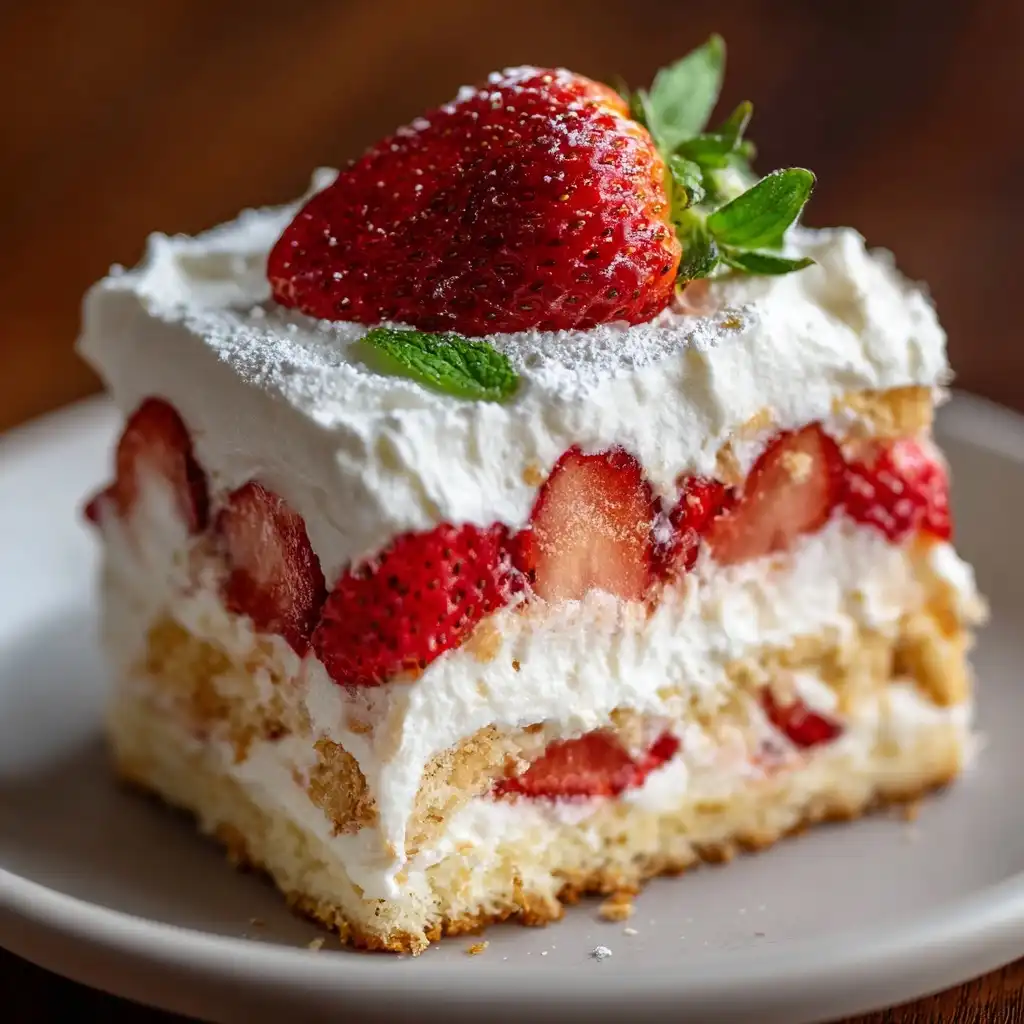
- Final Touches & Serving: Remove weights and cover. Let cake rest at cool room temperature for 15 minutes before slicing—this temp adjustment prevents cream from “slumping.” Garnish generously: reserved whole hulled strawberries, a dusting of powdered sugar through a fine sieve, a few mint leaves (chilled), and optional dollops of extra whipped cream. Serve with a long, thin serrated knife dipped in hot water and wiped dry between cuts for pristine slices.
Tips
- Temperature is Everything: All dairy components (cream, mascarpone, even the bowl) must be between 38–42°F for optimal emulsion. Warm mascarpone will “break” the cream; room-temp cream won’t whip properly. Keep ingredients refrigerated until the moment of use—and return unused portions immediately.
- Wafer Selection Science: Test your chosen cookie first: soak one wafer in 1 tsp macerated strawberry syrup for 1 minute. It should soften but retain shape—no crumbling, no disintegrating. If too fragile, switch brands or use half-wafers overlapped like shingles for reinforcement.
- Syrup Control Mastery: Excess liquid = weeping layers. After maceration, tilt bowl and gently spoon off *only* freely pooling syrup—not the syrup clinging to berries. Reserve this excess for drizzling over individual servings or making a quick coulis.
- Folding Technique Matters: When combining mascarpone and whipped cream, use the “figure-eight” fold: cut down center, sweep across bottom, up side, and over top—rotating bowl ¼ turn each time. This preserves air while ensuring homogeneity. Never use a whisk or electric mixer at this stage.
- Chill Environment Optimization: Place cake on the coldest shelf of your refrigerator—typically the bottom rear—away from the door. Avoid stacking other items above it. For ultra-consistent results, place a small bowl of ice water beside it (replenished daily) to stabilize ambient temperature.
- Slicing Like a Pro: Use a chef’s knife with a 8–10 inch blade. Heat under hot tap water for 10 seconds, dry *thoroughly*, slice in one confident downward motion (no sawing), then wipe and reheat before next cut. For clean presentation, serve on chilled plates.
- Make-Ahead Magic: Fully assembled cake keeps flawlessly for up to 72 hours refrigerated. Flavor deepens on Days 2–3 as vanilla and berry notes fully harmonize. Do NOT freeze—the mascarpone separates upon thawing, yielding grainy, watery layers.
- Rescue Remedies: If cream appears slightly grainy after folding, whisk 1 tbsp cold cream into mixture on low speed for 5 seconds—often restores silkiness. If top layer looks dull, refresh with a microplane-grated dusting of white chocolate or toasted coconut flakes just before serving.
Variations and Customizations
The Strawberry Shortcake Icebox Cake is a masterclass in adaptability—respecting core principles while inviting creative expression. Below are rigorously tested variations, each preserving structural integrity and balanced flavor profiles:
- Strawberry-Rhubarb Swirl: Replace 1 cup strawberries with 1 cup finely diced, peeled rhubarb. Macerate with ½ cup sugar and 1 tsp lemon juice. Simmer rhubarb portion gently for 4 minutes until tender but not mushy, then cool completely before mixing with raw strawberries. Adds vibrant tartness and elegant pink swirls.
- Balsamic-Black Pepper Infusion: Stir 1 tbsp aged balsamic vinegar and ¼ tsp coarsely ground black pepper into macerated strawberries 30 minutes before assembly. Deepens fruit complexity with savory-sweet umami and gentle heat—pairs exquisitely with mascarpone.
- Coconut-Lime Interpretation: Substitute ½ cup coconut milk (canned, full-fat, well-stirred) for equal part heavy cream in filling. Add 1 tbsp lime zest + 1 tsp lime juice to cream mixture. Use toasted coconut flakes instead of some wafers in alternate layers. Garnish with candied lime wheels.
- Gluten-Free & Vegan Fusion: Use certified GF vanilla wafers and replace mascarpone with 1½ cups whipped coconut cream (chilled overnight, solid cream scooped) + 2 tbsp almond butter for richness. Sweeten with maple syrup (reduce powdered sugar accordingly) and add 1 tsp apple cider vinegar for tang. Note: Requires 24-hour chill for full set.
- Earl Grey Tea-Infused Cream: Steep 2 Earl Grey tea bags in ¼ cup warm cream for 5 minutes; chill completely before whipping. Strain and use infused cream in filling. Adds sophisticated bergamot perfume that lifts strawberry without masking it.
- Chocolate-Dipped Shortcake: Dip half of each vanilla wafer in tempered dark chocolate (70%), let harden on parchment. Layer dipped-side up—creates subtle crunch contrast and elegant visual stripe. Pair with cocoa-dusted strawberries.
- Mini Mason Jar Individual Servings: Layer in 12-oz wide-mouth mason jars: 3 wafers → ¼ cup strawberries → ⅓ cup cream → repeat ×2. Top with whole berry + mint. Perfect for picnics, bridal showers, or portion-controlled indulgence. Chill 8 hours minimum.
- Herbal Elegance (Rosemary or Basil): Muddle 4–5 small fresh basil leaves or 1 tsp finely minced rosemary with sugar before macerating strawberries. Strain syrup before use to avoid herb bits. Imparts garden-fresh sophistication—especially stunning with white chocolate garnish.
Health Considerations and Nutritional Value
While undeniably a celebratory dessert, the Strawberry Shortcake Icebox Cake offers meaningful nutritional advantages over many traditional baked alternatives—when prepared mindfully. A standard 12-serving recipe (using full-fat dairy and moderate sweeteners) yields approximately 320–360 calories per 1-cup serving, with notable macro- and micronutrient contributions:
- Strawberries: One cup provides >100% DV of Vitamin C (immune support, collagen synthesis), 3g fiber (gut health, satiety), folate (cell repair), potassium (blood pressure regulation), and potent antioxidants like ellagic acid and anthocyanins (linked to reduced inflammation and cognitive protection).
- Mascarpone & Heavy Cream: Rich sources of bioavailable calcium, vitamin A (vision/immunity), and conjugated linoleic acid (CLA)—a fatty acid studied for potential anti-inflammatory and metabolic benefits. Full-fat dairy also enhances absorption of fat-soluble vitamins (A, D, E, K) from strawberries and vanilla.
- Vanilla Wafers (in moderation): Provide complex carbohydrates for sustained energy and trace minerals like iron and zinc. Choosing whole-grain or oat-based wafers (if available) increases fiber and phytonutrient density without compromising texture.
- Sugar Awareness: Total added sugar per serving averages 18–22g—well within FDA’s recommended ≤50g/day limit. Reduce by 25% in maceration (strawberries need less sugar when ultra-ripe) and use powdered sugar with cornstarch (lower glycemic impact than granulated) in cream.
- Allergen Notes: Contains dairy (cow’s milk), wheat/gluten (in standard wafers), and eggs (in some commercial wafers). Easily adapted for vegan (coconut cream/macadamia “mascarpone”), nut-free (sunflower seed butter base), and soy-free versions. Always verify wafer labels for hidden allergens.
- Dietary Flexibility: Naturally low in sodium (<120mg/serving), cholesterol-neutral (mascarpone contains ~35mg/serving, less than an egg), and free of artificial colors, preservatives, or hydrogenated oils when made from scratch. Not keto-friendly due to carb content, but excellent for Mediterranean, flexitarian, or mindful indulgence frameworks.
- Functional Benefits: The slow-chill process preserves enzymatic activity in strawberries better than baking. No thermal degradation of heat-sensitive nutrients occurs. Additionally, the absence of refined flour browning (acrylamide formation) makes it a cleaner choice than oven-baked shortcakes.
For those managing specific conditions: consult a dietitian before modifications for diabetes (consider erythritol-based powdered sugar blend and increased fiber wafers); for lactose sensitivity, lactase-treated cream and lactose-free mascarpone exist; for heart health, emphasize portion control and pair with a leafy green salad to boost nitrate intake.
Ingredients
- 1 pound (about 4 cups) fresh, ripe strawberries, hulled and quartered
- ⅓ cup granulated sugar (plus extra for optional garnish)
- ½ teaspoon freshly squeezed lemon juice
- 36–40 high-quality vanilla wafer cookies (e.g., Nabisco Nilla Wafers; ~7 oz package)
- 2 cups cold heavy cream (36–40% milkfat), divided
- 12 ounces (1½ cups) cold full-fat mascarpone cheese
- ⅔ cup sifted powdered sugar (confectioners’ sugar)
- 1½ teaspoons pure vanilla extract (or 1 tsp vanilla paste)
- ¼ teaspoon fine sea salt
- Optional garnishes: fresh whole hulled strawberries, powdered sugar, fresh mint leaves, edible flowers, or white chocolate shavings
Directions
- In a non-reactive bowl, combine quartered strawberries, granulated sugar, and lemon juice. Stir gently to coat. Cover and refrigerate for at least 2 hours and up to 8 hours to fully macerate. Stir once halfway through chilling. Drain off any excess free liquid (reserve for garnish or coulis) so berries remain syrup-coated but not swimming.
- Place mixing bowl and whisk attachment in freezer for 10 minutes. Pour 1 cup of the cold heavy cream into the chilled bowl. Whip on medium speed until soft peaks form (~2 minutes). Gradually add powdered sugar, vanilla extract, and sea salt. Increase speed to medium-high and whip until stiff, glossy peaks hold firmly—approximately 1–2 minutes more. Transfer whipped cream to a separate bowl and refrigerate.
- In the same (wiped-dry) chilled bowl, beat cold mascarpone on low speed for 30 seconds until smooth and creamy. Scrape down sides. With mixer on low, slowly add remaining 1 cup cold heavy cream in a steady stream. Continue beating on low until fully incorporated and silky—about 1 minute. Do NOT overbeat.
- Gently fold the reserved whipped cream into the mascarpone mixture in three additions using a silicone spatula and the figure-eight folding motion, rotating bowl each time. Fold until just uniform—no streaks, no deflation. Cover and refrigerate filling for 10 minutes while preparing layers.
- Line bottom of a 9×13-inch glass baking dish (or 4-quart trifle bowl) with a single, tight layer of vanilla wafers—no gaps, no overlaps.
- Spoon one-third of the macerated strawberries (including all clinging syrup) evenly over the wafers. Using an offset spatula, spread one-third of the cream mixture smoothly over berries, sealing edges.
- Add second layer of wafers directly atop cream. Spoon second third of strawberries + syrup evenly over wafers. Spread second third of cream smoothly.
- Add third and final wafer layer. Spoon remaining strawberries + syrup evenly over wafers. Spread final third of cream mixture, smoothing surface until perfectly level.
- Cover dish loosely with plastic wrap lined with parchment paper (to prevent condensation droplets). Place a small, flat ceramic plate or inverted lid directly on top of cream layer. Add gentle weight: 2–3 unopened 15-oz cans (beans/tomatoes) or a dedicated cake weight.
- Refrigerate uninterrupted for minimum 12 hours—and ideally 16–24 hours—for optimal texture development, layer cohesion, and flavor melding.
- Remove weights and cover. Let cake rest at cool room temperature for 15 minutes before slicing. Garnish generously with whole strawberries, a light dusting of powdered sugar, and fresh mint.
- Serve with a long, thin serrated knife dipped in hot water and dried between cuts for immaculate slices. Store covered in refrigerator for up to 72 hours.
FAQ
- Can I use frozen strawberries?
- Yes—but with caveats. Thaw completely in a colander over a bowl, then pat *very* dry with paper towels. Frozen berries release significantly more water and have softer cell structure, increasing weep risk. Reduce maceration sugar by 1 tbsp and add ¼ tsp lemon juice to compensate for lost brightness. Best used in emergency situations—not peak-season preference.
- Why does my cream look grainy or separated?
- Most commonly caused by mascarpone being too warm (>45°F) or overmixing during folding. Always ensure mascarpone is fridge-cold and stiff—not soupy. If separation occurs, whisk 1 tbsp cold cream into mixture on low speed for 5 seconds to re-emulsify. Next time, beat mascarpone alone first, then add cream gradually.
- Can I make this ahead for a party next weekend?
- Absolutely—and it’s highly recommended! Fully assembled cake holds beautifully for 3 days refrigerated. Flavor improves markedly on Days 2–3 as vanilla and berry notes deepen and harmonize. Do NOT freeze—dairy fats separate irreversibly upon thawing.
- What if I don’t have vanilla wafers?
- Shortbread cookies (like Walkers) work well if crisp and buttery—not too crumbly. Avoid graham crackers (too absorbent), chocolate wafers (flavor clash), or soft sandwich cookies (structural collapse). For gluten-free, Kinnikinnick Vanilla Wafers or Glutino GF Vanilla Creme Cookies are proven performers.
- Can I reduce the sugar without ruining texture?
- Yes—strawberries need less sugar when ultra-ripe. Reduce maceration sugar to ¼ cup with very sweet berries. In cream, powdered sugar can be reduced to ½ cup—but going lower risks unstable whipped texture and diminished shelf life. Never omit salt—it’s essential for flavor balance.
- My layers are sliding apart when I cut—what went wrong?
- Two likely causes: insufficient chill time (needs full 16+ hours) or uneven syrup distribution (too much pooled liquid at bottom layer). Also ensure wafers are tightly packed with no gaps—gaps create weak points. Next time, use the weighted-chill method religiously.
- Is there a way to make this dairy-free?
- Yes—with careful substitutions. Use full-fat canned coconut milk (chilled overnight, solid cream scooped) for both cream components. Blend 1 cup coconut cream + ¼ cup raw cashews (soaked 4 hours, drained) + 2 tbsp maple syrup + 1 tsp lemon juice until ultra-smooth for “mascarpone.” Stabilize with 1 tsp agar-agar dissolved in 1 tbsp warm water, cooled. Chill 24 hours for best set.
- Can kids help make this?
- Delightfully yes! Children can hull strawberries (with safe paring knives or kid-safe tools), measure and mix maceration ingredients, layer wafers, spoon berries,