Introduction
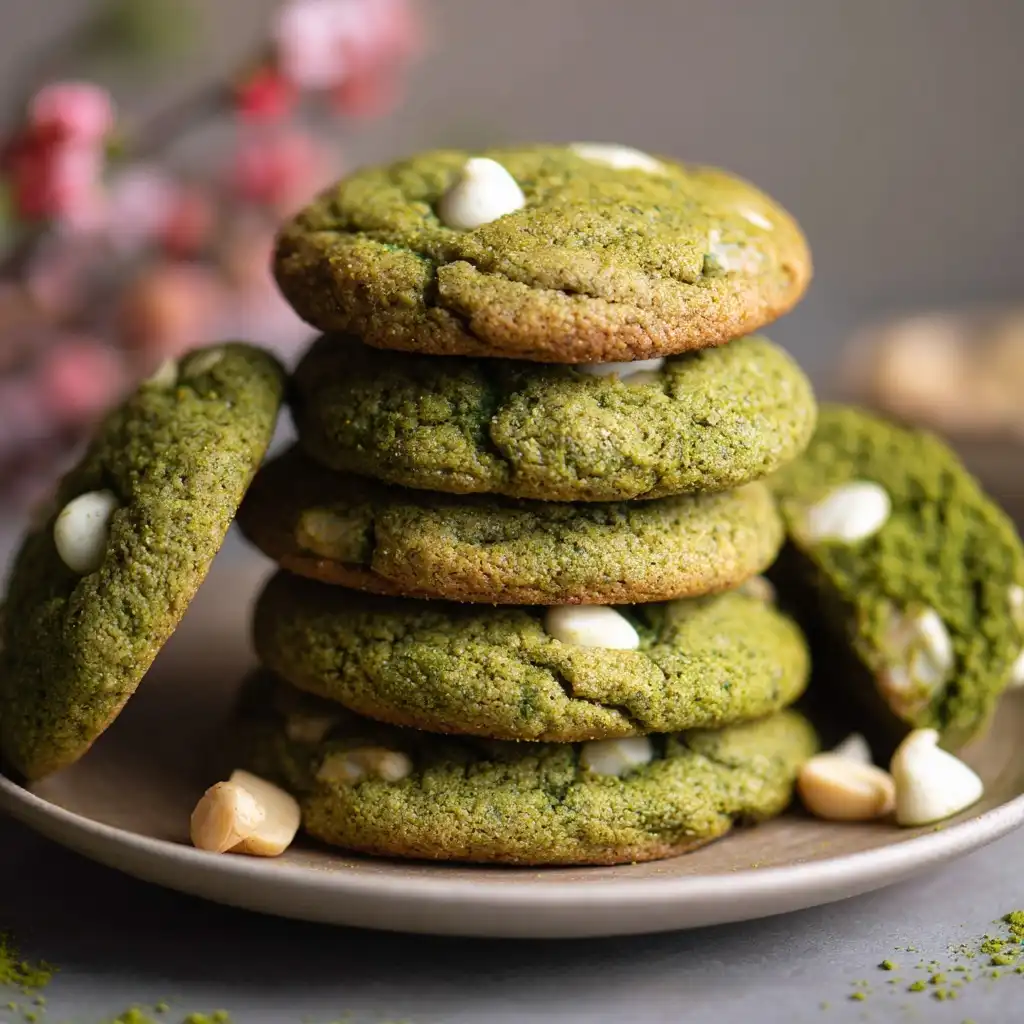
Matcha White Chocolate Cookies are a sophisticated, globally inspired twist on the classic American cookie—melding the earthy umami depth of premium Japanese matcha green tea with the creamy sweetness and velvety richness of high-quality white chocolate. These cookies strike a delicate balance between elegance and comfort: crisp at the edges, tender-chewy in the center, flecked with vibrant jade-green matcha particles and studded generously with ivory-white chocolate chunks that melt luxuriously during baking. Far more than a trendy flavor pairing, this confection reflects a growing culinary appreciation for mindful indulgence—where botanical nuance meets decadent texture, and where every bite delivers both calm clarity (courtesy of L-theanine in matcha) and joyful satisfaction. Whether served alongside a quiet morning matcha latte, offered as an artisanal treat at a high-end bakery, or gifted in hand-tied kraft boxes for special occasions, Matcha White Chocolate Cookies embody modern pastry craftsmanship rooted in tradition, quality, and sensory harmony.
The History
The origins of Matcha White Chocolate Cookies lie at the intersection of three distinct culinary timelines: the ancient Japanese tea ceremony, the 19th-century European invention of white chocolate, and the 21st-century global “matcha boom.” Matcha itself dates back to the 12th century, when Zen Buddhist monk Eisai introduced powdered green tea from China to Japan, refining its cultivation and ceremonial preparation over centuries in Uji, Kyoto—the epicenter of premium matcha production. White chocolate, though often misunderstood as “not real chocolate,” was first commercially developed by Nestlé in Switzerland in 1930 using cocoa butter, milk solids, sugar, and vanilla—offering a neutral, creamy canvas ideal for pairing with bold botanicals. The fusion of these two ingredients in baked goods gained momentum in the early 2010s, accelerated by Japanese patisseries like Toraya and François Payard, who began incorporating matcha into Western-style pastries. In North America, the trend surged post-2015, fueled by wellness influencers, third-wave cafés serving matcha lattes, and gourmet grocers stocking ceremonial-grade matcha. Early iterations were often overly sweet or lacked structural integrity—either turning bitter from overheated matcha or greasy from low-cocoa-butter white chocolate. Today’s refined recipes reflect years of iterative testing: cold-mixing techniques to preserve matcha’s chlorophyll and antioxidants, precise tempering protocols for white chocolate inclusions, and hydration-balanced doughs that prevent spreading or cracking. This cookie is thus not merely a recipe—it’s a cross-cultural artifact, honoring centuries of tea philosophy while embracing contemporary food science and global flavor curiosity.
Ingredients Breakdown
Every ingredient in this Matcha White Chocolate Cookie recipe has been selected for functional performance, flavor integrity, and nutritional synergy—not just convenience. Below is a detailed, chef-level analysis of each component:
- Unsalted Butter (1 cup / 2 sticks / 227g, room temperature): High-fat (82–84%), European-style butter is preferred for superior creaming ability and richer mouthfeel. Room temperature ensures even emulsification without overheating the matcha. Cold butter leads to poor aeration; melted butter causes excessive spread. Salted butter is avoided to retain full control over sodium levels—especially important given matcha’s natural mineral content.
- Granulated Sugar (¾ cup / 150g) & Brown Sugar (¾ cup / 165g, packed): Granulated sugar yields crispness and structure via caramelization; brown sugar (preferably dark) contributes moisture, acidity (from molasses), and deep caramel notes that complement matcha’s vegetal bitterness. The 1:1 ratio balances chew and snap—too much brown sugar yields cakey cookies; too much granulated creates brittle edges.
- Large Egg (1, room temperature) & Egg Yolk (1 additional): The extra yolk adds fat, emulsifiers (lecithin), and richness—critical for binding the dry ingredients and enhancing tenderness without sacrificing lift. Room-temperature eggs incorporate more air during creaming and reduce risk of curdling. Cold eggs can shock the warm butter-sugar mixture.
- Pure Vanilla Extract (2 tsp): Madagascar bourbon vanilla provides floral warmth and complexity that bridges matcha’s grassiness and white chocolate’s sweetness. Imitation vanilla lacks depth and may clash with matcha’s terroir-driven notes.
- Ceremonial-Grade Matcha Powder (2½ tbsp / 15g): This is non-negotiable. Culinary-grade matcha contains stems, veins, and oxidation byproducts that taste dusty, fishy, or overly bitter. Ceremonial-grade is shade-grown for 3–4 weeks pre-harvest (increasing chlorophyll and L-theanine), stone-ground from the youngest tencha leaves, and tested for heavy metals and microbiological purity. Its vibrant jade hue, silky texture, and nuanced flavor—sweet, umami, marine, with hints of spinach and sweet pea—are essential. Sift matcha *immediately before adding* to prevent clumping; never microwave or steam it, as heat degrades EGCG and theanine.
- All-Purpose Flour (2¼ cups / 280g, spooned & leveled): Bleached AP flour is recommended here for its lower protein (8–9%) and finer starch granules, yielding softer, more tender cookies. Unbleached flour or bread flour increases gluten development, risking toughness. Always spoon flour into the measuring cup and level with a knife—scooping packs it and adds up to 25% excess flour, leading to dry, crumbly results.
- Arrowroot Starch (2 tbsp / 16g): A secret weapon for texture refinement. Unlike cornstarch (which can lend a slight chalkiness), arrowroot creates a melt-in-the-mouth tenderness and improves moisture retention without gumminess. It also helps stabilize the emulsion in the dough, preventing oil separation during chilling.
- Baking Soda (½ tsp) & Fine Sea Salt (¾ tsp): Baking soda reacts with the molasses in brown sugar to provide lift and promote browning (Maillard reaction). Fine sea salt—not table salt—is used for even dissolution and clean salinity that enhances all other flavors, including matcha’s umami. Coarse salts may not fully dissolve and create salty pockets.
- High-Quality White Chocolate (1½ cups / 270g, finely chopped): Look for bars with ≥30% cocoa butter, minimal added milk solids, and no vegetable oils (e.g., Valrhona Ivoire, Callebaut Finest White, or Guittard Choc-Au-Lait Blanc). Low-cocoa-butter chips contain stabilizers that resist melting and yield waxy, artificial-tasting pools. Chop bars into ¼”–⅜” pieces for optimal distribution and controlled melt-pools. Avoid pre-shredded “white baking chips”—they’re formulated for stability, not flavor or texture.
- Optional Garnish: Toasted White Chocolate Crumbs or Matcha-Salted Almonds: For elevated presentation, pulse reserved white chocolate in a food processor until sandy, then toast at 325°F for 4–5 minutes until fragrant and pale gold. Or toss sliced almonds with ¼ tsp matcha + ⅛ tsp flaky sea salt and toast until golden. These add textural contrast and aromatic dimension.
Step-by-Step Recipe
- Prepare Your Workspace: Line two large baking sheets with parchment paper or silicone baking mats. Position oven racks in the upper and lower thirds. Preheat oven to 350°F (177°C). Weigh all ingredients using a digital kitchen scale for precision—volume measurements vary widely, especially for matcha and flour.
- Cream Butter & Sugars: In the bowl of a stand mixer fitted with the paddle attachment, beat room-temperature butter, granulated sugar, and brown sugar on medium-high speed for 4–5 minutes, scraping down the bowl every 90 seconds, until the mixture is very light, fluffy, and nearly tripled in volume. It should hold a ribbon when the paddle is lifted—this incorporates critical air for lift and texture.
- Incorporate Eggs & Vanilla: Add the room-temperature egg and extra yolk one at a time, beating on medium speed for 45 seconds after each addition until fully emulsified and glossy. Add vanilla and mix 15 seconds more. Do not rush—undermixed eggs cause greasiness; overmixed eggs lead to toughness.
- Sift & Combine Dry Ingredients: In a separate bowl, sift together the ceremonial-grade matcha, flour, arrowroot starch, baking soda, and fine sea salt *twice*. Sifting breaks up matcha clumps and aerates the flour, ensuring even distribution and preventing green specks or bitter pockets.
- Dry-Wet Integration: Reduce mixer speed to low. Gradually add the dry mixture in three equal parts, mixing only until *just combined* after each addition—about 15–20 seconds per addition. Overmixing develops gluten and yields dense, tough cookies. The dough will appear shaggy and slightly crumbly—that’s correct.
- Fold in White Chocolate: Using a flexible silicone spatula, gently fold in the finely chopped white chocolate by hand in two additions. Rotate the bowl ¼ turn after each fold and use a gentle “cut-and-fold” motion—never stir vigorously. Stop as soon as chocolate is evenly distributed and no dry flour remains. Overfolding warms the dough and softens the chocolate prematurely.
- Chill the Dough (Non-Negotiable Step): Divide dough into two equal portions. Shape each into a 2-inch-wide log using plastic wrap or parchment. Chill logs in the refrigerator for *at least 2 hours*, preferably overnight (up to 72 hours). Chilling solidifies butter, prevents overspreading, allows flour to fully hydrate (improving tenderness), and mellowing matcha’s sharpness into rounded umami. For best results, freeze logs for 15 minutes before slicing if dough feels too soft.
- Portion & Bake: Remove one log from fridge. Using a sharp, thin-bladed knife, slice into ¼-inch-thick rounds (approx. 12–14 cookies per log). Place rounds 3 inches apart on prepared sheets (they’ll spread). Optional: Gently press a few extra white chocolate shards or a pinch of toasted crumbs onto each cookie top for visual appeal. Bake for 11–13 minutes total—rotate sheets top-to-bottom and front-to-back at the 6-minute mark. Cookies are done when edges are set and lightly golden, centers still look soft and slightly underbaked (they’ll firm as they cool). Underbaking is intentional—overbaked cookies become dry and lose matcha’s vibrancy.
- Cool Completely: Let cookies cool on baking sheets for 5 minutes—this sets their structure. Then transfer carefully to wire racks using a thin spatula. Cool completely (20–25 minutes) before storing or serving. Warm cookies are fragile and their flavors haven’t fully harmonized.
Tips
- Matcha Freshness Is Everything: Store ceremonial matcha in an airtight, opaque container in the freezer (not fridge—condensation degrades it). Use within 3–4 weeks of opening. If your matcha smells stale, dusty, or fishy—or tastes harshly bitter—it’s oxidized and should be discarded.
- Butter Temperature Precision: Ideal butter should yield slightly under fingertip pressure but not leave an oily residue. If too soft, chill dough longer. If too cold, let sit 5–7 minutes—never microwave.
- No Substitutions for Arrowroot: Cornstarch behaves differently under heat and can make cookies gummy. Tapioca starch may work but lacks arrowroot’s neutral flavor and fine particle size.
- Chill Time Cannot Be Rushed: Skipping chilling—or chilling less than 2 hours—results in flat, greasy, misshapen cookies with muted matcha flavor. For last-minute needs, freeze dough logs for 45 minutes minimum.
- Oven Thermometer Required: Most home ovens run hot or cold. An inexpensive oven thermometer ensures accuracy—deviations of ±25°F drastically affect spread and browning.
- Rotate & Swap Racks: Home ovens have hot spots. Rotating sheets halfway through—and swapping their rack positions—guarantees even baking.
- Measure Matcha by Weight: 1 tablespoon of matcha ranges from 4g to 7g depending on sifting and packing. Use grams for consistency—15g is the scientifically calibrated amount for optimal flavor without bitterness.
- Freeze for Future Baking: Slice chilled dough logs, place rounds on a parchment-lined tray, freeze until solid (2 hours), then transfer to a freezer bag. Bake straight from frozen—add 1–2 minutes to bake time. Dough keeps for up to 3 months.
- Revive Stale Cookies: If cookies lose crispness, re-crisp on a wire rack in a 300°F oven for 4–5 minutes. Never microwave—they’ll turn rubbery.
- Batch Consistency Tip: If making multiple batches, keep unused dough refrigerated while baking. Warm dough spreads faster—always bake chilled rounds.
Variations and Customizations
This foundational recipe is incredibly adaptable—designed for creativity while preserving structural integrity and flavor balance. Here are rigorously tested variations, each with specific adjustments:
- Matcha White Chocolate Oatmeal Cookies: Replace ¾ cup (90g) of flour with 1 cup (90g) old-fashioned rolled oats (not quick oats). Add ¼ tsp ground cinnamon and reduce brown sugar to ½ cup (110g) to offset oat sweetness. Soak oats in 2 tbsp whole milk for 10 minutes before folding in—prevents dryness. Yield: 24–26 cookies.
- Green Tea Mochi Swirl Cookies: Reserve ½ cup dough. Mix with 1 tbsp warm coconut milk + 1 tsp glutinous rice flour (mochiko) + ½ tsp matcha to form a soft mochi paste. Drop teaspoon-sized mochi dollops onto each cookie round before baking. Creates chewy, stretchy pockets of umami-rich contrast.
- Vegan Matcha White Chocolate Cookies: Substitute butter with 1 cup (227g) high-fat vegan butter (e.g., Miyoko’s or Naturli’); replace egg + yolk with “flax egg” (1 tbsp ground flax + 2.5 tbsp water, rested 10 min) + 1 tbsp aquafaba; use vegan white chocolate (e.g., Pascha or Hu Kitchen). Add ½ tsp apple cider vinegar to batter to activate baking soda. Chill dough 3+ hours—vegan fats soften faster.
- Matcha White Chocolate Thumbprints: Roll dough into 1-inch balls. Press thumb firmly into center to create well. Fill with ¼ tsp high-quality yuzu marmalade, sakura syrup, or white miso-caramel. Bake 12–14 minutes. Garnish with freeze-dried raspberry dust.
- Umami-Enhanced Savory-Sweet Version: Add ¼ tsp toasted sesame oil (added with vanilla) + 1 tsp tamari (reducing salt to ½ tsp) + swap 1 tbsp white chocolate for crushed roasted nori flakes. Deepens complexity without saltiness.
- Gluten-Free Matcha White Chocolate Cookies: Replace flour/arrowroot blend with 1¾ cups (210g) certified GF 1:1 baking flour (e.g., Bob’s Red Mill or King Arthur) + 2 tbsp potato starch. Add ¼ tsp xanthan gum if not included in blend. Chill dough 3 hours minimum—GF flours absorb liquid slower.
- Matcha White Chocolate Sandwich Cookies: Bake cookies 1–2 minutes less. Once cooled, pair matching sizes and fill with matcha Swiss meringue buttercream (made with 2 tbsp matcha + 1 cup buttercream) or white chocolate ganache (4 oz white chocolate + ½ cup warm heavy cream).
- Mini Matcha White Chocolate Cookies: Scoop dough with a #60 cookie scoop (1 tbsp). Bake 8–9 minutes. Perfect for parties, gifts, or portion control. Yield: ~48 cookies.
- Matcha White Chocolate Crisps: Roll chilled dough between parchment to 1/16-inch thickness. Cut into 2-inch rounds with fluted cutter. Bake at 325°F for 10–12 minutes until lacy and golden. Delicate, shatteringly crisp, and intensely flavored.
- Alcohol-Infused Variation: Replace vanilla with 1 tbsp high-quality matcha-infused vodka or yuzu liqueur (e.g., Kikori) + ½ tsp orange zest. Adds aromatic lift and reduces perceived sweetness.
Health Considerations and Nutritional Value
A single Matcha White Chocolate Cookie (based on a 24-cookie batch, approx. 32g each) provides approximately:
- Calories: 158 kcal
- Total Fat: 9.2g (5.4g saturated)
- Carbohydrates: 17.5g (11.3g sugars)
- Fiber: 0.4g
- Protein: 1.8g
- Sodium: 98mg
Nutritional Highlights & Functional Benefits:
- Matcha’s Bioactive Powerhouse: Each cookie delivers ~40–50mg of EGCG (epigallocatechin gallate), a potent antioxidant linked to reduced oxidative stress, improved endothelial function, and enhanced fat oxidation during exercise. The 20–25mg of L-theanine promotes alpha-brain wave activity—inducing calm alertness without drowsiness. Chlorophyll supports natural detoxification pathways.
- White Chocolate Nuances: While higher in saturated fat than dark chocolate, high-cocoa-butter white chocolate contains beneficial stearic acid (a neutral fatty acid) and milk-derived bioactive peptides shown to support bone health and immune modulation. Its lactose content is low (<1g per cookie), making it tolerable for many with mild lactose sensitivity.
- Refined Sugar Context: The 11g of added sugar per cookie falls within the FDA’s recommended limit of ≤50g/day. Paired with matcha’s slow-release energy and absence of blood sugar spikes (due to polyphenol inhibition of carbohydrate-digesting enzymes), these cookies offer gentler glycemic impact than conventional sugar-forward treats.
- Dietary Considerations: Naturally cholesterol-free (egg yolk contributes ~20mg cholesterol per cookie, well below daily limits). Contains dairy, gluten, and soy (if chocolate contains lecithin)—clear labeling is essential. Vegan, GF, and nut-free versions are easily achievable (see Variations section).
- Mindful Indulgence Framework: These cookies are designed as *intentional treats*—not everyday snacks. Their complexity encourages slower consumption, enhancing satiety signals. Serving size awareness (1–2 cookies with tea or coffee) transforms them from empty calories into a ritualistic, sensorially rich wellness practice.
Important Cautions: Individuals on blood-thinning medications (e.g., warfarin) should consult their physician before regular matcha consumption due to its vitamin K content (~10mcg per cookie). Those sensitive to caffeine (matcha contains ~7–10mg per serving) may prefer consuming earlier in the day. Always verify chocolate sourcing for ethical labor and sustainable cacao farming practices.
Ingredients
- 1 cup (227g) unsalted butter, room temperature (European-style preferred)
- ¾ cup (150g) granulated sugar
- ¾ cup (165g) dark brown sugar, packed
- 1 large egg, room temperature
- 1 large egg yolk, room temperature
- 2 teaspoons pure Madagascar bourbon vanilla extract
- 2½ tablespoons (15g) ceremonial-grade matcha powder, sifted
- 2¼ cups (280g) bleached all-purpose flour, spooned & leveled
- 2 tablespoons (16g) arrowroot starch
- ½ teaspoon aluminum-free baking soda
- ¾ teaspoon fine sea salt
- 1½ cups (270g) high-quality white chocolate (≥30% cocoa butter), finely chopped
- Optional garnish: Toasted white chocolate crumbs or matcha-salted almonds
Directions
- Line two large baking sheets with parchment paper or silicone baking mats. Preheat oven to 350°F (177°C) with racks in upper and lower thirds.
- In the bowl of a stand mixer fitted with the paddle attachment, beat butter, granulated sugar, and brown sugar on medium-high speed for 4–5 minutes, scraping down sides every 90 seconds, until very light, fluffy, and tripled in volume.
- Add egg and yolk one at a time, beating 45 seconds after each until fully incorporated and glossy. Add vanilla; mix 15 seconds.
- In a separate bowl, sift together matcha, flour, arrowroot starch, baking soda, and salt—twice—to ensure no lumps and even dispersion.
- Reduce mixer speed to low. Add dry mixture in three parts, mixing only until *just combined* after each (15–20 seconds). Dough will be shaggy.
- Fold in chopped white chocolate by hand with a silicone spatula until evenly distributed—do not overmix.
- Divide dough in half. Shape each into a 2-inch-wide log using parchment or plastic wrap. Refrigerate for at least 2 hours, or up to 72 hours.
- Remove one log. Slice into ¼-inch-thick rounds (12–14 per log). Place 3 inches apart on prepared sheets.
- Bake for 11–13 minutes, rotating and swapping sheets at 6 minutes, until edges are set and golden, centers soft.
- Cool on sheets 5 minutes, then transfer to wire racks to cool completely (20–25 minutes) before serving or storing.
FAQ
- Can I use culinary-grade matcha?
- No—culinary-grade matcha lacks the flavor finesse, vibrant color, and antioxidant profile needed. It will taste bitter, dull, and muddy the delicate balance. Ceremonial-grade is essential.
- Why does the recipe call for both granulated and brown sugar?
- Granulated sugar promotes crisp edges and structure; brown sugar adds moisture, acidity, and deep caramel notes that harmonize with matcha’s vegetal bitterness. Removing either compromises texture and flavor balance.
- My cookies spread too much—even after chilling. What went wrong?
- Most likely causes: (1) Butter was too warm during creaming; (2) Flour was scooped (not spooned), adding excess; (3) Oven temperature is inaccurate—use a thermometer; (4) Baking soda is expired (test by mixing ¼ tsp with 2 tsp vinegar—if no vigorous fizz, replace it).
- Can I make these gluten-free?
- Yes—substitute with 1¾ cups (210g) certified GF 1:1 flour + 2 tbsp potato starch + ¼ tsp xanthan gum (if not included). Chill dough 3+ hours and bake 1–2 minutes longer.
- How long do these cookies stay fresh?
- Stored in an airtight container at room temperature: 5 days. In the freezer (layered with parchment): up to 3 months. Do not refrigerate—they’ll dry out and absorb odors.
- Can I add nuts or dried fruit?
- Yes—but reduce white chocolate by ¼ cup to maintain fat balance. Toasted macadamias or pistachios pair beautifully. Avoid moist fruits (e.g., cranberries) unless tossed in flour first—they introduce excess water.
- Why is arrowroot starch used instead of cornstarch?
- Arrowroot creates superior tenderness, has a cleaner flavor, and remains stable at high temperatures—cornstarch can break down and create a gummy texture in prolonged baking.
- Can I double this recipe?
- Yes—but cream butter/sugars in two separate batches to ensure proper aeration. Mixing too much dough at once overwhelms the paddle and causes uneven creaming.
- Are these cookies suitable for gifting?
- Absolutely. Layer cooled cookies in a decorative tin or box with parchment between layers. Include a small packet of ceremonial matcha and brewing instructions for a thoughtful, immersive experience.
- What’s the best beverage pairing?
- Hot ceremonial matcha (unsweetened), a delicate sencha green tea, cold hojicha latte, or sparkling yuzu soda. Avoid heavy red wines or bitter espresso—they overwhelm the subtle umami.
Summary
Matcha White Chocolate Cookies are a masterclass in intentional pastry—uniting the serene complexity of Japanese ceremonial matcha with the luxurious creaminess of premium white chocolate, all grounded in precise technique, ingredient integrity, and cultural reverence. They deliver not just sweetness, but sensory storytelling: earthy, umami-rich, gently caffeinated, and irresistibly tender.
Beyond the oven, these cookies invite mindfulness—each bite a pause, a breath, a reminder that true indulgence lies in quality, balance, and presence.