Introduction
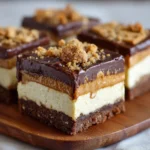
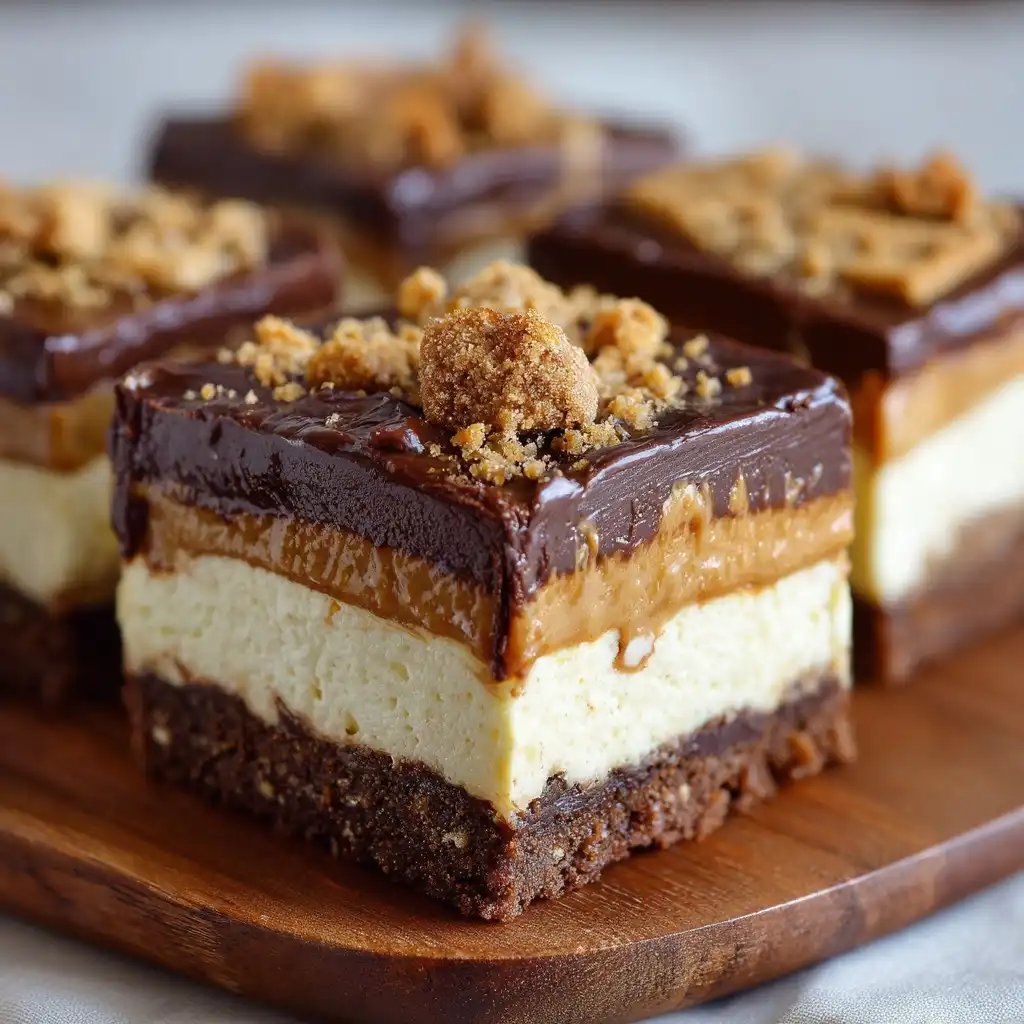
Indulge in the ultimate fusion of childhood nostalgia and sophisticated dessert elegance with Chocolate Cookie Butter Cheesecake Bars — a decadent, layered confection that marries the rich creaminess of New York–style cheesecake with the warm, spiced caramel notes of cookie butter (also known as speculoos or Biscoff spread) and the deep, velvety intensity of high-quality chocolate. These bars are more than just a treat — they’re an experience: crunchy graham cracker–cookie butter crust, a luxuriously smooth and tangy chocolate-swirled cheesecake layer, and a glossy, crack-free top finished with delicate drizzles, crumbled cookies, and a whisper of sea salt. Whether you’re hosting a holiday gathering, packing a showstopping dessert for a potluck, or simply treating yourself after a long week, these bars deliver restaurant-quality flavor and texture with surprisingly approachable techniques. Designed for both seasoned bakers and enthusiastic beginners, this recipe balances precision with flexibility — offering foolproof guidance while encouraging personal expression through customizations, seasonal twists, and dietary adaptations.
The History
The Chocolate Cookie Butter Cheesecake Bars represent a delicious convergence of three iconic dessert lineages: the ancient roots of cheesecake, the Belgian heritage of speculoos, and the modern American evolution of bar desserts. Cheesecake itself traces back over 2,000 years to ancient Greece, where it was served to athletes at the first Olympic Games in 776 BCE — a dense, honey-sweetened cake made with fresh cheese, flour, and pounded cheese curds. It later evolved through Roman, European, and ultimately New York iterations, culminating in the creamy, baked, cream-cheese-based version we know today. Meanwhile, speculoos — spiced shortcrust biscuits flavored with cinnamon, nutmeg, ginger, cloves, and caramelized sugar — originated in Belgium and the Netherlands as festive “speculaas” baked for St. Nicholas Day. In the 1930s, Belgian bakery Lotus Bakeries commercialized the iconic Biscoff cookie, and decades later, innovators transformed the crushed cookies into a rich, spreadable cookie butter — launching a global pantry staple. The bar dessert format gained massive popularity in mid-20th-century America, prized for its ease of portioning, transportability, and crowd-pleasing versatility. Chocolate Cookie Butter Cheesecake Bars emerged organically from food bloggers and home bakers around 2012–2015, fueled by the viral rise of Biscoff spread and the ongoing “chocolate + caramel + spice” flavor trend. Today, they appear on gourmet bakery menus, viral TikTok feeds, and wedding dessert tables — a testament to how tradition, innovation, and irresistible flavor harmony can create something entirely new yet deeply comforting.
Ingredients Breakdown
Every ingredient in this recipe serves a precise functional and sensory role — no element is arbitrary. Let’s explore them in depth:
- Graham Crackers (1 ½ cups, finely crushed): Provide structure, subtle sweetness, and a gentle toasted wheat backbone to the crust. Whole-grain graham crackers add fiber and earthiness; honey graham versions enhance caramel notes. Avoid overly sugary or frosted varieties, which can make the crust brittle or overly sweet.
- Cookie Butter (¾ cup, smooth, room temperature): The soul of the recipe. Authentic Biscoff or Lotus Speculoos spread delivers the signature warm spice profile and deep molasses-like richness. Substitutes like peanut butter or almond butter lack the nuanced spice complexity and will fundamentally alter the identity of the bar. Ensure it’s *smooth* — not crunchy — for even distribution and optimal crust binding.
- Unsalted Butter (6 tbsp, melted): Adds fat for tenderness, promotes browning, and helps fuse the crust. Unsalted allows full control over sodium content. Clarified butter may be used for higher smoke point and richer flavor, though not required.
- Cream Cheese (24 oz / 3 standard blocks, full-fat, room temperature): The structural and textural foundation of the filling. Full-fat (at least 33% milkfat) is non-negotiable — low-fat or Neufchâtel yields a watery, fragile, and grainy texture. Room temperature (65–70°F) ensures seamless, lump-free blending. Let blocks sit out for 1.5–2 hours; do not microwave.
- Granulated Sugar (1 cup): Sweetens, tenderizes, and stabilizes the cheesecake matrix. Fine granulation dissolves fully during mixing. For refined texture, consider superfine sugar or process granulated sugar in a blender for 10 seconds.
- Sour Cream (⅔ cup, full-fat, room temperature): Adds acidity for brightness, moisture for silkiness, and fat for richness. Prevents cracking and contributes to the characteristic “tang.” Avoid low-fat or “light” versions — they contain stabilizers and excess water that compromise texture.
- Heavy Cream (¼ cup, cold or room temperature): Enhances fluidity for easy pouring and adds luxurious mouthfeel without thinning the batter excessively. Heavy cream (36–40% fat) is ideal; half-and-half or whole milk will dilute richness and increase bake time unpredictably.
- Vanilla Extract (2 tsp, pure, not imitation): Deepens flavor complexity and rounds out the spice profile. Madagascar bourbon vanilla offers caramel and floral notes that harmonize beautifully with cookie butter.
- Eggs (3 large, room temperature): Act as binders and leaveners. Room-temperature eggs incorporate air more efficiently and emulsify smoothly into the batter. Cold eggs risk curdling the warm cream cheese mixture. Always add eggs one at a time, mixing just until incorporated — overmixing introduces excess air, leading to cracks and collapse.
- Unsweetened Cocoa Powder (⅓ cup, natural or Dutch-process): Provides intense chocolate flavor and deep color. Natural cocoa (acidic) pairs well with baking soda if used elsewhere; Dutch-process (alkalized) is milder and smoother — both work, but maintain consistency within the batch. Sift before adding to prevent lumps.
- Dark Chocolate (4 oz, 60–70% cacao, finely chopped or chips): Adds complexity, bitterness to balance sweetness, and visual appeal when swirled. High-cocoa chocolate prevents excessive sweetness; avoid milk chocolate here, as its added sugar and dairy can mute the cookie butter notes. Couverture chocolate yields superior melt and sheen.
- Pinch of Flaky Sea Salt (for finishing): A critical contrast element — heightens sweetness, accentuates spice, and adds textural intrigue. Maldon or Fleur de Sel are ideal; avoid fine iodized table salt.
Optional but highly recommended garnishes: Additional cookie butter for drizzling, crushed Biscoff cookies, shaved dark chocolate, edible gold dust, candied ginger pieces, or a light dusting of cinnamon.
Step-by-Step Recipe
- Prep & Preheat: Position oven rack in the center. Preheat oven to 325°F (163°C). Generously grease a 9×13-inch metal baking pan (not glass or ceramic — metal ensures even heating and crisp crust). Line the pan with two overlapping sheets of parchment paper, leaving a 2-inch overhang on two opposite sides for effortless lifting. Lightly grease the parchment.
- Make the Crust: In a medium bowl, combine graham cracker crumbs, cookie butter, and melted butter. Use a fork or pastry cutter to mix until the mixture resembles wet sand and holds together when pinched. Transfer to the prepared pan and press *firmly and evenly* into the bottom using the back of a measuring cup or flat-bottomed glass. Aim for uniform ¼-inch thickness — uneven pressure causes sinking or crumbling. Refrigerate crust for at least 20 minutes (or up to 2 hours) to set and prevent butter leakage during baking.
- Bake the Crust: Bake chilled crust for 10 minutes. Remove from oven and let cool slightly (about 3 minutes) — do not skip cooling; hot crust can cook egg yolks prematurely when filling is added. Reduce oven temperature to 300°F (149°C) for the cheesecake layer — lower heat prevents over-browning and cracking.
- Prepare the Cheesecake Filling: In a large bowl, beat cream cheese with an electric mixer on medium speed until completely smooth and creamy (about 2 minutes), scraping down sides and bottom frequently. Add sugar and beat 2 more minutes until light and fluffy — this incorporates air for lift and tenderness. Add sour cream and heavy cream; beat 1 minute until homogenous. Mix in vanilla. Add eggs one at a time, beating on low speed *just until yolk disappears* after each addition (about 15–20 seconds per egg). Overmixing = cracks. Finally, sift in cocoa powder and beat on low for 30 seconds until fully incorporated and velvety. Do not overbeat.
- Swirl in Chocolate: Reserve ¼ cup of the batter in a small bowl. Stir the chopped dark chocolate into the remaining batter until just combined (small streaks of chocolate are ideal — don’t fully melt it). Pour chocolate batter over the warm crust. Dollop reserved plain batter in spoonfuls across the surface. Use a toothpick, skewer, or thin knife to gently swirl in a figure-eight or zigzag motion — 10–12 light passes max. Over-swirling creates muddy, indistinct layers.
- Water Bath (Highly Recommended): Place the filled pan inside a larger roasting pan. Carefully pour hot (not boiling) water into the roasting pan until it reaches halfway up the sides of the 9×13 pan. This gentle steam environment regulates temperature, prevents surface cracks, and yields ultra-creamy texture. Cover the 9×13 pan *loosely* with aluminum foil to prevent water droplets from landing on the surface.
- Bake with Precision: Bake in the preheated 300°F oven for 65–75 minutes. The bars are done when the edges are set and puffed slightly, the center jiggles only *slightly* like Jell-O (not liquid), and an instant-read thermometer inserted 2 inches from the edge reads 150–152°F (65–67°C). The center will continue to set as it cools. Avoid opening the oven door for the first 50 minutes.
- Cool Gradually (Non-Negotiable Step): Turn off oven. Crack the oven door open 1–2 inches with a wooden spoon and let bars cool inside for 1 hour. This slow cooldown prevents thermal shock and dramatic sinking/cracking. Then, carefully remove from water bath, discard foil, and cool on a wire rack at room temperature for another 2 hours.
- Chill Thoroughly: Cover cooled bars loosely with plastic wrap (touching the surface to prevent condensation) and refrigerate for *at least 12 hours*, preferably 24 hours. This chilling firms the texture, deepens flavor integration, and makes clean slicing possible. Do not rush this step.
- Finish & Serve: Use parchment overhang to lift entire slab from pan onto a cutting board. Run a long, thin knife under very hot water, wipe dry, and slice into 12–16 bars. Wipe and reheat knife between cuts. Drizzle with warmed cookie butter, sprinkle with crushed Biscoff cookies and flaky salt. Serve chilled.
Tips
- Room Temperature Is Everything: All dairy (cream cheese, sour cream, eggs, butter) must be truly room temperature — not just “out of the fridge for 30 minutes.” Ideal temp is 68–72°F. Cold ingredients cause lumps, curdling, and poor emulsification.
- Scrape Religiously: Scrape bowl and mixer attachments after every step — especially after cream cheese, sugar, and egg additions. Missed pockets of unmixed cocoa or cream cheese guarantee gritty or uneven texture.
- No Overmixing Zone: Once eggs are added, switch to low speed and mix *only until just combined*. Count seconds if needed. Overmixing = cracked, sunken, or rubbery bars.
- Crust Compression Matters: Press crust so firmly it feels almost like concrete. A loose crust crumbles when cut. Chill before baking to lock in shape.
- Thermometer Confidence: An instant-read digital thermometer eliminates guesswork. Target 150–152°F at the edge — not the center — for perfect set without overbaking.
- Patience Pays Off: Rushing the chill time results in smearing, soft edges, and weak structure. Overnight chilling transforms texture from “good” to “restaurant-perfect.”
- Knife Technique: Use a chef’s knife or long serrated knife. Heat under hot tap water, dry thoroughly, and slice in one confident downward motion — no sawing. Reheat between cuts.
- Storage Wisdom: Store covered in fridge for up to 5 days. Freeze unfrosted bars (wrap individually in plastic + foil) for up to 3 months. Thaw overnight in fridge before serving — never at room temperature, which causes condensation and sogginess.
- Altitude Adjustment: Above 3,000 ft? Increase oven temp by 15–25°F, reduce sugar by 1–2 tbsp, and add 1 tbsp extra sour cream for moisture retention.
- Crack Repair Hack: If minor cracks appear, cover generously with cookie butter drizzle and toppings — no one will notice!
Variations and Customizations
This recipe is a canvas — embrace creativity while honoring its structural integrity:
- Gluten-Free: Substitute certified GF graham crackers or GF speculoos cookies (like Schär or Delicia) for crust. Ensure cookie butter is GF-certified (Lotus Biscoff Spread is naturally GF and verified).
- Vegan: Use vegan cream cheese (Kite Hill or Miyoko’s), coconut oil–based cookie butter (or blend soaked cashews + spices + maple syrup), GF oat or almond flour crust, flax eggs (3 tbsp ground flax + 9 tbsp water), and coconut cream instead of sour cream/heavy cream. Expect a softer set — chill 48 hours.
- Lower-Sugar: Replace granulated sugar with ¾ cup monk fruit–erythritol blend (like Lakanto Golden). Reduce cocoa to ¼ cup and add 1 tsp espresso powder to boost chocolate perception without sugar. Use no-sugar-added dark chocolate.
- Spiced Upgrade: Add ½ tsp ground cardamom + ¼ tsp ground white pepper to crust; stir 1 tsp orange zest into filling for bright, aromatic contrast.
- Peanut Butter Swirl: Replace ¼ cup cookie butter in crust with natural creamy peanut butter. Swirl 3 tbsp melted peanut butter into filling alongside chocolate.
- Espresso Infusion: Dissolve 1 tbsp instant espresso powder in the heavy cream before adding to filling. Garnish with chocolate-covered espresso beans.
- Seasonal Twists: Fall: Add 1 tsp pumpkin pie spice to crust; top with candied pecans. Winter: Fold ¼ cup dried cranberries into filling; garnish with crushed peppermint. Spring: Add 1 tbsp rosewater to filling; top with edible violets. Summer: Swirl in 3 tbsp raspberry purée; finish with fresh berries.
- Mini Bar Version: Press crust into lined muffin tin cups. Fill with 1 tbsp filling each. Bake at 300°F for 22–25 minutes. Chill 8 hours. Perfect for parties.
- Layered Luxury: Add a ¼-inch layer of salted caramel sauce *between* crust and filling. Or top baked & chilled bars with a thin ganache (4 oz dark chocolate + ½ cup warm heavy cream) before final garnish.
- Boozy Boost: Add 1 tbsp bourbon or dark rum to filling along with vanilla. Intensifies warmth and depth — alcohol bakes off but leaves nuanced aroma.
Health Considerations and Nutritional Value
While undeniably indulgent, mindful preparation can enhance nutritional balance without sacrificing pleasure. A standard serving (1 of 16 bars, approx. 2.5”x3”) contains approximately:
- Calories: 320–360 kcal
- Total Fat: 22–25g (14–16g saturated)
- Carbohydrates: 28–32g (20–24g sugars)
- Protein: 5–6g
- Fiber: 1–1.5g (higher with whole-grain graham crust)
- Sodium: 180–220mg
Nutritional Highlights:
- Cream Cheese: Provides calcium, vitamin A, and high-quality protein. Opt for organic or grass-fed varieties for enhanced omega-3 and CLA content.
- Cocoa Powder: Rich in flavanols — potent antioxidants linked to improved vascular function and cognitive health. Choose unsweetened, minimally processed cocoa for maximum benefit.
- Spices (Cinnamon, Ginger, Cloves in Cookie Butter): Contain anti-inflammatory compounds like cinnamaldehyde and gingerol, supporting metabolic and immune health.
- Healthy Fats: While saturated fat is present, the balanced ratio from dairy and cocoa supports hormone production and satiety — especially when consumed mindfully as part of a varied diet.
Dietary Notes & Cautions:
- Lactose Sensitivity: Sour cream and cream cheese contain moderate lactose. Lactase enzyme supplements taken before eating may aid digestion. Vegan versions eliminate dairy entirely.
- Added Sugar Awareness: Most of the sugar is added. For those managing blood glucose, pair a bar with a protein-rich snack (e.g., Greek yogurt) to slow absorption, or opt for the lower-sugar variation.
- Food Allergens: Contains dairy, wheat (unless GF crust used), and soy (in most commercial cookie butters and chocolate). Always verify labels if allergies are a concern.
- Mindful Enjoyment: These bars align with intuitive eating principles when savored slowly, without guilt. Their richness means smaller portions satisfy — focus on quality, not quantity.
Ingredients
- 1 ½ cups (150g) graham cracker crumbs (about 12 full sheets)
- ¾ cup (190g) smooth cookie butter (Lotus Biscoff or speculoos spread)
- 6 tablespoons (85g) unsalted butter, melted
- 24 ounces (680g) full-fat brick-style cream cheese, room temperature
- 1 cup (200g) granulated sugar
- ⅔ cup (160g) full-fat sour cream, room temperature
- ¼ cup (60ml) heavy cream, cold or room temperature
- 2 teaspoons pure vanilla extract
- 3 large eggs, room temperature
- ⅓ cup (30g) unsweetened natural or Dutch-process cocoa powder, sifted
- 4 ounces (115g) high-quality dark chocolate (60–70% cacao), finely chopped
- Flaky sea salt, for finishing
- For Garnish (optional): Extra cookie butter (warmed), crushed Biscoff cookies, shaved dark chocolate
Directions
- Preheat oven to 325°F (163°C). Grease a 9×13-inch metal baking pan and line with parchment paper, leaving overhang on two sides.
- In a bowl, mix graham cracker crumbs, cookie butter, and melted butter until cohesive. Press firmly into pan. Chill 20 minutes.
- Bake crust 10 minutes at 325°F. Cool 3 minutes. Reduce oven to 300°F (149°C).
- Beat cream cheese until smooth. Add sugar; beat 2 minutes until fluffy. Add sour cream, heavy cream, and vanilla; beat 1 minute. Add eggs one at a time, mixing just until blended. Sift in cocoa; mix on low 30 seconds.
- Reserve ¼ cup batter. Stir chopped chocolate into remaining batter. Pour over crust. Dot with reserved batter. Swirl gently.
- Place pan in roasting pan. Pour hot water halfway up sides. Cover loosely with foil.
- Bake 65–75 minutes until edges are set and center jiggles slightly. Internal temp should read 150–152°F at edge.
- Turn off oven. Crack door open with spoon. Cool inside 1 hour. Remove from water bath; cool on rack 2 hours.
- Cover and refrigerate minimum 12 hours (24 hours preferred).
- Lift out using parchment. Slice with hot, dry knife. Drizzle with warm cookie butter, sprinkle with cookies and sea salt.
FAQ
- Can I use low-fat cream cheese?
- No. Low-fat or Neufchâtel will result in a watery, fragile, grainy, and cracked filling. Full-fat cream cheese is essential for structure, richness, and proper setting.
- Why did my bars crack?
- Most common causes: overmixing after eggs are added, rapid temperature changes (opening oven too soon, skipping gradual cool-down), or overbaking. Using a water bath and thermometer dramatically reduces cracking risk.
- Can I make these ahead for a party?
- Absolutely — and it’s recommended! They taste even better after 24–48 hours of chilling, as flavors meld and texture firms. Store covered in the fridge. Bring to cool room temperature 15 minutes before serving for optimal creaminess.
- My cookie butter is too thick to swirl — what do I do?
- Gently warm it in a microwave-safe bowl in 5-second bursts, stirring between, until just fluid enough to drizzle (do not overheat or it will separate). Alternatively, thin with ½ tsp neutral oil or warm heavy cream.
- Can I freeze these bars?
- Yes! Freeze uncut, fully chilled bars tightly wrapped in plastic wrap + aluminum foil for up to 3 months. Thaw overnight in the refrigerator. Do not thaw at room temperature to prevent condensation and texture loss.
- What if I don’t have a water bath?
- You can bake without one, but expect higher risk of cracking and less creamy texture. To compensate: ensure all ingredients are room temperature, avoid overmixing, cool gradually, and consider placing a pan of hot water on the lowest oven rack.
- Can I use store-bought chocolate chip cookie dough for the crust?
- Not recommended. Cookie dough contains raw eggs and leaveners that behave unpredictably when baked under cheesecake. Stick to crushed cookies + butter + cookie butter for reliable texture and flavor synergy.
- How do I get clean slices every time?
- Use a sharp, thin-bladed knife. Heat under hot water, wipe *completely* dry, and slice in one firm downward motion — no dragging or sawing. Clean and reheat between every cut.
- Are these bars gluten-free?
- They can be! Use certified gluten-free graham crackers or speculoos cookies and verify your cookie butter and chocolate are GF-certified. Lotus Biscoff Spread is naturally gluten-free and certified.
- Can I add fruit?
- Fresh fruit adds excess moisture and can cause sogginess or spoilage. Instead, use fruit *compotes or reductions* (like raspberry or salted caramel) as a thin layer *under* the filling or as a garnish *after* chilling.
Summary
Chocolate Cookie Butter Cheesecake Bars are a masterclass in layered luxury — featuring a spiced, crunchy cookie-butter graham crust, a luxuriously creamy and tangy chocolate-swirled cheesecake filling, and elegant, customizable finishes that balance sweetness, spice, and salt.
With meticulous attention to ingredient temperature, gentle mixing, precise baking via water bath, and mandatory overnight chilling, these bars deliver flawless texture, deep flavor complexity, and endless opportunities for creative adaptation — making them a showstopping, crowd-pleasing centerpiece for any occasion.