Introduction
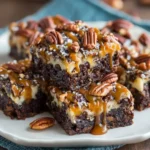
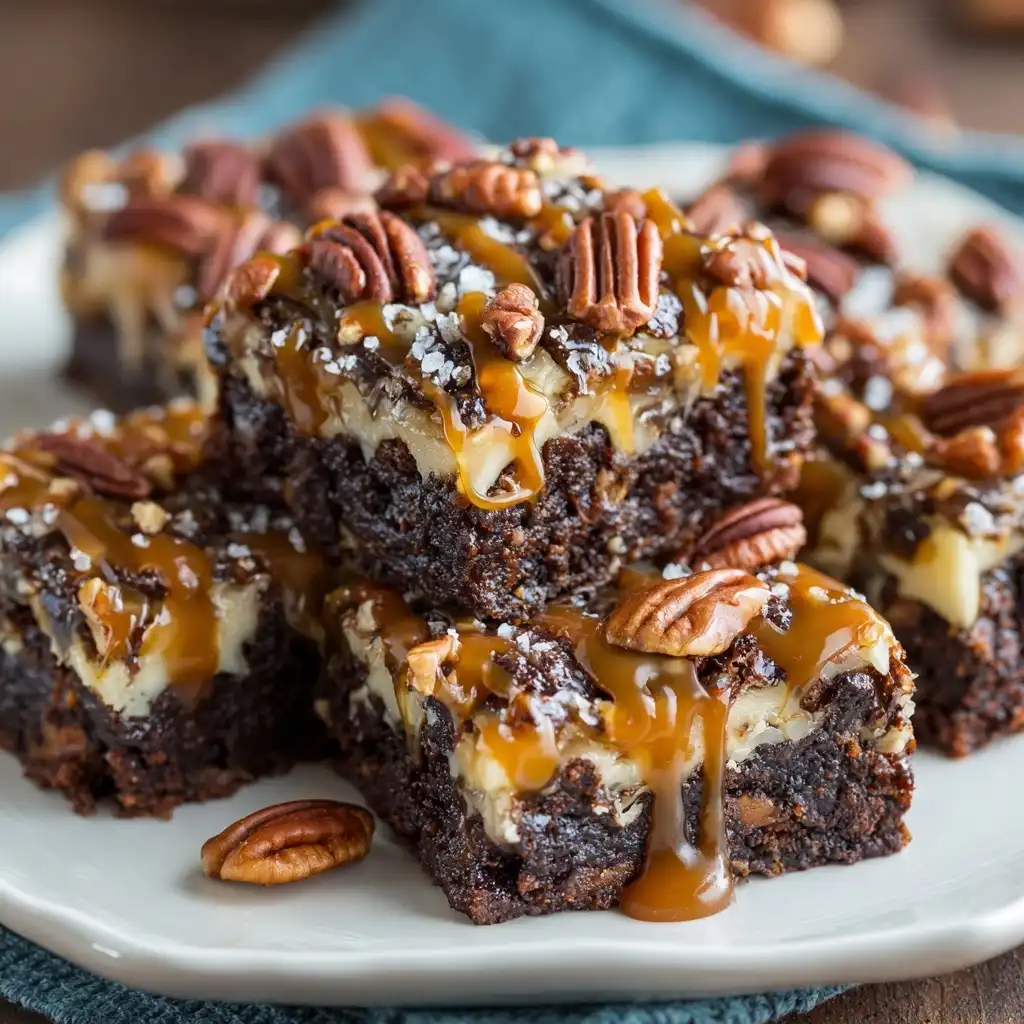
Indulgence meets elegance in the beloved Caramel Pecan Turtle Brownies—a decadent fusion of rich chocolate, buttery caramel, and crunchy toasted pecans that delivers an unforgettable symphony of textures and flavors. Inspired by the iconic turtle candy (a confection of caramel, chocolate, and roasted pecans), these brownies elevate the classic dessert into a showstopping treat perfect for holidays, dinner parties, gourmet gift baskets, or simply satisfying a deep, soul-soothing chocolate craving. Unlike standard brownies, Turtle Brownies feature layered complexity: a dense, fudgy base infused with espresso-enhanced cocoa; a velvety, slow-simmered homemade caramel layer that stays luxuriously soft and chewy (not hard or grainy); and a generous crown of golden, candied pecans—some embedded in the caramel, others scattered on top for visual drama and textural contrast. Whether you’re a seasoned baker seeking a refined challenge or a home cook eager to impress with minimal fuss, this recipe balances artisanal appeal with approachable technique—and rewards every step with profound depth, balance, and nostalgic warmth.
The History
The origins of the Turtle Brownie trace back to the mid-20th century evolution of American confectionery culture, rooted firmly in the 1918 creation of the DeMet’s Turtle® candy in Chicago—a hand-dipped, triangular confection of caramel, roasted pecans, and milk chocolate, named for its shell-like shape and slow, deliberate “turtle” pace of production. As home baking surged in popularity during the 1950s and ’60s—fueled by accessible boxed mixes, improved oven technology, and women’s magazines like Betty Crocker’s Picture Cook Book and Good Housekeeping—bakers began creatively deconstructing and reimagining classic candies as layered bars. Early iterations appeared in regional church cookbooks and Midwestern potluck collections as “Turtle Bars” or “Caramel-Pecan Brownies,” often using condensed milk or store-bought caramel bits for convenience. The true transformation occurred in the 1990s and early 2000s, when food bloggers and culinary magazines championed from-scratch caramel and artisanal nut roasting, shifting the recipe from a shortcut dessert to a craft-driven experience. Today, Caramel Pecan Turtle Brownies symbolize both nostalgia and modern baking sophistication—featured in bakery windows across Portland and Brooklyn, spotlighted on Food Network holiday specials, and celebrated on platforms like Bon Appétit and King Arthur Baking for their perfect harmony of bitter, sweet, salty, and umami notes.
Ingredients Breakdown
Every ingredient in this Caramel Pecan Turtle Brownies recipe serves a precise functional and flavor purpose—no filler, no afterthoughts. Let’s explore them in detail:
- Unsalted Butter (1 cup, cubed): Provides richness, tenderness, and flakiness in the brownie base. Using unsalted butter allows full control over sodium levels and prevents interference with caramel’s delicate Maillard reactions. European-style butter (82–84% fat) is highly recommended for superior mouthfeel and deeper browning.
- High-Quality Semi-Sweet Chocolate (8 oz, finely chopped): The backbone of flavor intensity. Opt for 54–60% cacao chocolate with clean cocoa notes—not overly fruity nor excessively bitter. Avoid chocolate chips (they contain stabilizers that hinder proper melting and emulsification). Couverture-grade chocolate yields silkier texture and glossier finish.
- Granulated Sugar (1 ½ cups): Not just for sweetness—granulated sugar contributes to crust formation (“the shiny top”), aids in aeration during mixing, and interacts with proteins to create structural integrity. A small portion (¼ cup) is reserved for the caramel to balance acidity and promote controlled crystallization.
- Brown Sugar (¾ cup, packed light or dark): Adds moisture, acidity, and molasses depth—critical for caramel’s complexity and brownie chewiness. Dark brown sugar intensifies toffee notes; light brown offers subtler warmth.
- Eggs (3 large, room temperature): Act as emulsifiers, leaveners, and binders. Room temperature ensures uniform incorporation and prevents seizing when added to warm chocolate-butter mixture. Egg yolks enrich with fat and lecithin; whites add subtle lift without compromising density.
- Pure Vanilla Extract (2 tsp): Enhances aromatic complexity and rounds out bitterness. Bourbon-vanilla or Tahitian vanilla adds floral nuance; avoid imitation vanillin, which tastes flat and chemical under heat.
- All-Purpose Flour (¾ cup, spooned & leveled): Provides essential gluten structure—just enough to hold the bar together without yielding cakey toughness. Overmixing or excess flour leads to tunneling or crumbliness. For gluten-free adaptation, use a 1:1 certified GF blend with xanthan gum.
- Natural Cocoa Powder (⅓ cup, unsweetened, non-alkalized): Delivers intense, bright chocolate flavor and natural acidity that reacts with baking soda (if used) and complements caramel’s richness. Dutch-process cocoa can be substituted—but reduce added acid (e.g., omit vinegar) and expect mellower, earthier notes.
- Espresso Powder (1 tsp, instant): A secret weapon—not for coffee taste, but to amplify chocolate’s inherent bitterness and deepen overall savoriness. Instant espresso dissolves completely and adds zero liquid.
- Sea Salt (1 tsp, plus flaky salt for finishing): Balances sweetness, enhances perception of other flavors, and mitigates cloyingness. Fine sea salt integrates seamlessly; flaky Maldon or fleur de sel sprinkled post-bake provides elegant bursts of salinity.
- Heavy Cream (½ cup, room temperature): Used exclusively in the caramel layer to add unctuous body, prevent crystallization, and contribute dairy-sweet lactic tang. Never substitute with half-and-half or milk—fat content is non-negotiable for texture and stability.
- Light Corn Syrup (¼ cup): Functions as an interfering agent—its glucose molecules inhibit sucrose crystals from forming, ensuring smooth, pourable, non-grainy caramel. While optional, omission increases risk of seizing, especially for novice cooks. Organic brown rice syrup is a viable alternative.
- Maple Syrup (2 tbsp, Grade A dark amber): Adds nuanced woody-sweet complexity and subtle acidity. Its invert sugars further stabilize the caramel matrix and deepen color. Do not use pancake syrup—it contains artificial flavors and high-fructose corn syrup that burn easily.
- Real Bourbon (1 tbsp): Volatile alcohol carries volatile aromatic compounds; it evaporates during cooking but leaves behind rich oak, vanilla, and caramelized sugar notes. Substitute with ½ tsp pure almond extract + ½ tsp vanilla if avoiding alcohol.
- Toasted Pecans (1 ½ cups, coarsely chopped, plus extra whole halves for garnish): Toasting unlocks enzymatic oils, transforming raw nuttiness into deep, buttery, slightly smoky richness. Pecans are essential—not walnuts or almonds—as their high monounsaturated fat content melts luxuriously into warm caramel, while their delicate crunch holds up beautifully against fudgy brownie.
- Flaky Sea Salt (for finishing): A final flourish that creates dynamic contrast—each bite begins with saline brightness before unfolding into chocolate-caramel-pecan opulence.
Step-by-Step Recipe
- Prep & Preheat: Position oven rack to center position. Preheat oven to 325°F (163°C)—a lower temperature than typical brownies ensures even baking without cracking or doming. Line a 9×13-inch metal baking pan with two overlapping sheets of parchment paper, leaving 2-inch overhang on all sides for effortless lifting. Lightly grease exposed parchment with butter or neutral oil. Toast pecans: Spread 1 ½ cups raw pecan halves on a rimmed baking sheet. Bake at 350°F for 8–10 minutes, shaking pan halfway, until fragrant and lightly golden. Cool completely, then coarsely chop 1 cup; reserve remaining ½ cup as whole or halved pieces for topping.
- Make the Brownie Batter: In a medium heatproof bowl set over a saucepan of barely simmering water (double boiler), melt butter and chopped chocolate together, stirring constantly with a silicone spatula until smooth and glossy (about 5–7 minutes). Remove from heat and cool 5 minutes. Whisk in granulated sugar, brown sugar, and salt until fully combined and slightly thickened (~1 min). Add eggs one at a time, whisking vigorously for 30 seconds after each addition until batter is thick, glossy, and ribbon-like (this incorporates air for optimal crust formation). Stir in vanilla, espresso powder, and cocoa powder until no streaks remain. Gently fold in flour with a spatula using 10–12 strokes—stop the moment no dry patches remain. Overmixing develops gluten and causes toughness.
- Layer the Base: Pour batter into prepared pan. Use an offset spatula to spread evenly, smoothing the top. Tap pan sharply on counter 3 times to release air bubbles and level surface. Place in preheated oven and bake for 22–25 minutes—until edges are set and a toothpick inserted 1 inch from edge comes out with moist crumbs (not wet batter). The center should still appear slightly underbaked—this ensures fudginess. Remove from oven and let rest undisturbed for 15 minutes. Do not skip this resting period—it allows carryover cooking and structural stabilization before caramel application.
- Prepare the Gourmet Caramel: While brownies bake, prepare caramel in a heavy-bottomed 3-quart saucepan. Combine granulated sugar (¼ cup), corn syrup, maple syrup, and 2 tbsp water. Stir gently to moisten sugar—do not splash sides. Place over medium heat. Once bubbling begins around edges, insert a candy thermometer. Cook—without stirring—until mixture reaches 320°F (160°C), the “hard crack” stage, ~12–15 minutes. Watch closely: color shifts from clear → pale gold → amber → deep copper. At 320°F, immediately remove from heat. Carefully whisk in heavy cream (stand back—steam will erupt), followed by butter, bourbon, and ¼ tsp salt. Return to low heat and stir constantly until butter is fully melted and caramel is smooth and homogenous (~2 min). Remove from heat and stir in toasted chopped pecans. Let cool 8–10 minutes—caramel should thicken slightly but remain fluid enough to pour.
- Apply the Caramel Layer: After brownies have rested 15 minutes, carefully pour warm caramel evenly over the surface. Tilt pan gently to distribute. Immediately scatter reserved whole/halved toasted pecans over caramel. Press lightly with spatula to adhere. Sprinkle with flaky sea salt.
- Final Bake & Set: Return pan to oven. Bake at 325°F for 12–14 minutes—just until caramel is bubbling gently at edges and pecans are deeply fragrant. Do not overbake; caramel will continue to set as it cools. Remove and cool completely in pan on a wire rack—minimum 2 hours, preferably 3–4 hours or overnight. This chilling time is critical: it allows caramel to fully firm, brownie to hydrate and settle, and layers to bond seamlessly for clean, sharp cuts.
- Cut & Serve: Using parchment overhang, lift entire slab from pan onto cutting board. With a hot, sharp chef’s knife (dip blade in hot water and wipe dry between cuts), slice into 12–16 even rectangles (or diamonds for presentation). Wipe knife after each cut for pristine edges. Serve at cool room temperature for ideal texture contrast.
Tips
- Chocolate Melting Mastery: Never microwave chocolate directly—it burns instantly. Always use a double boiler with simmering (not boiling) water. If steam contacts chocolate, it will seize—add 1 tsp neutral oil and stir vigorously to rescue.
- Room Temperature Eggs Are Non-Negotiable: Cold eggs cause chocolate-butter mixture to harden into lumps. To warm quickly: submerge eggs in warm (not hot) tap water for 5 minutes before cracking.
- Measure Flour Accurately: Spoon flour into measuring cup, then level with straight edge. Scooping packs flour and adds up to 25% more—guaranteeing dry, crumbly brownies.
- Toast Nuts in Batches: Overcrowding the pan steams instead of toasts. Use a single layer with space between pieces. Let cool fully—warm nuts make caramel seize upon contact.
- Candy Thermometer Calibration: Test accuracy by boiling water—thermometer should read 212°F at sea level. Adjust readings accordingly (e.g., subtract 2°F if reading 214°F).
- No-Stir Caramel Rule: Once sugar solution begins heating, do not stir—agitation encourages crystallization. If sugar crystals form on pan sides, brush down with wet pastry brush.
- Control Caramel Consistency: If caramel thickens too fast while cooling, gently re-warm over low heat for 15 seconds. If too thin after cooling, refrigerate 10 minutes—then stir to re-emulsify.
- Chill Before Cutting = Professional Results: Warm caramel smears; cold caramel slices cleanly. Refrigeration also firms brownie crumb for sharp corners and prevents crumbling.
- Knife Technique: Use a long, thin-bladed knife (like a boning or slicing knife). Heat under hot tap water, dry thoroughly, cut once, wipe, reheat, repeat. For decorative edges, dip knife in cocoa powder between cuts.
- Storage Wisdom: Keep covered at cool room temperature (65–70°F) for up to 3 days. Refrigerate up to 1 week—but bring to room temp 30 minutes before serving to restore caramel pliability. Freeze unfrosted slabs up to 3 months—wrap tightly in plastic, then foil.
Variations and Customizations
- Dark Chocolate Decadence: Swap semi-sweet for 70% dark chocolate and increase espresso to 1½ tsp. Use smoked sea salt and add ¼ tsp chipotle powder to caramel for sophisticated heat.
- White Chocolate & Macadamia: Replace semi-sweet chocolate with high-quality white chocolate. Omit espresso. Use macadamia nuts instead of pecans and add 1 tsp lemon zest to caramel for bright contrast.
- Gluten-Free Turtle Brownies: Substitute AP flour with King Arthur Measure-for-Measure GF blend. Ensure all other ingredients (vanilla, baking powder if used) are certified GF. Add ½ tsp xanthan gum if blend doesn’t include it.
- Vegan Adaptation: Use dairy-free dark chocolate, coconut oil (¼ cup solid + ¼ cup melted) instead of butter, flax eggs (3 tbsp ground flax + 9 tbsp water), and coconut cream instead of heavy cream. Caramelize coconut sugar + maple syrup + coconut milk for vegan caramel.
- Boozy Infusion: Add 1 tbsp spiced rum to caramel; swirl 2 tbsp salted caramel liqueur into brownie batter before baking. Garnish with candied orange peel.
- Mini Turtle Bites: Bake brownie batter in lined mini muffin tins for 18–20 minutes. Top each with 1 tsp caramel and 1 pecan half. Chill 1 hour before unmolding.
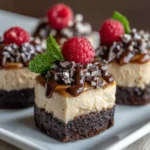
- Layered Turtle Cheesecake Bars: Press graham cracker crust, top with no-bake cheesecake layer flavored with brown sugar and vanilla, then add caramel-pecan layer and chilled fudgy brownie top.
- Savory-Sweet Twist: Stir 1 tsp flaky sea salt + ½ tsp black sesame seeds into caramel. Finish with crushed pretzel pieces and a drizzle of dark chocolate ganache.
- Seasonal Variations: In fall—add 1 tsp pumpkin pie spice to brownie batter; in winter—infuse caramel with star anise and orange peel; in spring—top with edible violets and lemon-zested caramel.
- Gift-Ready Presentation: Cut into squares, wrap individually in parchment, tie with twine, and tuck into kraft boxes lined with gold foil. Include tasting notes card: “Notes of toasted pecan, burnt sugar, Madagascar vanilla, and 60% Venezuelan cocoa.”
Health Considerations and Nutritional Value
While Caramel Pecan Turtle Brownies are undeniably indulgent, thoughtful ingredient choices and portion awareness allow for mindful enjoyment. Per standard 2×2-inch serving (approx. 1/16th of recipe), nutrition estimates are: Calories: 320–350; Total Fat: 18–20g (mostly heart-healthy monounsaturated fats from pecans and cocoa butter); Saturated Fat: 8–9g; Cholesterol: 55mg; Sodium: 180–220mg; Total Carbohydrates: 38–42g; Dietary Fiber: 2–3g (from cocoa, nuts, and small amount of whole grain flour if substituted); Sugars: 26–29g (naturally occurring lactose from cream + added sucrose/glucose/fructose); Protein: 4–5g. Key health highlights include: Cocoa flavonoids—linked to improved endothelial function and reduced oxidative stress; Pecan polyphenols—shown in studies (Journal of Nutrition, 2011) to support healthy cholesterol profiles; and Vanilla’s vanillin—a potent antioxidant with anti-inflammatory properties. To enhance nutritional profile: opt for organic, fair-trade chocolate; use grass-fed butter; choose raw, sprouted pecans; and reduce granulated sugar by ¼ cup (compensating with extra brown sugar for moisture). Those managing blood sugar should note the high glycemic load—pair with Greek yogurt or berries to slow absorption. For nut allergies, substitute sunflower or pumpkin seeds (toasted), though texture and flavor profile will shift significantly. Always consult a registered dietitian for personalized guidance—especially for diabetes, hypertension, or cardiovascular conditions.
Ingredients
- 1 cup (2 sticks / 227g) unsalted butter, cubed, divided
- 8 oz (227g) high-quality semi-sweet chocolate (54–60% cacao), finely chopped
- 1 ½ cups (300g) granulated sugar
- ¾ cup (150g) light or dark brown sugar, packed
- 3 large eggs, room temperature
- 2 tsp pure vanilla extract
- ¾ cup (95g) all-purpose flour, spooned & leveled
- ⅓ cup (30g) natural unsweetened cocoa powder
- 1 tsp instant espresso powder
- 1 tsp fine sea salt, plus flaky sea salt for finishing
- ½ cup (120ml) heavy cream, room temperature
- ¼ cup (60ml) light corn syrup
- 2 tbsp (30ml) dark amber maple syrup
- 1 tbsp (15ml) real bourbon
- 1 ½ cups (150g) raw pecan halves, toasted and coarsely chopped (plus ½ cup whole or halved for topping)
Directions
- Preheat oven to 325°F (163°C). Line a 9×13-inch metal baking pan with parchment paper, allowing 2-inch overhang on all sides. Grease exposed parchment.
- Toast pecans: Spread pecan halves on rimmed baking sheet. Bake 8–10 minutes at 350°F until fragrant and golden. Cool completely. Chop 1 cup; reserve ½ cup whole/halved.
- In heatproof bowl over simmering water, melt ¾ cup butter and chocolate, stirring until smooth. Cool 5 minutes.
- Whisk in granulated sugar, brown sugar, and ½ tsp salt until thickened (~1 min). Add eggs one at a time, whisking 30 sec after each. Stir in vanilla, espresso, and cocoa.
- Fold in flour with spatula—stop when no dry streaks remain. Pour into pan. Tap pan firmly 3 times. Bake 22–25 min until edges set and center is slightly soft.
- Cool brownies in pan 15 minutes.
- Meanwhile, make caramel: In heavy saucepan, combine ¼ cup granulated sugar, corn syrup, maple syrup, and 2 tbsp water. Stir to moisten. Cook over medium heat, without stirring, until 320°F (160°C), ~12–15 min.
- Remove from heat. Carefully whisk in heavy cream, then remaining ¼ cup butter, bourbon, and ¼ tsp salt. Return to low heat; stir until smooth (~2 min). Stir in chopped pecans. Cool 8–10 min.
- Pour caramel over warm brownies. Scatter whole pecans. Sprinkle with flaky salt.
- Bake 12–14 min more until caramel bubbles gently at edges.
- Cool completely in pan on wire rack—minimum 2 hours, ideally 3–4 hours or overnight.
- Lift from pan using parchment. Cut into 12–16 rectangles with hot, clean knife. Serve at cool room temperature.
FAQ
- Can I use store-bought caramel sauce?
- Yes—but with caveats. Most commercial sauces contain stabilizers, excessive water, and preservatives that prevent proper setting. Look for “small-batch,” “kettle-cooked,” or “dairy-forward” labels. Simmer store-bought caramel uncovered for 5–7 minutes to reduce excess moisture before pouring. Expect softer set and less complex flavor than homemade.
- Why did my caramel seize or become grainy?
- Seizing occurs when cold cream hits hot sugar too abruptly, or when sugar crystals reform due to stirring, splashing, or contamination. Always use room-temp cream, pour slowly while whisking vigorously, and never stir sugar solution once boiling begins. Brush down pan sides with wet pastry brush if crystals appear.
- Can I make these ahead for Thanksgiving?
- Absolutely—and recommended! Bake brownies and apply caramel 2 days ahead. Store covered at cool room temperature. They mature beautifully: caramel softens further, flavors meld, and brownie texture becomes ultra-fudgy. Add flaky salt and final pecan garnish day-of.
- My brownies cracked on top. What went wrong?
- Cracking usually results from oven temperature too high, overmixing batter (incorporating too much air), or rapid cooling. Ensure accurate oven calibration, mix eggs just until incorporated, and cool gradually—never refrigerate warm brownies.
- How do I prevent the pecans from sinking?
- Use coarsely chopped (not fine) toasted pecans, and pour caramel while still warm but thickened. Press pecans lightly into surface immediately after pouring. Whole halves stay loftier than chopped pieces.
- Can I freeze these?
- Yes! Fully cooled, uncut slab freezes exceptionally well for up to 3 months. Wrap tightly in plastic wrap, then aluminum foil. Thaw overnight in fridge, then bring to room temperature before cutting. Texture remains pristine.
- Is there a lower-sugar option?
- You can reduce granulated sugar to 1 cup, but do not omit brown sugar—it provides vital moisture and acidity. Consider adding 2 tbsp unsweetened applesauce to batter to retain tenderness. Note: caramel requires sugar for structure; low-sugar alternatives (erythritol, allulose) behave differently and may crystallize or fail to set.
- What’s the best way to transport these to a potluck?
- Keep in original pan, covered with parchment-lined lid or inverted baking sheet. Carry flat and level. Cut onsite with portable knife and cutting board—or pre-cut and nest squares in divided container with parchment between layers.
- Can I add nuts to the brownie batter itself?
- You can—but it changes texture dramatically. Fold in ½ cup finely chopped toasted pecans *after* adding flour. Expect denser, more rustic brownies with less defined layer separation. Many purists prefer nuts only in caramel for authentic turtle integrity.
- Why does the recipe use both granulated and brown sugar?
- Granulated sugar promotes crust formation and structural lift; brown sugar contributes moisture, acidity, and molasses-derived complexity that deepens caramel’s flavor and prevents brownie dryness. Together, they create balanced sweetness and optimal texture.
Summary
Caramel Pecan Turtle Brownies are a masterclass in layered luxury—featuring a fudgy, espresso-kissed chocolate base, a slow-simmered, bourbon-infused caramel that stays luxuriously soft and chewy, and a crown of deeply toasted, buttery pecans finished with flaky sea salt.
Every step—from precise chocolate tempering and controlled caramelization to strategic cooling and knife-temperature discipline—is designed to deliver professional-grade texture, nuanced flavor balance, and showstopping visual appeal, making these brownies equally at home on a holiday dessert table or as a cherished homemade gift.