Introduction
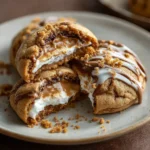
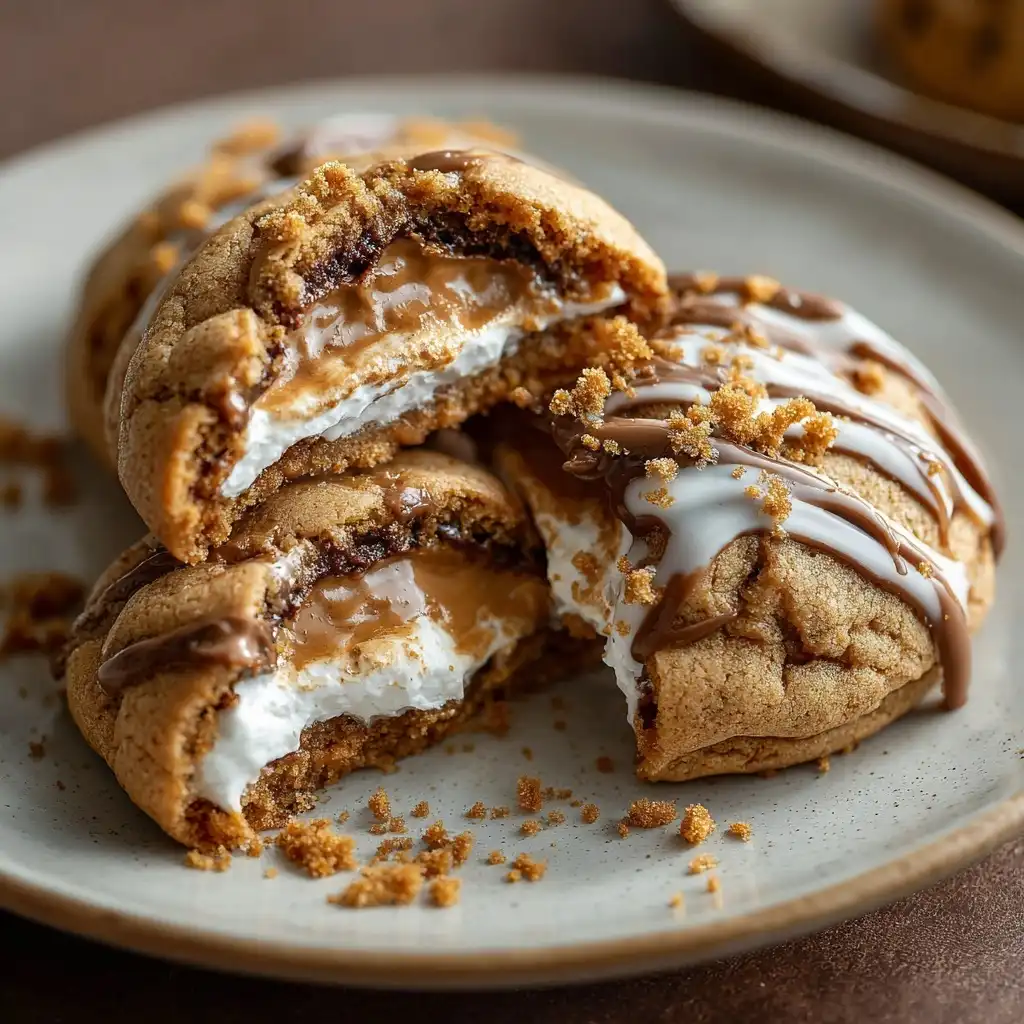
Imagine biting into a warm, soft-baked cookie—crisp at the edges, tender and chewy in the center—only to be met with a molten, caramelized cascade of rich, spiced Biscoff spread oozing luxuriously from within. The Biscoff Lava Stuffed Cookie isn’t just a dessert—it’s an experience. A bold fusion of Belgian biscuit heritage and American cookie craftsmanship, this showstopping treat delivers deep notes of cinnamon, ginger, brown sugar, and toasted caramel in every bite. Whether served fresh from the oven with a scoop of vanilla bean ice cream or enjoyed solo with a steaming mug of spiced chai, these cookies redefine indulgence with their irresistible contrast of textures and layered complexity. More than a trend, they’ve become a beloved staple in bakeries, food blogs, and home kitchens worldwide—and for good reason.
The History
The story of the Biscoff Lava Stuffed Cookie begins not in a modern test kitchen—but in the humble, golden-brown crumbles of a Belgian bakery. Lotus Biscoff biscuits were first created in 1932 by Jan Boone Sr. in Lembeke, Belgium, as a way to use up surplus speculoos spice blends and day-old bread dough. Their distinctive caramelized flavor—born from slow-roasting premium Belgian beet sugar and a proprietary blend of warm spices (cinnamon, nutmeg, ginger, cloves, allspice, and cardamom)—quickly earned cult status across Europe. In 2008, Lotus introduced Biscoff Spread, transforming the crunchy biscuit into a velvety, spoonable paste that became an instant global phenomenon—especially after Starbucks adopted it as a “cinnamon crunch” syrup alternative in 2013. Meanwhile, the lava cookie concept traces back to the early 2000s, inspired by molten chocolate cake (fondant au chocolat), where bakers sought to replicate that magical “center that flows.” It wasn’t until around 2016–2017 that savvy home bakers and pastry chefs began marrying the two ideas: using Biscoff spread as a molten core. Viral TikTok videos in 2021–2022—featuring dramatic cross-section reveals, ASMR squishes, and oven-to-plate timelapses—catapulted the Biscoff Lava Cookie into internet stardom. Today, it stands as a testament to cross-cultural culinary innovation: a European pantry staple reimagined through the lens of American comfort baking—with a luxurious, gooey, utterly unforgettable twist.
Ingredients Breakdown
Every exceptional Biscoff Lava Stuffed Cookie relies on precise ingredient synergy—not just quantity, but quality, temperature, and functional role. Below is a meticulous breakdown of each component and why it matters:
- Unsalted Butter (room temperature): Provides richness, moisture, and flakiness when creamed properly. Room temperature ensures optimal emulsification—too cold prevents proper aeration; too warm causes greasiness and flat cookies.
- Granulated Sugar & Brown Sugar (light or dark): Granulated adds crispness and structure; brown sugar contributes moisture, acidity (from molasses), and deep caramel notes that harmonize with Biscoff. Dark brown sugar intensifies molasses depth; light offers subtler warmth.
- Large Egg + Egg Yolk: The whole egg binds and leavens slightly; the extra yolk adds fat, tenderness, and emulsifying power—critical for holding the lava core in suspension without leakage during baking.
- Pure Vanilla Extract: Enhances aromatic complexity and rounds out spice notes. Avoid imitation—its alcohol content and volatile compounds interact uniquely with Biscoff’s roasted sugars.
- All-Purpose Flour (spooned & leveled): Provides gluten structure. Over-measuring leads to toughness; under-measuring yields excessive spread. For optimal chew, some bakers substitute 1–2 tbsp with bread flour (higher protein) or add 1 tsp cornstarch for tenderness.
- Baking Soda (not powder): Reacts with the acid in brown sugar and Biscoff to create lift and spread—essential for achieving that signature domed, crackled top and airy-yet-chewy crumb.
- Fine Sea Salt: Not just for seasoning—salt heightens sweetness, balances bitterness in roasted sugars, and strengthens gluten networks. Flaky Maldon or fleur de sel can be sprinkled atop pre-bake for textural contrast.
- Lotus Biscoff Spread (original, not crunchy): The star. Must be the authentic, smooth, shelf-stable version—not generic “speculoos” spreads, which vary widely in sugar content, oil ratio, and spice balance. Its high sugar and low water content are key to maintaining viscosity pre-bake and achieving true lava flow at 190–200°F internal temp.
- Optional Additions: Toasted pecans or walnuts (enhance nutty undertones); crushed Biscoff biscuits (for crunch and visual appeal); a pinch of ground cardamom or white pepper (to accentuate Biscoff’s spice profile); or a swirl of salted caramel drizzle post-bake for gourmand elegance.
Step-by-Step Recipe
- Prep & Chill (45–60 minutes): In a large bowl, beat room-temperature butter, granulated sugar, and brown sugar on medium-high speed for 3–4 minutes until pale, fluffy, and free of graininess. Scrape bowl thoroughly. Add egg, yolk, and vanilla; beat 2 more minutes until fully incorporated and glossy. In a separate bowl, whisk flour, baking soda, and salt. Gradually add dry ingredients to wet mixture on low speed—just until no streaks remain (do not overmix). Fold in optional nuts or crushed Biscoff. Cover dough and refrigerate minimum 45 minutes (up to 72 hours). Chilling solidifies butter, prevents overspread, hydrates flour, and deepens flavor.
- Portion & Stuff (10 minutes): Line two baking sheets with parchment. Scoop 3 tbsp (≈65g) chilled dough per cookie onto sheet. Using a small melon baller or teaspoon, create a deep well (½-inch wide, ¾-inch deep) in the center of each mound. Place 1 heaping tsp (≈15g) of Biscoff spread into each well—do not overfill. Gently fold dough edges over filling, pinching seams tightly to fully enclose. Roll into smooth, taut balls. Place 3 inches apart on sheets. Optional: lightly roll each stuffed ball in turbinado sugar for sparkle and crunch.
- Final Chill (15 minutes): Return shaped cookies to fridge while oven preheats. This step is non-negotiable—it resets butter temperature, preventing premature melting and leakage during bake.
- Bake to Perfection (11–13 minutes): Preheat oven to 350°F (175°C) with racks in upper and lower thirds. Bake one sheet at a time for 11 minutes for softer, thicker cookies with pronounced lava flow—or 12–13 minutes for slightly firmer edges and more controlled ooze. Cookies are done when edges are golden and set, centers look soft and slightly puffed, and surface has fine cracks. They will continue cooking on the hot sheet for 2–3 minutes.
- Cool & Serve (Critical Timing): Let cookies cool on baking sheet for exactly 5 minutes—this allows structure to set while preserving molten integrity. Then carefully transfer to a wire rack. For maximum lava effect, serve within 10–15 minutes of removal from oven. If desired, gently press down with the back of a spoon just before serving to encourage flow.
Tips
- Butter Temperature is Everything: Ideal butter should yield slightly under fingertip pressure but hold its shape—like cold cream cheese. Too soft? Refrigerate dough 10 minutes mid-mix. Too hard? Grate frozen butter into dry ingredients and mix briefly before adding wet.
- Measure Flour Correctly: Use the “spoon-and-level” method: fluff flour in bag, spoon into measuring cup, then level with straight edge. Never scoop directly—this compacts flour and adds up to 25% excess.
- Chill Twice, Bake Once: First chill (post-mix) develops flavor and texture; second chill (post-shaping) prevents explosion. Skipping either risks flat, greasy, or leaking cookies.
- Biscoff Spread Consistency Matters: If spread is overly stiff (e.g., stored in cold kitchen), microwave in 5-second bursts until just pliable—not runny. If too warm, it’ll bleed into dough during stuffing.
- Oven Calibration is Key: Use an independent oven thermometer. Most home ovens run 25–50°F hot or cold—underbaking yields raw centers; overbaking dries out the lava core.
- Don’t Skip the 5-Minute Rest: This brief cooling period sets the outer crumb just enough to support the molten center without solidifying it. Cutting too soon collapses structure; waiting too long cools the lava completely.
- Freeze for Future Lava: Unbaked stuffed cookies freeze beautifully for up to 3 months. Bake straight from frozen—add 1–2 minutes to bake time. No thawing required.
- Use Heavy-Duty Parchment or Silicone Mats: Thin liners warp or allow heat transfer inconsistencies, causing uneven baking and potential leakage. Avoid greasing pans—this encourages spread and weakens structure.
Variations and Customizations
While the classic Biscoff Lava Stuffed Cookie is sublime, its versatility invites endless creativity—without compromising structural integrity or molten magic. Here are rigorously tested, chef-approved variations:
- Double-Lava Swirl: Replace ¼ cup of dough with a ribbon of melted dark chocolate (70%) folded in just before portioning. Stuff as usual—the chocolate and Biscoff create a dual-core surprise with contrasting temperatures and textures.
- Salted Caramel-Biscoff Fusion: Mix 1 tbsp high-quality salted caramel sauce into each 15g Biscoff dollop before stuffing. The added moisture enhances flow; sea salt amplifies both caramel and spice notes.
- Spiced Nut & Date: Pulse ¼ cup Medjool dates (pitted) and ⅓ cup toasted walnuts in food processor until chunky. Fold into dough along with ½ tsp extra cinnamon and ⅛ tsp cayenne. Stuff with plain Biscoff for sweet-heat balance.
- White Chocolate–Biscoff Crunch: Fold ½ cup white chocolate chips and ⅓ cup crushed Biscoff into dough. Stuff with Biscoff as directed. The white chocolate melts into creamy pockets alongside the lava.
- Gluten-Free Adaptation: Substitute 1:1 gluten-free flour blend (with xanthan gum), add 1 tsp psyllium husk powder for elasticity, and increase chill time to 90 minutes. Use certified GF Biscoff Spread.
- Vegan Version: Use vegan butter (Miyoko’s or Earth Balance), flax egg (1 tbsp ground flax + 2.5 tbsp water per egg), and vegan Biscoff-style spread (e.g., Trader Joe’s Speculoos). Add 1 tsp apple cider vinegar to activate baking soda.
- Mini Lava Bites: Portion dough into 1-tbsp balls, stuff with ½ tsp Biscoff, and bake at 375°F for 7–8 minutes. Perfect for parties, gift boxes, or portion control.
- Gourmet Finish: Post-bake, drizzle with dark chocolate ganache, sprinkle with edible gold dust or crystallized ginger, or serve sandwiched around a quenelle of brown butter ice cream.
Health Considerations and Nutritional Value
While undeniably decadent, understanding the nutritional landscape of the Biscoff Lava Stuffed Cookie empowers mindful enjoyment. Per standard 65g cookie (based on recipe yielding ~18 cookies):
- Calories: ≈320–360 kcal — primarily from complex carbohydrates (brown sugar, flour), healthy unsaturated fats (butter, Biscoff’s rapeseed/canola oil), and minimal protein.
- Sugar Content: ≈22–26g total sugar — ~12g naturally occurring (milk solids, molasses), ~10–14g added (granulated, brown sugar, Biscoff spread). Note: Biscoff spread contains ≈10g added sugar per tbsp—less than many nut butters, but significant in concentrated form.
- Fat Profile: ≈18–20g total fat (≈11g saturated). Butter contributes cholesterol (≈30mg), while Biscoff spread is cholesterol-free. The majority of fat is monounsaturated (heart-healthy), especially if using grass-fed butter or olive oil–infused Biscoff alternatives.
- Functional Ingredients: Contains trace minerals (calcium, iron from fortified flour), antioxidants (cinnamon’s cinnamaldehyde, gingerol), and prebiotic fiber (from whole grain Biscoff variants—though standard spread is refined).
- Dietary Notes: Naturally free of eggs (if vegan version used), tree nuts (unless added), and soy (check Biscoff label—original is soy-free). Contains gluten, dairy, and wheat. Not keto-friendly due to carb load (≈42g net carbs/cookie), but lower-carb versions exist using almond flour and erythritol blends.
- Mindful Enjoyment Tips: Savor one warm cookie slowly—pair with herbal tea to enhance satiety signals. Freeze extras to prevent impulsive second servings. Boost nutrition by adding chia or flax seeds to dough (1 tbsp per batch adds omega-3s and fiber without altering texture). View as occasional celebration food—not daily fare—but absolutely worth every intentional bite.
Ingredients
- 1 cup (227g) unsalted butter, room temperature
- ¾ cup (150g) granulated sugar
- 1 cup (220g) packed light brown sugar
- 1 large egg + 1 large egg yolk (room temperature)
- 2 tsp pure vanilla extract
- 2¾ cups (345g) all-purpose flour, spooned & leveled
- 1 tsp baking soda
- 1 tsp fine sea salt
- 1½ cups (360g) smooth Lotus Biscoff Spread (original, not crunchy)
- Optional: ½ cup toasted pecans or walnuts, roughly chopped
- Optional: ⅓ cup crushed Lotus Biscoff biscuits
- Optional: Turbinado sugar for rolling
Directions
- In the bowl of a stand mixer fitted with paddle attachment, beat butter, granulated sugar, and brown sugar on medium-high speed for 3–4 minutes until light, fluffy, and pale in color. Scrape bowl thoroughly with a silicone spatula.
- Add egg, egg yolk, and vanilla; beat on medium speed for 2 minutes until fully combined and slightly glossy. Scrape bowl again.
- In a separate medium bowl, whisk together flour, baking soda, and salt until uniformly distributed.
- Gradually add dry ingredients to wet mixture on low speed, mixing only until no dry streaks remain—about 45 seconds. Do not overmix.
- Fold in optional nuts and/or crushed Biscoff biscuits by hand until evenly dispersed.
- Cover bowl tightly with plastic wrap and refrigerate dough for minimum 45 minutes (up to 72 hours).
- When ready to bake, line two large baking sheets with heavy-duty parchment paper or silicone baking mats. Preheat oven to 350°F (175°C) with racks in upper and lower thirds.
- Scoop 3-tablespoon portions (≈65g) of chilled dough onto prepared sheets, spacing 3 inches apart.
- Using a small teaspoon or melon baller, press firmly into the center of each dough mound to create a deep, round well (½” wide × ¾” deep).
- Place 1 heaping teaspoon (≈15g) of Biscoff spread into each well. Carefully fold dough edges over filling, pinching seams tightly to fully seal. Roll gently between palms to form smooth, taut spheres. Place seam-side down on sheet.
- Optional: Roll each stuffed ball lightly in turbinado sugar for sparkle and crunch.
- Refrigerate shaped cookies for 15 minutes while oven finishes preheating.
- Bake one sheet at a time for 11–13 minutes, rotating pan halfway through. Cookies are done when edges are golden brown and set, centers appear soft and puffed, and surface shows delicate cracks.
- Remove from oven and let cool on baking sheet for exactly 5 minutes—do not skip this step.
- Using a thin, flexible spatula, carefully transfer cookies to a wire rack. Serve warm for maximum lava effect. Best enjoyed within 15 minutes of baking.
- Store uneaten cookies in an airtight container at room temperature for up to 3 days—or freeze unbaked stuffed dough balls for up to 3 months (bake from frozen, +1–2 min).
FAQ
- Why did my Biscoff leak out during baking?
- Most commonly due to insufficient chilling (dough too warm), under-sealing the filling (pinch seams tightly!), or using spread that was too warm or too thin. Ensure dough is thoroughly chilled twice—pre- and post-shaping—and verify Biscoff is at ideal pliability (cool to touch, holds shape when scooped).
- Can I use crunchy Biscoff instead of smooth?
- Not recommended for the lava core—crunchy bits disrupt the smooth flow and may puncture the dough barrier. However, crunchy Biscoff makes an excellent topping or dough inclusion for texture contrast.
- My cookies spread too much—what went wrong?
- Over-creaming butter/sugar, using warm butter, skipping the final chill, measuring flour incorrectly (too little), or baking on a hot or greased surface. Also check oven temperature—many ovens run hot, accelerating spread.
- Can I make these ahead for a party?
- Absolutely! Shape and freeze stuffed cookies on a tray for 1 hour, then transfer to freezer bags for up to 3 months. Bake straight from frozen—add 1–2 minutes to bake time and expect slightly thicker, slower-flowing lava.
- Is there a lower-sugar version?
- Yes—replace half the brown sugar with coconut sugar (same volume, lower glycemic index), use monk fruit–erythritol blend (1:1) for granulated sugar, and opt for reduced-sugar Biscoff alternatives (though flavor and flow may vary). Expect denser texture and milder caramel notes.
- What’s the best way to store leftovers?
- Cool completely, then layer between parchment in an airtight container at room temperature up to 3 days. To refresh: place on parchment-lined sheet and warm in 325°F oven for 4–5 minutes—lava will soften beautifully.
- Can I double the recipe?
- Yes—but scale precisely and mix in two batches if your mixer bowl is under 5 qt. Doubling increases friction and heat during mixing, risking over-softened butter. Chill dough longer (60+ minutes) if doubling.
- Why do you use both granulated and brown sugar?
- Granulated promotes spread and crisp edges; brown sugar adds moisture, chew, and acidic molasses that reacts with baking soda for lift and deepens Biscoff’s roasted notes. Omitting either alters texture and flavor balance significantly.
Summary
The Biscoff Lava Stuffed Cookie is a masterclass in contrast—crisp yet chewy, warmly spiced yet deeply caramelized, meticulously structured yet gloriously molten—rooted in Belgian tradition and perfected through modern baking science. With careful attention to temperature, timing, and technique, it transforms a pantry staple into a theatrical, soul-satisfying dessert that delivers wonder in every warm, oozing bite.
Whether you’re a novice baker seeking showstopping confidence or a seasoned pro chasing the perfect lava flow, this recipe honors authenticity while inviting creativity—proving that the most memorable treats are born not just from ingredients, but from intention, patience, and the joyful pursuit of edible magic.