Introduction
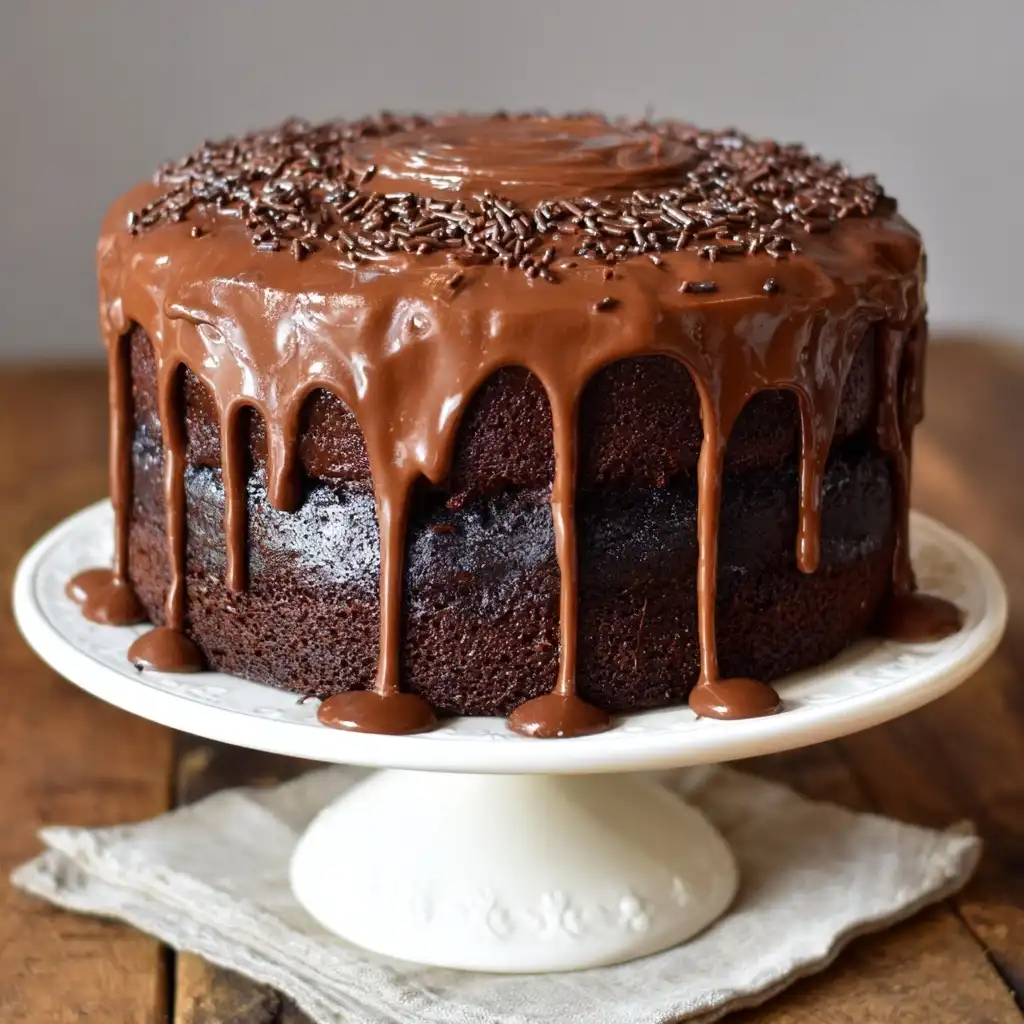
Welcome to the ultimate indulgence—Triple Chocolate Fudge Cake. This isn’t just another chocolate cake; it’s a symphony of cocoa, a decadent crescendo of textures and intensities that celebrates chocolate in its three most luxurious forms: rich dark chocolate, velvety milk chocolate, and bittersweet unsweetened cocoa. Whether you’re baking for a milestone celebration, surprising a loved one, or treating yourself after a long week, this cake delivers an unforgettable sensory experience—deep aroma, moist crumb, glossy fudge glaze, and layers of molten richness that linger on the palate. It’s the kind of dessert that silences rooms, earns second helpings, and becomes the centerpiece of memory-making moments.
The History
The evolution of the triple chocolate cake traces back to the late 20th century, when American home bakers and professional pastry chefs began experimenting with layered chocolate intensity—not merely adding more sugar or fat, but deepening flavor through strategic cocoa differentiation. While single-chocolate cakes date to Victorian-era recipes (like Eliza Acton’s 1845 “Chocolat Cake”), and double-chocolate versions gained traction in the 1970s with the rise of premium cocoa powders and high-cacao baking bars, the true “triple chocolate” concept emerged in the early 1990s. Pioneering bakeries in New York and Los Angeles started layering dark chocolate ganache between milk chocolate sponge layers, then dusting with Dutch-process cocoa—thus achieving three distinct yet harmonious chocolate expressions. Food magazines like Bon Appétit and Martha Stewart Living popularized the term in the mid-90s, often pairing it with “fudge” to emphasize its dense, melt-in-the-mouth texture. Today, Triple Chocolate Fudge Cake stands as a benchmark of modern chocolatier-inspired baking—a testament to how ingredient nuance, rather than mere quantity, transforms dessert into art.
Ingredients Breakdown
Every component of this cake is chosen not only for flavor but for functional synergy—each ingredient plays a precise role in moisture retention, structural integrity, emulsification, and chocolate depth:
- Unsweetened Cocoa Powder (Dutch-processed): Provides intense, smooth, low-acidity chocolate backbone. Dutch-processing neutralizes acidity, allowing deeper cocoa notes to shine without bitterness—essential for balancing the sweetness of other chocolates.
- High-Quality Dark Chocolate (70% cacao): Adds complexity, tannic structure, and slow-melting richness. Its higher cocoa butter content contributes to a satiny crumb and enhances shelf-life moisture.
- Milk Chocolate (38–42% cacao): Introduces creamy lactose sweetness, caramelized dairy notes, and a softer melt point—crucial for tender crumb and glossy fudge glaze sheen.
- Espresso Powder (instant): Not for coffee flavor—but to amplify chocolate’s inherent aromatics via Maillard reaction enhancement. A mere 1 tsp deepens perception of cocoa without detectable coffee notes.
- Buttermilk: Reacts with baking soda to create fine, even bubbles while adding subtle tang and tenderness. Its lactic acid also helps break down gluten strands for ultra-soft texture.
- Vegetable Oil (or light olive oil): Ensures unparalleled moisture and shelf stability—unlike butter-based cakes, oil doesn’t solidify at cool temps, keeping every slice fudgy for up to 5 days.
- Dark Brown Sugar: Contains molasses, which adds moisture, acidity, and rich caramel undertones—critical for balancing the cake’s overall sweetness profile and enhancing crust formation.
- Fine Sea Salt: Not just for seasoning—salt suppresses bitterness, brightens sweetness, and heightens aromatic volatiles in all three chocolates.
- Heavy Cream (for glaze): High-fat content ensures a luxuriously thick, pourable, and temperature-stable ganache that sets with a satin finish—not dull or greasy.
- Unsweetened Baking Chocolate (for fudge swirl): Melted and swirled into batter pre-bake, it creates ribbons of pure, unadulterated cocoa intensity—melting into pockets of molten fudge during baking.
Ingredient quality cannot be overstated: using supermarket cocoa or waxy chocolate chips will mute depth and compromise texture. Opt for brands like Valrhona, Guittard, Callebaut, or Cacao Barry—and always weigh ingredients for precision.
Step-by-Step Recipe
- Prep & Preheat: Position oven racks in upper and lower thirds. Grease three 8-inch round cake pans with softened butter, line bottoms with parchment paper rounds, then flour pans lightly (tap out excess). Preheat oven to 350°F (175°C). Allow all dairy and eggs to reach room temperature (65–70°F) for optimal emulsion.
- Bloom the Cocoa: In a medium heatproof bowl, whisk together ¾ cup Dutch-process cocoa powder, 1 cup hot brewed espresso (or strong coffee), and 1 tsp instant espresso powder. Stir until smooth and glossy. Let cool to lukewarm (~100°F)—this step unlocks maximum cocoa solubility and flavor release.
- Prepare Wet Ingredients: In a large mixing bowl, combine 1¼ cups buttermilk, ½ cup vegetable oil, 2 large eggs + 2 large egg yolks (reserve whites), and 2 tsp pure vanilla extract. Whisk until fully homogenized—no streaks of oil visible.
- Dry Ingredients Blend: In a separate bowl, sift together 2½ cups all-purpose flour (spooned & leveled), 2 cups dark brown sugar, 1½ tsp baking soda, 1½ tsp fine sea salt, and ½ tsp ground cinnamon (optional, for warmth). Sifting prevents clumping and ensures even distribution of leaveners.
- Combine Batter: Gradually add dry ingredients to wet mixture in three additions, alternating with cooled cocoa mixture—begin and end with dry ingredients. Mix on low speed *just* until no dry streaks remain after each addition (approx. 15–20 seconds per addition). Overmixing develops gluten → toughness.
- Incorporate Fudge Swirl: Melt 4 oz unsweetened baking chocolate with 2 tbsp heavy cream over double boiler until smooth. Cool 5 minutes. Using a spoon, dollop melted chocolate over batter in prepared pans. Gently swirl once with a chopstick—do NOT over-swirl; aim for visible marbling, not uniform blending.
- Bake Strategically: Divide batter evenly among pans (use kitchen scale for accuracy: ~580g per pan). Tap pans firmly on counter twice to release air bubbles. Bake 28–32 minutes—rotate pans top-to-bottom and front-to-back at 18 minutes. Cake is done when a toothpick inserted 1 inch from edge comes out with *moist crumbs* (not wet batter)—center may appear slightly underbaked but will set during cooling.
- Cool & Stabilize: Let cakes cool in pans on wire racks for 20 minutes. Run thin offset spatula around edges, invert onto racks, peel off parchment, then reinvert right-side-up. Cool completely (minimum 2 hours)—warm cake will absorb frosting and crumble.
- Make Fudge Glaze: Heat 1¼ cups heavy cream until steaming (not boiling). Pour over 12 oz finely chopped 70% dark chocolate and 4 oz finely chopped milk chocolate in heatproof bowl. Wait 3 minutes, then stir gently from center outward until smooth and glossy. Add 2 tbsp light corn syrup for extra sheen and shelf stability. Cool at room temp, stirring every 5 min, until thickened to spreadable-but-pourable consistency (~22–25°C / 72–77°F).
- Assemble with Precision: Level cooled cake layers with serrated knife if domed. Place bottom layer on cake turntable or cardboard round. Spread ¾ cup glaze evenly with offset spatula. Top with second layer, press gently. Repeat with third layer. Apply thin crumb coat; chill 20 minutes. Then apply final glaze: pour center of top layer, let cascade naturally down sides. Use bench scraper for clean edges. Chill 45 minutes before slicing.
Tips
- Scale, Don’t Scoop: Flour measured by weight (290g) yields consistent results—scooping packs flour, causing dryness.
- Room-Temp Rule: Cold eggs or buttermilk cause premature chocolate seizing and uneven emulsion. Warm them in warm water for 5 minutes if needed.
- Oven Thermometer Essential: Most home ovens run 15–25°F hot or cold. An accurate thermometer prevents overbaking—the #1 cause of dry fudge cake.
- Swirl Smart: For dramatic fudge ribbons, chill melted unsweetened chocolate 2 minutes before swirling—it holds shape better and won’t sink.
- Glaze Timing Matters: If glaze thickens too fast, gently re-warm over hot water (5 sec bursts). If too thin, chill 5 minutes—never refrigerate below 50°F, or fat will separate.
- Slicing Secret: Use a long, thin knife dipped in hot water and wiped dry between cuts—yields clean, glossy slices without dragging.
- Storage Wisdom: Unfrosted layers freeze beautifully for 3 months (wrap tightly in plastic + foil). Frosted cake keeps 5 days refrigerated—bring to 65°F 1 hour before serving for ideal texture.
- Altitude Adjustment: Above 3,000 ft? Reduce baking soda to 1 tsp, increase buttermilk to 1¼ cups, and bake at 360°F for 25–28 min.
Variations and Customizations
This recipe serves as a master canvas—elevate, adapt, or reimagine without compromising its fudgy soul:
- Gluten-Free Triple Chocolate: Substitute 2½ cups 1:1 gluten-free flour blend (with xanthan gum), add 1 tsp psyllium husk powder for elasticity, and increase buttermilk to 1¼ cups. Bake 2–3 minutes longer.
- Vegan Fudge Cake: Replace eggs with ¼ cup aquafaba + 1 tsp apple cider vinegar (whipped to soft peaks), use almond milk + 1 tbsp lemon juice instead of buttermilk, swap oil for refined coconut oil, and choose vegan dark/milk chocolates (check for dairy-free certification). Glaze uses full-fat coconut cream.
- Espresso-Infused Layer: Steep 2 tbsp coarsely ground espresso beans in hot cream for 15 minutes before straining—use infused cream in glaze for bold, sophisticated contrast.
- Sea Salt & Caramel Swirl: Before swirling fudge, drizzle ⅓ cup homemade salted caramel sauce over batter—creates gooey, salty-sweet pockets.
- Orange-Chocolate Fusion: Add 2 tsp finely grated orange zest to batter and 1 tbsp Grand Marnier to glaze—citrus lifts chocolate without competing.
- Spiced Aztec Version: Infuse dry ingredients with 1 tsp ancho chili powder, ¼ tsp ground clove, and ½ tsp cinnamon—adds warmth and ancient-Mesoamerican authenticity.
- Mini Bundt Pan Edition: Fill greased 12-cup bundt pan ⅔ full; bake 38–42 minutes. Drizzle with glaze and garnish with candied orange peel and crushed cacao nibs.
- Layered Parfait Jar: Crumble cooled cake, alternate with chocolate mousse and raspberry coulis in glasses—top with whipped cream and gold leaf for elegant individual servings.
Health Considerations and Nutritional Value
While undeniably indulgent, mindful preparation allows for nuanced nutritional awareness—without sacrificing authenticity:
- Cocoa’s Antioxidant Powerhouse: Dutch-process cocoa retains 80%+ of original flavanols when not overheated—compounds linked to improved endothelial function and cognitive support. Each serving delivers ~25mg epicatechin.
- Smart Fat Profile: Vegetable oil contributes monounsaturated fats (heart-healthy), while cocoa butter provides stearic acid—a saturated fat shown in clinical studies to have neutral impact on LDL cholesterol.
- Reduced Added Sugar Option: Cut brown sugar to 1½ cups and add 2 tbsp monk fruit/erythritol blend—maintains moisture and browning via Maillard reaction without glycemic spike.
- Protein Boost: Substitute ¼ cup flour with high-fiber, high-protein black bean flour (blanched, defatted)—adds 3g plant protein/serving and deepens fudge color.
- Portion Intelligence: A standard 1/12 slice (120g) contains approx. 420 kcal, 22g total fat (13g sat), 52g carbs (38g sugars), 5g protein, and 3g fiber. Pair with Greek yogurt or fresh berries to balance macros.
- Allergen Notes: Naturally nut-free and soy-free (if using soy-free chocolate); easily made dairy-free with certified vegan substitutes. Always verify chocolate labels for shared-equipment warnings if severe allergy exists.
- Functional Additions: Stir 1 tbsp chia seeds into batter for omega-3s and soluble fiber—adds subtle crunch and boosts satiety without altering taste.
Remember: nutrition is contextual. Enjoying this cake mindfully—as part of a balanced diet and joyful lifestyle—supports both physical and emotional well-being far more than restrictive avoidance ever could.
Ingredients
For the Triple Chocolate Fudge Cake Layers:
- ¾ cup (75g) Dutch-process cocoa powder (e.g., Valrhona, Cacao Barry)
- 1 cup (240ml) hot brewed espresso or strong coffee (195–200°F)
- 1 tsp instant espresso powder
- 1¼ cups (300ml) full-fat buttermilk, room temperature
- ½ cup (120ml) neutral vegetable oil (grapeseed, avocado, or light olive oil)
- 2 large eggs + 2 large egg yolks, room temperature
- 2 tsp pure vanilla extract
- 2½ cups (310g) all-purpose flour, spooned & leveled
- 2 cups (400g) dark brown sugar, packed
- 1½ tsp baking soda
- 1½ tsp fine sea salt
- ½ tsp ground cinnamon (optional but recommended)
- 4 oz (115g) unsweetened baking chocolate
- 2 tbsp (30ml) heavy cream (for fudge swirl)
For the Triple Chocolate Fudge Glaze:
- 1¼ cups (300ml) heavy cream (36–40% fat)
- 12 oz (340g) high-quality 70% dark chocolate, finely chopped
- 4 oz (115g) high-quality milk chocolate (38–42% cacao), finely chopped
- 2 tbsp (30ml) light corn syrup (for shine & stability)
- 1 tsp pure vanilla extract
- ¼ tsp fine sea salt
For Garnish (Optional):
- Flaky sea salt (Maldon or fleur de sel)
- Cocoa-dusted cacao nibs
- Edible gold leaf
- Whipped cream infused with orange zest
Directions
- Preheat & Prep: Preheat oven to 350°F (175°C). Grease three 8-inch round cake pans with butter, line bottoms with parchment, then flour lightly. Set aside.
- Bloom Cocoa: In heatproof bowl, whisk cocoa, hot espresso, and instant espresso powder until smooth. Let cool to ~100°F (38°C).
- Mix Wet Ingredients: In large bowl, whisk buttermilk, oil, eggs + yolks, and vanilla until emulsified.
- Combine Dry Ingredients: In separate bowl, sift flour, brown sugar, baking soda, salt, and cinnamon.
- Build Batter: Alternate adding dry mixture and cooled cocoa mixture to wet ingredients—begin/end with dry. Mix on low just until combined (do not overmix).
- Prepare Fudge Swirl: Melt unsweetened chocolate + 2 tbsp cream over double boiler. Cool 5 minutes.
- Swirl & Portion: Divide batter evenly among pans (~580g each). Dollop cooled fudge over each. Swirl once gently with chopstick.
- Bake: Bake 28–32 minutes, rotating pans halfway. Cool in pans 20 min, then invert and cool completely (2+ hrs).
- Make Glaze: Heat cream until steaming. Pour over chopped dark + milk chocolate. Wait 3 min, stir until smooth. Stir in corn syrup, vanilla, salt.
- Cool Glaze: Let glaze cool at room temp, stirring every 5 min, until thickened to honey-like consistency (22–25°C).
- Assemble: Level layers. Stack with glaze between layers. Crumb coat, chill 20 min. Apply final glaze. Chill 45 min. Slice with hot knife.
FAQ
- Can I make this cake ahead?
- Absolutely. Baked, unfrosted layers keep wrapped in plastic + foil for 3 days at room temp or 3 months frozen. Frosted cake lasts 5 days refrigerated. For best texture, bring to 65°F before serving.
- Why does my glaze look dull or grainy?
- Graininess = overheating chocolate or introducing cold cream. Dullness = insufficient cocoa butter content or improper cooling. Always use high-fat chocolate, steam cream (don’t boil), and cool glaze slowly with gentle stirring.
- Can I use cocoa powder instead of chocolate in the glaze?
- No—cocoa lacks cocoa butter, so it won’t set properly or achieve glossy sheen. For lighter glaze, use 8 oz dark chocolate + 4 oz milk chocolate + ¼ cup cocoa dissolved in 2 tbsp hot cream.
- My cake sank in the center—what went wrong?
- Most common causes: opening oven too early (before 20 min), underbaking (toothpick came out wet), expired baking soda, or overmixing batter. Always test at edge, not center.
- Is there a substitute for buttermilk?
- Yes: mix 1¼ cups whole milk + 1 tbsp white vinegar or lemon juice. Let sit 5 min until curdled. Avoid low-fat milk—it lacks necessary fat for tenderness.
- Can I bake this as a sheet cake?
- Yes! Pour into greased 9×13-inch pan. Bake at 350°F for 35–40 minutes. Cool completely before glazing. Slice into 15–20 bars.
- How do I prevent chocolate bloom on the glaze?
- Bloom occurs when cocoa butter separates due to temperature swings. Store cake at steady 60–68°F. Never refrigerate uncovered or freeze glazed cake—condensation causes sugar bloom.
- Can I add coffee to the batter instead of espresso powder?
- Yes—but reduce liquid elsewhere. Replace ¼ cup buttermilk with ¼ cup cooled strong coffee. Espresso powder remains preferred for concentrated, non-diluting impact.
- Why use both dark and milk chocolate in the glaze?
- Dark chocolate provides structure and depth; milk chocolate adds creaminess and lowers melting point for perfect pour-and-set behavior. Using only one creates imbalance—too stiff or too soft.
- Can I make this egg-free?
- Yes—with limitations. Replace each egg with 3 tbsp unsweetened applesauce + ¼ tsp baking powder. Texture will be denser and less springy—but still fudgy. Aquafaba (3 tbsp per egg, whipped) yields superior rise.
Summary
Triple Chocolate Fudge Cake is a masterclass in layered chocolate artistry—where Dutch-process cocoa, 70% dark chocolate, and creamy milk chocolate unite in a supremely moist, deeply flavored, and luxuriously textured dessert that balances intensity with elegance.
From precise ingredient science and strategic technique to customizable variations and mindful nutritional context, this recipe honors tradition while inviting innovation—proving that the most extraordinary desserts are born not from excess, but from intention, quality, and reverence for chocolate’s timeless magic.