Introduction
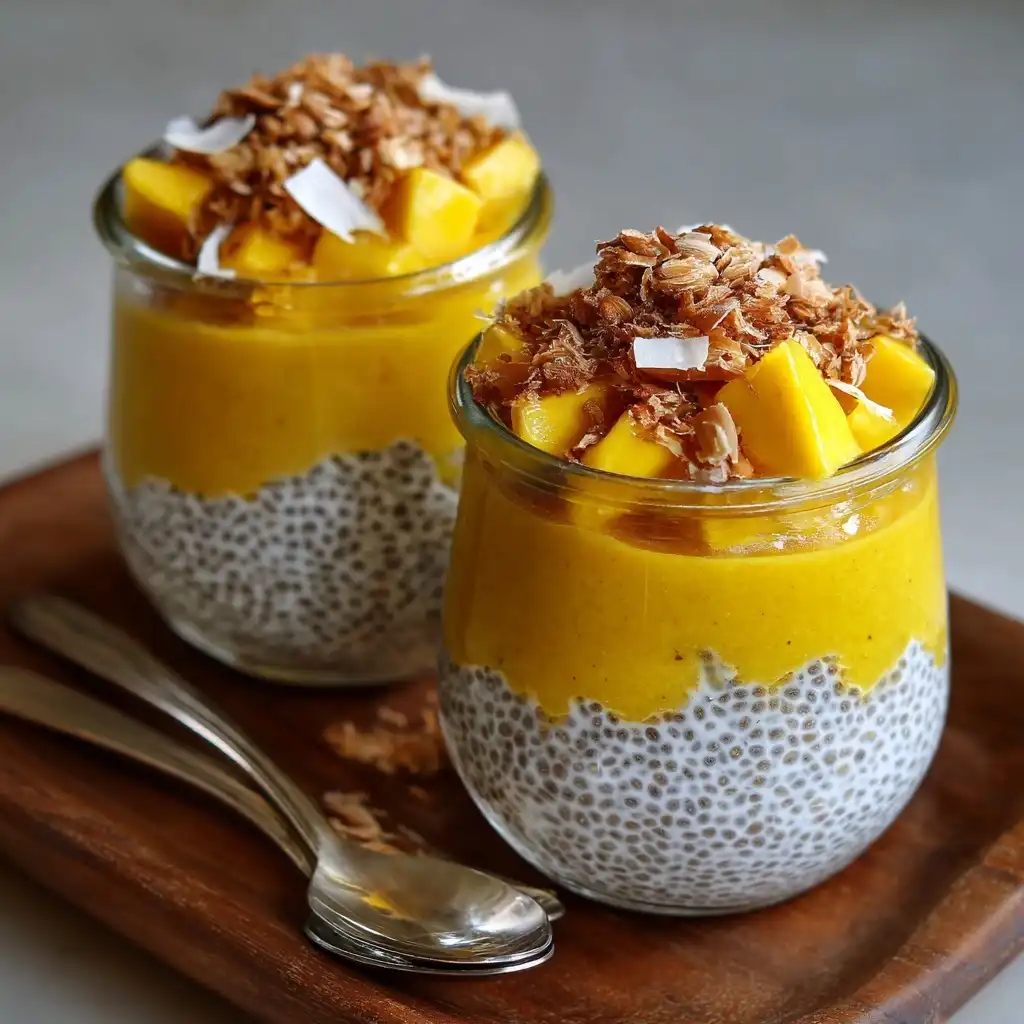
Welcome to the vibrant, tropical world of Mango Coconut Chia Pudding Parfaits — a luscious, no-bake dessert or breakfast masterpiece that marries creamy indulgence with nutrient-dense simplicity. This refreshing layered treat is more than just eye candy; it’s a harmonious fusion of velvety coconut milk, fiber-rich chia seeds, sun-ripened mango sweetness, and delicate textural contrasts that delight the palate and nourish the body from within. Whether you’re seeking a post-yoga refuel, a guilt-free afternoon pick-me-up, or an elegant yet effortless dessert for guests, these parfaits deliver sophistication without sacrifice — all in under 15 minutes of active prep and a few hours of gentle chilling. With its naturally vegan, gluten-free, and refined-sugar-free foundation, this recipe embraces clean eating principles while never compromising on decadence — proving that wholesome can be *wow*-worthy.
The History
Chia pudding, as we know it today, traces its roots to ancient Mesoamerican civilizations — particularly the Aztecs and Mayans — who revered chia seeds (Salvia hispanica) as a sacred superfood, calling them “running food” for their extraordinary endurance-boosting properties. Warriors and messengers consumed chia mixed with water or fruit juices for sustained energy over long distances. Fast-forward to the 21st century: chia pudding experienced a global renaissance during the early 2010s health-food boom, evolving from simple chia-water gels into luxurious, layered culinary creations. The marriage with coconut milk reflects Southeast Asian and Caribbean culinary traditions where coconut is both staple and symbol of abundance — its rich, aromatic fat content perfectly counterbalancing chia’s subtle nuttiness and amplifying creaminess without dairy. Meanwhile, mango — native to South Asia over 4,000 years ago and later cultivated across tropical regions — brings sunshine in every bite. The parfait format (layered in glasses) emerged from modern café culture’s emphasis on visual storytelling and mindful portion control, transforming humble pantry staples into Instagram-famous, restaurant-worthy presentations. Thus, the Mango Coconut Chia Pudding Parfait is not just a recipe — it’s a cross-continental, time-traveling celebration of ancestral wisdom, botanical bounty, and contemporary wellness aesthetics.
Ingredients Breakdown
Every ingredient in this parfait serves a functional, flavorful, and nutritional purpose — nothing is arbitrary. Let’s explore each component in depth:
- Full-Fat Canned Coconut Milk (unsweetened): The luxurious base that provides body, richness, and natural emulsifiers (like lauric acid) to help chia seeds fully hydrate and swell into a luxuriously thick, spoonable pudding. Opt for BPA-free cans with minimal ingredients — ideally just coconut and water — to avoid gums or stabilizers that interfere with texture. The high-fat content (typically 17–22% fat) is essential for mouthfeel and satiety; light coconut milk will yield a watery, unstable pudding.
- Chia Seeds (whole, raw, organic preferred): These tiny black-and-white powerhouses absorb up to 10–12 times their weight in liquid, forming a viscous gel via soluble fiber (mucilage). They’re nature’s perfect thickener — and packed with omega-3 ALA, complete plant protein (all 9 essential amino acids), magnesium, calcium, and antioxidants. White or black chia seeds are nutritionally identical; choose based on aesthetic preference (black offers dramatic contrast against golden mango).
- Ripe Ataulfo (Honey) or Kent Mangoes: Ataulfo mangoes — smaller, buttery, low-fiber, and intensely floral — are ideal for silky purées. Kent mangoes offer a balanced sweet-tart profile with vibrant color. Avoid underripe or fibrous varieties like Tommy Atkins for puréeing. Mango contributes natural fructose for gentle sweetness, digestive enzymes (amylase, esterase), vitamin C (immune support), vitamin A (beta-carotene for skin and vision), and polyphenols like mangiferin with anti-inflammatory properties.
- Pure Maple Syrup or Raw Agave Nectar (optional but recommended): Used sparingly to enhance mango’s natural sweetness without overpowering — especially helpful if your mango isn’t peak-season ripe. Maple syrup adds trace minerals (zinc, manganese) and prebiotic oligosaccharides; agave offers a neutral, low-glycemic alternative. Never use corn syrup or artificial sweeteners — they disrupt chia hydration and lack phytonutrient value.
- Fresh Lime Juice: A bright, acidic counterpoint that lifts richness, balances sweetness, and prevents browning in the mango layer. Its citric acid also enhances bioavailability of mango’s non-heme iron and beta-carotene.
- Unsweetened Toasted Coconut Flakes (medium shred): Adds crunch, toasted aroma, and additional healthy fats. Toasting deepens flavor and reduces moisture content, ensuring crispness remains even after brief contact with pudding layers. Avoid sweetened or hydrogenated versions — they add empty calories and artificial flavors.
- Fresh Mint Leaves & Microgreens (for garnish): More than decorative — mint contains rosmarinic acid (a potent antioxidant) and volatile oils that aid digestion and refresh the palate. Microgreens (like pea shoots or radish) contribute concentrated vitamins K, C, and E, plus sulforaphane — a powerful detox-supportive compound.
Optional enhancements include a pinch of ground cardamom (warming, digestive) or turmeric (anti-inflammatory, golden hue), a drizzle of coconut nectar (low-glycemic, mineral-rich), or a sprinkle of crushed pistachios (protein + healthy fats + vibrant green contrast).
Step-by-Step Recipe
- Prep the Chia Pudding Base (10 minutes + 4+ hours chilling): In a medium glass bowl or mason jar, whisk together 1 can (13.5 oz / 400 mL) full-fat unsweetened coconut milk, ¼ cup (40 g) chia seeds, 1–2 tsp pure maple syrup (to taste), and ½ tsp pure vanilla extract (optional but recommended for depth). Whisk vigorously for 60 seconds to fully disperse seeds and prevent clumping. Let sit 5 minutes, then whisk again — this second whisk breaks up any early gel clusters. Cover and refrigerate for *minimum* 4 hours, but preferably overnight (8–12 hrs) for optimal thickness and smooth texture. Stir once halfway through chilling if possible.
- Prepare the Mango Layer (10 minutes, best made same day): Peel and cube 2 large ripe mangoes (approx. 3 cups / 450 g flesh). Place in a high-speed blender with 1 tbsp fresh lime juice, 1 tsp maple syrup (optional), and a pinch of sea salt. Blend on high for 45–60 seconds until completely smooth and glossy — no fibrous bits. For ultra-silky texture, strain through a fine-mesh sieve, pressing with a spatula to extract every drop. Chill mango purée in a covered container for at least 30 minutes to deepen flavor and stabilize temperature before layering.
- Toast Coconut Topping (3–4 minutes): Heat a dry skillet over medium-low heat. Add ⅓ cup unsweetened coconut flakes. Toast, stirring constantly, until golden brown and fragrant (about 2–3 minutes). Immediately transfer to a cool plate to halt cooking. Let cool completely — warm coconut will melt pudding layers.
- Assemble the Parfaits (5 minutes): Use 4–6 (6–8 oz) clear glass jars, tumblers, or stemmed wine glasses for visual impact. Begin with a 2-tbsp layer of chilled chia pudding at the bottom. Gently spoon 2 tbsp mango purée over top — tilt glass slightly and let purée flow down sides for a marbled effect, or use the back of a spoon to smooth evenly. Repeat layers twice more (pudding → mango → pudding → mango), ending with a final thin layer of mango purée. Top each parfait with 1 tsp toasted coconut, a small mint leaf, and optional microgreens or crushed pistachios.
- Final Chill & Serve (15–30 minutes): Refrigerate assembled parfaits for 15–30 minutes before serving — this allows layers to gently meld at the edges without bleeding, enhancing structural integrity and flavor integration. Serve chilled, with long spoons to capture all layers in each bite.
Tips
- Chia Hydration Science: Chia seeds need time — and agitation — to fully gel. Whisking twice (immediately after mixing and again after 5 minutes) ensures even dispersion and prevents dense “chia cement” at the bottom. If your pudding separates, simply stir well before layering.
- Mango Ripeness is Non-Negotiable: Underripe mango yields tart, starchy purée; overripe mango becomes fermented and alcoholic. Perfect ripeness: yields slightly to gentle palm pressure near stem end, emits sweet, floral aroma at the stem, and has taut, slightly waxy (not wrinkled) skin.
- Texture Troubleshooting: Too runny? Chill longer (up to 24 hrs) or add ½ tsp extra chia seeds next time. Too thick/gummy? Whisk in 1 tsp chilled coconut milk. Grainy? You likely used low-fat coconut milk or didn’t blend mango long enough.
- Make-Ahead Mastery: Chia pudding keeps beautifully for 5 days refrigerated. Mango purée stays vibrant for 3 days (cover surface with plastic wrap to prevent oxidation). Assemble parfaits up to 2 hours before serving — beyond that, coconut softens and layers blur. For events, prep components separately and assemble tableside for maximum wow factor.
- Glassware Matters: Use wide-mouth jars (not narrow champagne flutes) for easy spoon access. Chill glasses for 10 minutes before assembly — cold vessels keep layers distinct longer.
- Flavor Amplification: For deeper complexity, infuse coconut milk with a 1-inch piece of peeled ginger (simmer 5 mins, cool completely, strain) before mixing with chia. Or swirl in ¼ tsp pure almond extract with the vanilla for a subtle marzipan note.
Variations and Customizations
This versatile template invites endless creativity — here are 12 thoughtfully crafted variations, each with unique nutritional and sensory profiles:
- Tropical Sunrise: Replace half the mango with 1 cup fresh pineapple purée + 1 tsp orange zest. Adds bromelain (digestive enzyme) and vitamin C synergy.
- Golden Turmeric Glow: Whisk ¼ tsp organic turmeric powder + ⅛ tsp black pepper (enhances curcumin absorption) into warm coconut milk before adding chia seeds.
- Protein-Powered: Stir 1 scoop unflavored or vanilla plant-based protein powder (pea/rice/hemp blend) into chia mixture before chilling. Increases protein to ~12g/serving.
- Chocolate-Dipped Mango: Swirl 1 tbsp melted 85% dark chocolate (cooled) into top mango layer before assembling. Adds flavonoids and magnesium.
- Passionfruit Twist: Fold 2 tbsp strained passionfruit pulp into mango purée. Introduces tart complexity and prebiotic fiber.
- Vanilla Bean & Cardamom: Split and scrape ½ vanilla bean into coconut milk; add ¼ tsp freshly ground cardamom. Elevates aroma and supports blood sugar balance.
- Green Goddess: Blend ½ cup baby spinach + ½ ripe avocado into mango purée for hidden greens, creaminess, and lutein.
- Spiced Rum Infusion (Adult Version): Stir 1 tsp dark rum (or rum extract) into chia pudding. Complements coconut’s warmth — serve only to adults.
- Crunchy Granola Crust: Replace toasted coconut with 2 tbsp homemade low-sugar granola (oats, pumpkin seeds, cinnamon) for added fiber and chew.
- Berry Swirl: Layer raspberry or strawberry purée between chia and mango for a vibrant, antioxidant-rich tri-color effect.
- Matcha Zen: Whisk 1 tsp ceremonial-grade matcha into chia pudding for calm energy, L-theanine, and earthy umami.
- No-Chill Overnight Oats Hybrid: Replace 2 tbsp chia with 3 tbsp rolled oats for a softer, chewier texture — still requires 4+ hrs chilling.
Health Considerations and Nutritional Value
A single ¾-cup (approx. 180g) serving of Mango Coconut Chia Pudding Parfait delivers exceptional macro- and micronutrient density:
- Calories: ~240–280 kcal (naturally moderate; highly satiating due to fat/fiber/protein synergy)
- Healthy Fats: ~18–22g — predominantly medium-chain triglycerides (MCTs) from coconut, which are rapidly converted to ketones for brain energy and thermogenesis. Chia contributes heart-healthy omega-3 ALA (1,800–2,200 mg/serving).
- Dietary Fiber: ~12–14g — 50%+ of daily needs! Chia’s soluble fiber forms viscous gel that slows gastric emptying (stabilizing blood sugar), feeds beneficial gut bacteria (prebiotic effect), and promotes regularity. Mango adds pectin and cellulose.
- Plant-Based Protein: ~5–6g — complete protein from chia (all 9 essential amino acids), enhanced by coconut’s arginine and mango’s tryptophan. Supports muscle maintenance and satiety hormones (GLP-1, PYY).
- Vitamins & Minerals: Exceptional vitamin C (120% DV), vitamin A (beta-carotene, 60% DV), folate (B9), potassium (500mg), magnesium (90mg), and manganese (1.2mg). Mango’s mangiferin and coconut’s ferulic acid provide potent antioxidant and anti-glycation protection.
- Glycemic Impact: Low-to-moderate glycemic load (~9–12) thanks to fiber/fat slowing sugar absorption — safe for most prediabetics when portion-controlled. Avoid added sugars beyond minimal maple syrup.
- Dietary Accommodations: Naturally vegan, gluten-free, soy-free, nut-free (if using seed-based toppings), dairy-free, and refined-sugar-free. Easily adapted for keto (reduce mango, increase coconut cream) or paleo (omit maple syrup, rely on mango sweetness).
- Cautions: Those with chia allergies (rare but possible) should avoid. High fiber intake may cause bloating initially — start with ½ serving and increase gradually. Coconut’s saturated fat is controversial; current evidence supports its MCT profile as neutral or beneficial for most when consumed as part of whole foods.
Ingredients
- 1 (13.5 oz / 400 mL) can full-fat unsweetened coconut milk (well-stirred)
- ¼ cup (40 g) whole raw chia seeds
- 1–2 tsp pure maple syrup or raw agave nectar (adjust to taste)
- ½ tsp pure vanilla extract (optional but recommended)
- 2 large ripe Ataulfo or Kent mangoes (approx. 3 cups / 450 g flesh)
- 1 tbsp fresh lime juice (plus extra for brushing mango if prepping ahead)
- Pinch of fine sea salt
- ⅓ cup unsweetened coconut flakes
- Fresh mint leaves, for garnish
- Microgreens or crushed pistachios (optional garnish)
Directions
- In a medium glass bowl or quart-sized mason jar, vigorously whisk together coconut milk, chia seeds, maple syrup, and vanilla extract for 60 seconds until fully combined and no dry seeds remain. Let sit 5 minutes, then whisk again thoroughly to break up any early gel clumps.
- Cover bowl/jar and refrigerate for minimum 4 hours, but ideally 8–12 hours (overnight) for optimal thickness and smooth texture. Stir once halfway through chilling if possible.
- While chia sets, prepare mango layer: Peel and cube mangoes. Place flesh in a high-speed blender with lime juice, optional extra 1 tsp maple syrup, and pinch of sea salt. Blend on high for 45–60 seconds until completely smooth and glossy. Strain through a fine-mesh sieve into a bowl, pressing pulp with a silicone spatula to extract all liquid. Cover and refrigerate for at least 30 minutes.
- Toast coconut: Heat a dry skillet over medium-low heat. Add coconut flakes and toast, stirring constantly, until golden brown and fragrant (2–3 minutes). Immediately transfer to a cool plate and let cool completely.
- When ready to assemble, ensure chia pudding and mango purée are well-chilled. Spoon 2 tablespoons chia pudding into the bottom of each serving glass (4–6 total). Gently layer 2 tablespoons mango purée on top. Repeat layers twice more, ending with a thin layer of mango purée.
- Top each parfait with 1 teaspoon toasted coconut, 1–2 fresh mint leaves, and optional microgreens or pistachios.
- Refrigerate assembled parfaits for 15–30 minutes before serving to allow gentle layer integration. Serve chilled with long spoons.
FAQ
- Can I use chia seed powder instead of whole seeds?
- No — chia powder lacks the mucilage-forming capacity of whole seeds and will not thicken properly. It’s excellent for smoothies or baking, but not puddings.
- Why does my pudding taste bitter?
- Likely from rancid chia seeds (store in fridge/freezer) or low-quality coconut milk with off-notes. Always smell chia seeds — they should be nutty and clean, never fishy or paint-like.
- Can I freeze chia pudding?
- Technically yes, but texture suffers significantly upon thawing — becomes icy and grainy. Best enjoyed fresh or refrigerated.
- Is this suitable for kids?
- Yes! It’s naturally sweet, allergen-friendly, and packed with brain-boosting omega-3s and vitamin A. For toddlers, omit lime juice and reduce chia to 3 tbsp per batch for milder texture.
- What if I don’t have a blender for mango?
- Use a food processor, immersion blender, or even a potato masher — then strain meticulously. A fork won’t achieve silkiness.
- Can I use frozen mango?
- Yes — thaw completely and drain excess liquid (frozen mango releases more water). Pat dry with paper towels before blending to prevent dilution.
- How do I prevent the layers from mixing?
- Chill all components thoroughly, use cold glasses, and spoon purée gently over the back of a spoon to slow descent. Final 15-minute chill is crucial.
- Can I make this sugar-free?
- Absolutely — ripe mango alone provides ample sweetness. Skip maple syrup entirely and rely on mango’s natural fructose. Add a pinch of stevia or monk fruit only if needed.
- Is there a way to make it higher in protein?
- Yes — stir in 1 scoop unflavored plant protein powder into chia mixture before chilling, or top with hemp hearts (3g protein/tbsp) or Greek yogurt (if dairy-acceptable).
- Why does my chia pudding have tiny white specks?
- Those are harmless chia seed coats — a sign you’re using whole, unprocessed seeds. They add fiber and are completely edible.
Summary
Mango Coconut Chia Pudding Parfaits are a masterclass in minimalist, nutrient-dense elegance — transforming just seven whole-food ingredients into a visually stunning, deeply satisfying, and scientifically supportive treat that bridges ancient superfood wisdom with modern culinary artistry.
With no cooking required, flexible customization, make-ahead ease, and profound benefits for gut health, blood sugar balance, radiant skin, and sustained energy, this parfait isn’t just dessert — it’s self-care, served in a glass.